WhatsApp: +86 16626708626
 Email:
 Phone: +86 16626708626
Description
Core Product Summary
The Teknic SST-6000-UCX is a digital AC servo drive from Teknic’s SSt-6000/3100 series — the manufacturer’s OEM-focused drive family built for simple, repeatable installation in production machinery. It drives three-phase brushless servo motors using Teknic’s third-generation S-Vector torque control, running from a 120–370 VDC bus with either AC or DC power input, and it accepts both servo-style and stepper-style commands: step and direction pulses (single-ended or differential) or an analog command interface.
The drive’s installation philosophy is its distinguishing trait. There are no DIP switches, potentiometers or jumpers — configuration is done from a PC over the RS-232 port, with multiple drives shareable on one serial port. Machine safety wiring is built in through a dedicated safety connector providing a brake output and ARM input, motor phase interrupt/dynamic braking and backup power options for the encoder and communications. Multi-axis machines can bus the drives on a shared DC bus for higher peak power at lower cost, and a real-time monitor port provides oscilloscope-level diagnostics of the axis in operation. The “-UCX” suffix identifies the drive’s option configuration within the series, and the SSt-6000/3100 installation documentation explicitly covers the -UXX model family this unit belongs to.
Key Technical Specifications
| Parameter | Value |
|---|---|
| Product type | Digital AC servo drive for three-phase brushless servo motors |
| Product series | Teknic SSt-6000/3100 servo drives and motors (installation manual covers -UXX and -TXX models, including -UCX) |
| Torque control | 3rd-generation vector torque control, synchronous S-Vector technology |
| Power input | AC or DC input; DC bus 120–370 VDC (DC supply must be inrush limited per manual) |
| Command interfaces | Step and direction pulses (single-ended or differential), or analog command interface; mates with servo controllers or stepper indexers |
| Controller interface | Digital drive interface with HLFB (High Level Feedback) and Ready output signals; limit switch inputs with selectable limit switch modes |
| Homing | Hard Stop Homing feature — can eliminate the need for home and/or limit switches |
| Machine safety | Dedicated safety connector: brake output, ARM input, motor phase interrupt/dynamic brake; encoder and logic power backup provisions |
| Regeneration | Built-in regeneration load control; regeneration hook-up per manual |
| Multi-axis power | Access to the DC bus for shared DC power bussing across drives (DC bus jumper cable available) |
| Configuration | All-digital — no DIP switches, pots, jumpers or selectable components; rapid PC configuration via RS-232; multiple drives on one serial port |
| Diagnostics | Real-time monitor port (diagnostic oscilloscope/scope port) for diagnosing mechanics and software problems |
| Motor protection | True RMS thermal limiting for motor protection |
| Electrical isolation | Full power/control electrical isolation (supports electrical safety compliance) |
| Mounting / current rating | Drive current rating depends on mounting configuration; optional fan mounting supported (manual section “Current Ratings for Various Mounting Configurations”) |
| Companion motors | Teknic M-series brushless servo motors (e.g., M4780, M3471, M3476, M3462, M3463) |
| Compliance support | CE use instructions included; design supports electrical safety, RF compatibility and machine safety requirements |
Engineering Selection Highlights
- One drive platform for servo and stepper control cultures. The drive accepts step and direction pulses as readily as analog commands, so an OEM can standardize on this drive across axes commanded by servo controllers and stepper indexers alike — one spares line, one configuration tool.
- The DC bus is a shared resource. Drives can be bussed together on a common 120–370 VDC bus, raising available peak power in multi-axis machines without a proportionally larger supply — a cost decision made at machine architecture level, not per axis.
- Safety wiring is designed in, not bolted on. The safety connector’s brake output, ARM input and motor phase interrupt/dynamic brake functions simplify the machine’s safety circuit, which reduces harness complexity where an axis carries a holding brake or safety-stop requirement.
- Hard Stop Homing can delete sensors. The drive’s homing feature can eliminate home and limit switches on suitable mechanics — fewer sensors, less wiring, fewer field failure points; suitability depends on the machine’s mechanical design.
- All-digital configuration eliminates setup hardware. With no DIP switches or pots, drive configuration is reproducible from the PC over RS-232, and multiple drives on one serial port make production-line setup and field service fast — a genuine OEM production benefit.
- The current rating is a mounting decision. The drive’s current capability depends on its mounting configuration, with optional fan mounting supported; the heatsinking and airflow must be chosen as part of the electrical sizing, per the manual’s mounting configuration table.
- True RMS thermal limiting protects the motor, not just the drive. The drive monitors the motor’s true RMS current against its capability, protecting the motor from thermal overload in a way that tracks real duty rather than simplified limits.
- Match the option suffix. SSt-6000 drives exist in several option suffixes (-UCX, -RCX and others); the suffix identifies the interface/option configuration and must be matched on replacement.
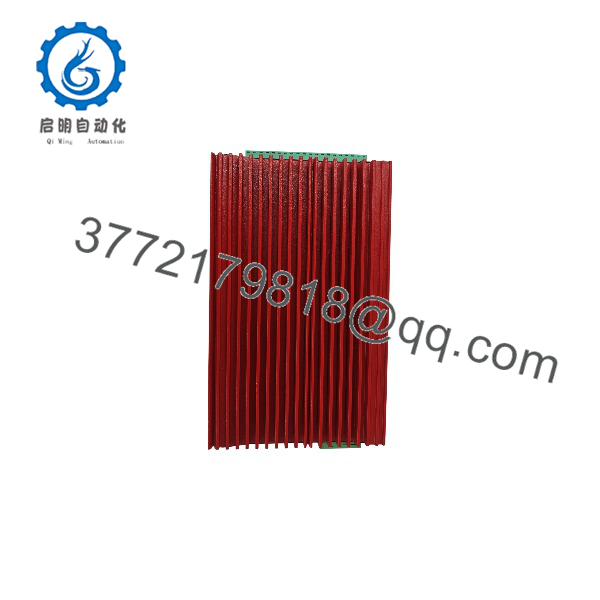
SST-6000-UCX
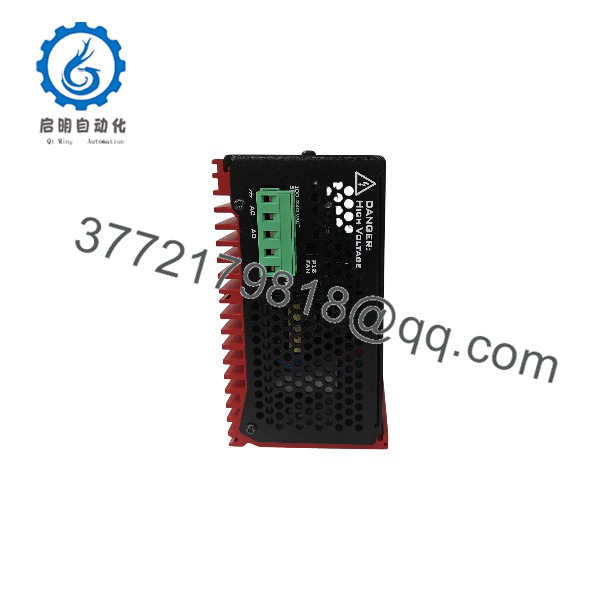
SST-6000-UCX
System Compatibility & Integration Requirements
| Item / Dependency | Verified Compatibility or Requirement | Practical Note |
|---|---|---|
| Power input | AC or DC input; DC bus 120–370 VDC; DC supply must be inrush limited | Follow the manual’s power input/distribution section; regeneration hook-up per manual |
| Multi-axis power | DC bus access for DC power bussing | DC bus jumper cable available for shared-bus architectures |
| Command source | Servo controllers or stepper indexers; step & direction (single-ended or differential) or analog command | Interface mates with both controller cultures; audit procedures in the manual’s appendix |
| Feedback outputs | HLFB (High Level Feedback) and Ready signals to the controller | Simplified, high-reliability interface wiring documented in the manual |
| Motors | Teknic M-series brushless servo motors (M4780, M3471, M3476, M3462, M3463) | Motor cables constructed per the manual’s standard cable drawings; bayonet MS-style connectors on Teknic motors |
| Limit switches | Limit switch inputs with selectable modes; Hard Stop Homing can eliminate switches | Wiring and mode selection per manual |
| Safety circuit | Safety connector: brake output, ARM input, motor phase interrupt/dynamic brake | Machine safety wiring section of the manual must be followed |
| Backup power | Provision for encoder power backup and logic power backup | Supports safe motion of axes with brakes during power events |
| Configuration | RS-232 configuration port; multiple drives on one serial port; all-digital (no DIP switches/pots) | Configuration from PC; drive status available over the shared serial line |
| Grounding | Grounding and shielding requirements per manual’s installation rules | CE compliance pathways documented in the CE use instructions |
| Mounting | Current rating depends on mounting configuration; optional fan mounting | Verify thermal mounting before applying the full current rating |
Detailed Product Overview
Teknic’s SSt-6000/3100 series represents a design philosophy about what a servo drive should cost an OEM — not just its purchase price, but the total engineering effort of wiring, configuring, certifying and servicing it inside a production machine. Reading the installation manual’s feature list is effectively a tour of every installation pain point the design targets.
Start with the power architecture. The drive accepts AC or DC input and regulates a 120–370 VDC bus. That bus is deliberately exposed: drives in a multi-axis machine can share one DC bus, jumpered together, so the machine’s supply cost reflects the machine’s RMS demand rather than the sum of its axes’ peak demands. Regeneration is handled inside the drive with built-in regeneration load control, and the manual covers the regeneration hook-up explicitly. The one hard rule the front panel states plainly: the DC supply must be inrush limited.
On the command side, the drive is deliberately bilingual. Step and direction pulses — the language of stepper indexers — are accepted in single-ended or differential form, alongside a conventional analog command interface. This is the series’ strategic position: it lets an OEM design one motion platform whether the controller is a stepper-style indexer or a full servo controller. The outputs back this up with a high-level digital feedback (HLFB) signal and a Ready signal, a simplified, high-reliability interface intended to reduce the controller-side software and wiring burden.
Safety is treated as a drive function, not an external afterthought. The safety connector provides a brake output for axes with holding brakes, an ARM input, and motor phase interrupt with dynamic braking — the pieces a machine builder would otherwise assemble from discrete relays and contactors. Backup power provisions cover both the encoder and the logic/communications sections, so an axis can be brought to a safe stop with its brake applied even through a power event. The manual’s machine safety wiring section carries the corresponding instructions and warnings.
Configuration is where the drive departs from its era’s conventions. There are no DIP switches, no potentiometers, no jumpers — nothing to mis-set on a production line or drift over time. All configuration runs from a PC over the RS-232 port, and several drives can hang off one serial port for both status monitoring and configuration. The real-time monitor port provides a scope-style diagnostic view into the axis, which the manual positions as a tool for diagnosing mechanics and software problems — effectively built-in instrumentation for commissioning and field service.
Electrically, the drive delivers its vector torque control through Teknic’s S-Vector technology — the third generation of the company’s vector control — providing the accurate, smooth torque production that lets a machine use smaller motors for the same positioning task. Motor protection is true RMS thermal limiting, monitoring the motor’s actual thermal duty rather than a simplified threshold. And the power and control sections are fully isolated from each other, which the manual highlights as easing electrical safety compliance; CE use instructions are part of the documentation.
For a buyer, three identification points matter. First, the suffix: this is the -UCX configuration, one of the -UXX option family covered by the SSt-6000/3100 installation manual, and replacements should match the complete designation. Second, the series pair: the SSt-6000 and SSt-3100 share documentation and accessories, so cable sets and setup procedures carry across the family — but current capability differs between the two drives, and the exact rating for a given mounting must be taken from the manual’s “Current Ratings for Various Mounting Configurations” section rather than assumed. Third, the motor pairing: the drive is documented with Teknic’s M-series motors, whose bayonet MS-style connectors and standardized cable drawings are part of the same installation ecosystem.
These drives now circulate mainly as legacy spares through the industrial parts and repair market — common in CNC machining, factory automation and robotics machines where they were OEM-fitted. For maintenance procurement, the complete model string, the unit’s condition, and a post-installation configuration check against the machine’s saved drive settings are the practical acceptance criteria.
Applications & System Role
The SST-6000-UCX occupies the drive position of an OEM motion axis: between the machine’s motion controller and a brushless servo motor, closing the torque, velocity and position loops that produce controlled motion. Within the SSt-6000/3100 series it is paired in the same installation documentation with Teknic’s NEMA-frame M-series motors (M4780, M3471/3476, M3462/3463), forming complete servo axes for industrial machinery.
The drive’s design brief was OEM production environments, and the feature set follows from it. Installation is simplified wherever sensors and harness wiring can be removed: Hard Stop Homing can delete home and limit switches, the HLFB output reduces the feedback wiring the controller needs, and the safety connector carries brake and safety-stop functions that would otherwise need external relays. Multi-axis machines benefit from the shared DC bus — power distribution and regeneration are handled across the drive group rather than per-axis. In production and field service, the all-digital configuration and shared serial port make drive setup a repeatable, software-controlled process rather than a hardware adjustment.
Command-side, the drive serves machines from both control cultures: servo controllers using analog or digital interfaces, and stepper indexers issuing step and direction pulses. The diagnostic scope port gives machine builders an oscilloscope view of axis behavior through the drive itself, useful for separating mechanical from software problems during commissioning and support.
FAQ
What is the Teknic SST-6000-UCX?
It is a digital AC servo drive from Teknic’s SSt-6000/3100 series, driving three-phase brushless servo motors with S-Vector vector torque control from a 120–370 VDC bus.
What command signals does it accept?
Step and direction pulses (single-ended or differential) from stepper indexers, or an analog command from servo controllers — plus limit switch inputs with selectable modes.
What power input does it need?
AC or DC input feeding a 120–370 VDC bus; the DC supply must be inrush limited, and multiple drives can share one DC bus via jumper cables for higher peak power in multi-axis machines.
How is the SST-6000-UCX configured?
Entirely from a PC over the RS-232 configuration port — the drive has no DIP switches, potentiometers or jumpers — and several drives can share one serial port for configuration and status.
What machine safety functions does it include?
A dedicated safety connector with a brake output, an ARM input, and motor phase interrupt/dynamic brake, plus backup power provisions for the encoder and logic/communications sections.
What is Hard Stop Homing?
A drive feature that performs homing against a hard mechanical stop, which can eliminate the need for home and/or limit switches on suitable machine designs.
How does the drive protect the motor?
Through true RMS thermal limiting, which monitors the motor’s actual current duty against its capability, plus built-in regeneration load control on the drive side.
How do I select the correct replacement unit?
Match the complete model string including the option suffix — the SSt-6000 drives were produced in several -UXX/-TXX option configurations, and the suffix identifies the interface/option build.