WhatsApp: +86 16626708626
 Email:
 Phone: +86 16626708626
Description
Core Product Summary
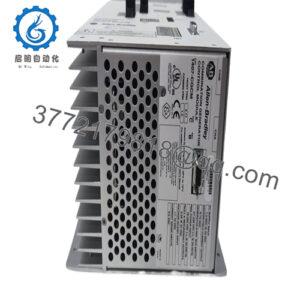
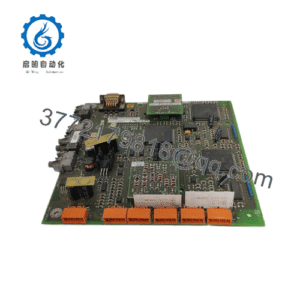
The TOSHIBA USIO21 is a serial I/O interface unit used within Toshiba’s V-Series and nv unified controller system environment. Its role is to connect intelligent I/O modules and drive equipment to the controller’s TC-net I/O serial communication loop, providing the data path between field-level devices and the supervising controller.
In Toshiba’s TC-net I/O architecture, the SIO interface provides the connection point through which I/O modules are attached to the control system. Up to 32 SIO interfaces can be supported per TC-net I/O loop, and each SIO interface can carry up to 16 I/O modules. The USIO21 is also used in drive configurations where variable-speed drives mounted in multistage panels connect to the interface through optical-electrical converters. Because the nv controller platform supports existing intelligent serial I/O and user application programs, this interface unit is relevant both for existing V-Series installations and for system expansions built around the newer nv controller generation.
Key Technical Specifications
| Parameter | Value / Scope |
|---|---|
| Product type | Serial I/O (SIO) interface unit |
| Manufacturer | Toshiba (industrial systems now under TMEIC) |
| System family | V-Series / nv unified controller, TC-net I/O architecture |
| Primary function | Connects intelligent I/O modules and drives to the TC-net I/O loop |
| I/O modules per SIO interface | Up to 16 |
| SIO interfaces per TC-net I/O loop | Up to 32 |
| TC-net I/O data rate | 100 Mbps transmit/receive |
| Network topology | Fault-tolerant ring; a severed loop connection does not interrupt communication |
| Optical cable type (loop) | GI 50/125 fiber; up to 2 km optical node distance (4 km total) |
| Drive panel integration | Multistage drive panels connect via optical-electrical converters to the interface |
Engineering Selection Highlights
- Serial I/O attachment point: The USIO21 serves as the SIO interface through which I/O modules reach the controller; a system requiring more than 16 I/O modules per interface needs additional SIO interfaces, and a loop supports up to 32.
- Drive integration path: In drive configurations, multistage drive panels reach the controller through the USIO21 via optical-electrical converters, so panel layout and converter placement belong in the interface selection plan.
- Network boundary conditions: TC-net I/O uses fault-tolerant ring communication at 100 Mbps, with up to 2 km optical node spacing; system geometry must fit within these loop limits.
- Migration continuity: The nv controller platform supports existing intelligent serial I/O and user application programs, which keeps SIO-based I/O structures usable when the controller layer is renewed.
- Series-scoped compatibility: This interface belongs to the Toshiba V-Series / nv system environment; correct use depends on the controller, loop hub, and I/O module configuration defined for that system.
System Compatibility & Integration Requirements
| Item / Dependency | Verified Compatibility or Requirement | Practical Note |
|---|---|---|
| Controller platform | Toshiba V-Series; nv unified controller generation supports existing intelligent serial I/O | Interface fit follows the controller system configuration, not standalone operation |
| Communication network | TC-net I/O loop, 100 Mbps, fault-tolerant ring | Loop hubs and cabling must match the TC-net I/O topology |
| I/O modules | Up to 16 I/O modules per SIO interface | Plan SIO interface count from total I/O module demand |
| Loop capacity | Up to 32 SIO interfaces per loop | Verify loop loading before adding interfaces |
| Drive connection | Multistage drive panels connect through optical-electrical converters | Converter and fiber routing are part of the drive interface design |
| Cabling | GI 50/125 optical fiber; electrical segments use Category 5 shielded twisted pair | Electrical node spacing on the loop is limited to short distances |
Detailed Product Overview
The Toshiba USIO21 is best understood through the architecture it serves. In the TC-net I/O environment used by Toshiba’s V-Series and nv unified controllers, the controller does not communicate with individual I/O modules directly. Instead, serial I/O interfaces sit between the controller loop and the I/O level, and the USIO21 performs that role: it is the point where intelligent I/O modules — and, in drive installations, the drive panel group — are attached to the fault-tolerant communication ring.
The engineering significance of this position is capacity planning. Each SIO interface accommodates up to 16 I/O modules, and a TC-net I/O loop supports up to 32 SIO interfaces. Those two numbers define how a large installation is partitioned: the total I/O module count determines how many interfaces are needed, and the loop ceiling determines whether they fit on one ring or require additional network segmentation. Because the ring is fault tolerant, a single severed loop connection does not stop communication — but the physical design still has to respect the distance rules, with up to 2 km of fiber between optical nodes and short Category 5 shielded twisted-pair runs for electrical segments.
Drive integration is the second documented use case. Where variable-speed drives are mounted in multistage panels, the drives are wired within the panel and connected onward through an optical-electrical converter to the USIO21. The interface therefore also acts as the boundary between the electrically noisy drive panel environment and the optical loop — a division that explains the mix of copper inside the panel and fiber between panels.
For procurement and maintenance teams, the practical point is that the USIO21 is not a standalone component. Its usefulness is defined by the surrounding system: a compatible controller, TC-net I/O loop hubs, correctly specified fiber and twisted-pair cabling, and I/O modules from the same family. Selection should therefore be made against the system configuration documents for the specific installation, confirming the number of interfaces, loop loading, and drive panel layout before ordering. Toshiba’s documentation for the nv controller generation notes that existing intelligent serial I/O and user application programs are supported, which keeps serial I/O structures of this kind relevant when the controller layer is updated.
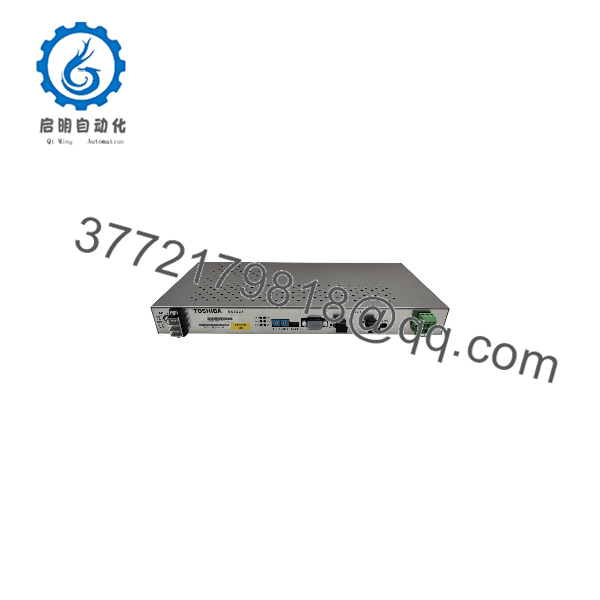
USIO21
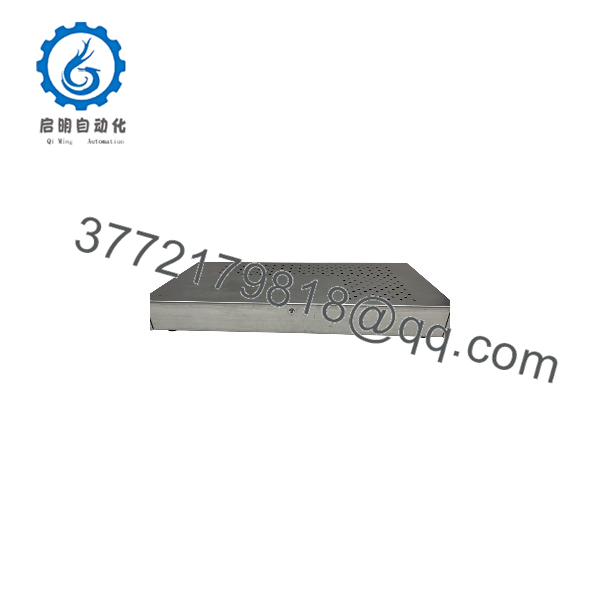
USIO21
Applications & System Role
The USIO21 occupies the serial I/O layer of the Toshiba V-Series / nv control architecture. Above it, the TC-net I/O loop links the controller, loop hubs, and SIO interfaces into a fault-tolerant ring. Below it, the interface aggregates the I/O modules that carry discrete and analog signals, and it serves as the aggregation point for drive cubicles: variable-speed drives grouped in multistage panels are brought onto the loop through optical-electrical converters attached to this interface.
This makes the unit a structural element in drive-based automation systems — rolling mill, process line, and similar installations where multiple drives and distributed I/O cabinets report to a unified controller. Its documented role in the nv controller documentation also positions it as the continuity element when a V-Series control layer is renewed while the serial I/O structure is retained.
FAQ
What is the Toshiba USIO21?
It is a serial I/O (SIO) interface unit used in Toshiba’s V-Series and nv unified controller systems to connect I/O modules and drive equipment to the TC-net I/O communication loop.
What function does the USIO21 perform in the control system?
It provides the attachment point between the controller’s TC-net I/O ring and the intelligent I/O level, carrying field I/O data between I/O modules, drive panels, and the supervising controller.
How many I/O modules can connect to one USIO21 interface?
Up to 16 I/O modules can be connected per SIO interface within the documented TC-net I/O system architecture.
How many SIO interfaces can one TC-net I/O loop support?
Up to 32 SIO interfaces per loop, which sets the ceiling on total I/O module capacity per ring.
How are drives connected through the USIO21?
Variable-speed drives mounted in multistage panels connect to the interface through optical-electrical converters, with fiber optic cabling used between panels on the loop.
What network does the USIO21 operate on?
It operates within TC-net I/O, a fault-tolerant ring network communicating at 100 Mbps, using GI 50/125 optical fiber for long distances and Category 5 shielded twisted pair for short electrical segments.
Is the USIO21 relevant when upgrading to the nv controller generation?
Yes — the nv controller platform supports existing intelligent serial I/O and user application programs, so serial I/O interfaces of this type remain part of the system picture during controller-layer renewal.