WhatsApp: +86 16626708626
 Email:
 Phone: +86 16626708626
Description
Core Product Summary
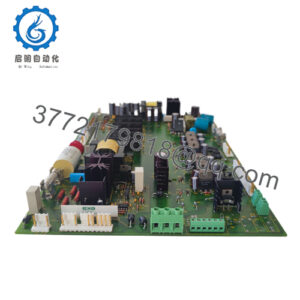
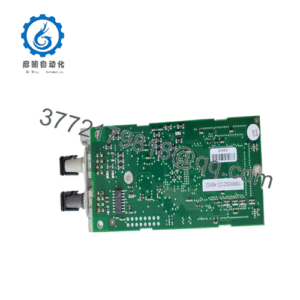
The TOSHIBA UTLH21 is the TC-net I/O Loop Hub used in Toshiba’s industrial controller architectures, including the Unified Controller nv series and the drive-based systems engineered by TMEIC. It forms the central node of the TC-net I/O fiber-optic ring, the high-speed serial I/O network over which the controller exchanges I/O data with remote, field-installed I/O.
TC-net I/O operates as a duplex fault-tolerant loop at 100 Mbps, with each line carrying a transmit and receive fiber. Any single loop connection can be severed without loss of communication, which is why the hub sits at the center of drive and distributed-I/O installations where communication continuity is a production-critical requirement. In the documented system topology, UTLH21 hubs connect the nv controller, the serial I/O (SIO) interfaces that carry I/O modules, drive cubicles, pulpit desks, and local and field-distributed I/O cabinets into one ring — so the hub is a structural component of the overall I/O system rather than a standalone accessory.
Key Technical Specifications
| Parameter | Value / Scope |
|---|---|
| Product type | TC-net I/O Loop Hub |
| Manufacturer | Toshiba (industrial systems under TMEIC) |
| System family | Unified Controller nv series; TC-net I/O field I/O system |
| Network role | Central hub of the TC-net I/O optical fault-tolerant loop |
| Data rate | 100 Mbps, duplex loop configuration |
| Fault tolerance | Each cable carries a transmit and receive path; a severed loop connection does not interrupt communication |
| Optical cable | GI optical fiber, two fibers per line; max 2 km between nodes, 4 km total loop length |
| Loop wiring rules (system level) | Duplex LC connectors; minimum optical cable bend radius of 10 × outer diameter |
| I/O data cycle (TC-net I/O system) | High-speed data collection down to 0.1 ms |
| Standardization | TCnet network technology published in IEC 61784-2 / IEC 61158 |
Engineering Selection Highlights
- Ring construction point: The UTLH21 is the hub around which the TC-net I/O loop is physically built; adding field I/O cabinets, drive panels, or serial I/O interfaces to an nv-based system means adding loop segments through these hubs.
- Fault tolerance by topology: The duplex loop continues communicating after any single cable break, so hub and cable placement determine how much physical damage the network can absorb while staying live.
- Distance budgeting: TC-net I/O allows up to 2 km of fiber between loop nodes and 4 km total per loop; large plants must verify node spacing against these limits before finalizing hub locations.
- Fiber discipline: The loop uses GI optical fiber with duplex LC connectors, and the cable must not be bent below ten times its outer diameter — installation quality, not just component selection, decides whether the loop performs.
- Performance context: TC-net I/O supports high-speed data collection down to 0.1 ms at 100 Mbps, so the hub is part of an I/O system intended for applications where I/O response time matters.
- Standards anchor: The underlying TCnet technology is published in IEC 61784-2 / IEC 61158, which documents the network’s place among internationally standardized industrial communication profiles.
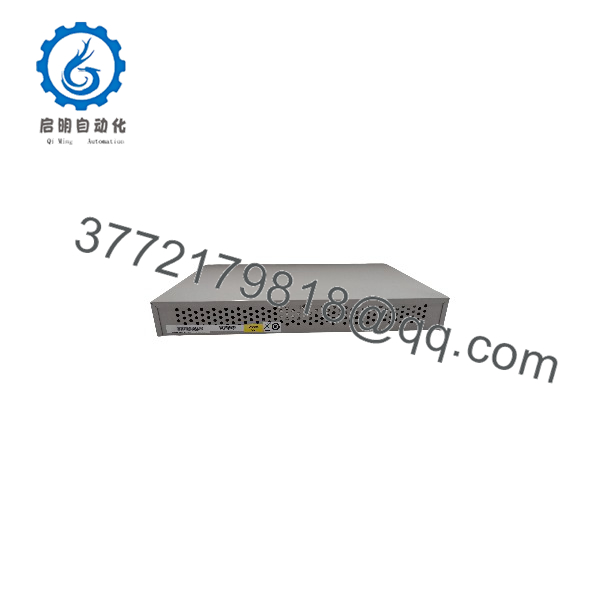
UTLH21
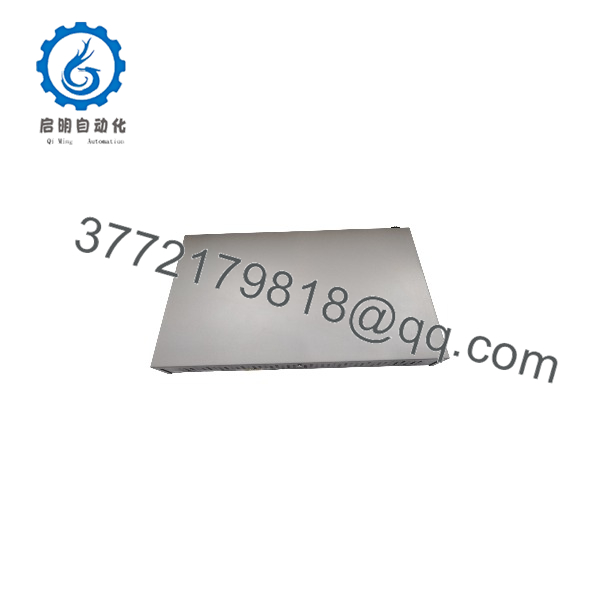
UTLH21
System Compatibility & Integration Requirements
| Item / Dependency | Verified Compatibility or Requirement | Practical Note |
|---|---|---|
| Controller platform | Unified Controller nv series (Toshiba); used in TMEIC drive system architectures | The hub belongs to the TC-net I/O system defined for these controllers |
| Network | TC-net I/O loop, 100 Mbps duplex fault-tolerant ring | Loop configuration, node numbering, and wiring must follow the TC-net I/O system documentation |
| Optical cabling | GI optical fiber, two fibers per line, duplex LC connectors | Max 2 km between nodes, 4 km total loop; min bend radius 10 × cable outer diameter |
| Ring nodes | Controller, serial I/O (SIO) interfaces, drive panels via optical-electrical converters, pulpit desks, local and field-distributed I/O cabinets | Field I/O cabinets can be placed adjacent to machines instead of in the electrical room |
| Electrical loop segments | Electric fault-tolerant ring segments span short distances (approx. 10 m between nodes, approx. 100 m total) | Copper-to-optical conversion is handled by optical-electrical converters/repeaters on the loop |
| Data performance | High-speed I/O data collection down to 0.1 ms (TC-net I/O system capability) | Relevant when selecting I/O refresh rates in drive and motion applications |
Detailed Product Overview
The UTLH21 is best understood as the wiring center of Toshiba’s TC-net I/O system. TC-net I/O is a high-speed serial I/O network that connects a Unified Controller nv (or V-series generation controller) to remotely installed I/O, and it does so as a duplex optical loop: every node transmits and receives on its own pair of fibers, and the loop hubs are the points through which controller, I/O, and drive segments are joined into that ring.
The engineering properties that matter at selection time are those of the loop itself. The ring runs at 100 Mbps and supports duplex — effectively redundant — configuration, so a single severed cable does not stop communication; the failure is absorbed by the reverse path while maintenance repairs the break. The optical budget is generous in plant terms: up to 2 km of GI fiber between nodes and 4 km around the whole loop, with each line using two fibers and duplex LC connectors. Those limits are usually sufficient to reach from an electrical room out to field-mounted I/O cabinets, which is precisely the design intent — TMEIC’s architecture documentation presents the loop as the mechanism that lets I/O modules live next to the machines (proximity switches, limit switches, solenoid valves, servo-valve sensors) instead of in the electrical room, cutting the hundreds of long copper runs a conventional wiring scheme would need.
Fault tolerance and data speed combine to define where the hub earns its place. TC-net I/O collects I/O data at rates down to 0.1 ms, which puts the network in the domain of drive and motion applications where I/O refresh time affects control quality — the kind of environment in which a rolling mill, process line, or comparable drive-intensive installation operates. The network technology itself, Toshiba’s TCnet, is published as an international standard profile in IEC 61784-2 / IEC 61158, which documents it as a standardized industrial communication system rather than a proprietary convenience.
For procurement and maintenance, the practical point is that the UTLH21 is not selected in isolation. A working TC-net I/O segment requires the controller with a TC-net I/O interface, correctly specified GI fiber with duplex LC terminations, node addressing consistent across the loop, and the serial I/O interfaces and I/O adapters that terminate the field side. When replacing a hub in an existing installation, the loop node arrangement and cabling order must be restored exactly, since the ring’s fault tolerance depends on a correctly closed duplex loop. Verification against the specific system configuration documents — and the module’s own identification label — is therefore an essential part of the ordering process.
Applications & System Role
In the control architecture, the UTLH21 sits at the network layer between the controller and the I/O equipment. Its documented position is the hub of the TC-net I/O loop: the controller connects to the ring, serial I/O interfaces attach I/O modules, drive cubicles join through optical-electrical converters, and field-distributed I/O cabinets — placed adjacent to the machines rather than in the electrical room — hang on the same loop through the hub.
This placement gives the hub a specific economic role in TMEIC’s drive-based system designs: by allowing I/O modules to be mounted in the field near the machines, the loop reduces the long multi-core cable runs that would otherwise run between the electrical room and the mill floor, while the fault-tolerant ring keeps the I/O network live through cable damage. The hub is therefore a structural component in systems where drives, distributed I/O, and operator pulpits must share one deterministic I/O network with the controller.
FAQ
What is the TOSHIBA UTLH21?
It is the TC-net I/O Loop Hub — the central hub module of the TC-net I/O fiber-optic loop used in Toshiba nv controller and TMEIC drive system architectures.
What does the UTLH21 do in the control system?
It joins the controller, serial I/O interfaces, drive panels, pulpit desks, and local and field-distributed I/O cabinets into one TC-net I/O fault-tolerant ring operating at 100 Mbps.
What network does the UTLH21 operate on?
TC-net I/O, a high-speed serial I/O system with duplex loop configuration at 100 Mbps; the underlying TCnet technology is published in IEC 61784-2 / IEC 61158.
How fault-tolerant is the TC-net I/O loop?
Each loop cable carries a transmit and receive fiber pair, so any single loop connection can be severed without loss of communication between the remaining nodes.
What cabling does the UTLH21 loop use?
GI optical fiber with two fibers per line and duplex LC connectors, with up to 2 km between nodes and 4 km total loop length; the cable bend radius must not be less than ten times its outer diameter.
How fast is I/O data collection over TC-net I/O?
The TC-net I/O system supports high-speed data collection down to 0.1 ms, suitable for drive and motion-related applications.
Which controller platforms work with the UTLH21?
It is part of the TC-net I/O system defined for Toshiba’s Unified Controller nv series and used in TMEIC drive-based industrial system architectures.