WhatsApp: +86 16626708626
 Email:
  Phone: +86 16626708626
Description
Key Technical Specifications
- Supply Voltage: 24 VDC
- Operating Voltage Tolerance: 22–28 VDC
- Typical Power Consumption: Maximum 5 W
- Digital Inputs: 16 isolated 24 VDC NPN/PNP universal inputs
- Analog Inputs: 4 channels, software-configurable for 0–10 VDC or 4–20 mA
- Digital Outputs: 8 isolated relay outputs
- Output Rating: Up to 2 A per relay channel for resistive loads
- Program Memory: 512 KB nonvolatile Flash
- Data Memory: 1 MB RAM for real-time process-variable buffering
- Mounting: IEC 60715 35 mm DIN rail
- Dimensions: 100 × 120 × 90 mm, W × H × D
- Operating Temperature: −20 to +60 °C
- Storage Temperature: −40 to +85 °C
- Relative Humidity: 5–85%, non-condensing
- Communications: Confirm exact protocol and port configuration from the unit label or OEM documentation
- Compliance: Reported CE and UL 61010 compliance; verify markings on the supplied unit
Publicly available information for the ECC1-1 is limited and inconsistent. One listing identifies it as a TRAZAR embedded control module, while unrelated results use the same identifier for other manufacturers and product families. Confirm the OEM name, complete label, revision, and terminal layout before publishing or ordering. cite
Product Introduction
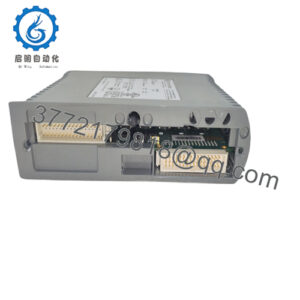
The TRAZAR ECC1-1 is a compact 24 VDC embedded industrial control module with configurable analog inputs, isolated digital inputs, relay outputs, and local process-control capability. It is described for distributed machine control, small process skids, HVAC equipment, semiconductor equipment, water treatment, and laboratory automation.
The module combines field signal acquisition and relay control in a DIN-rail package, reducing the need for a separate small PLC and I/O rack. Verify the application software, communication interface, firmware, and terminal arrangement because published documentation for this exact model is not widely available. cite
Troubleshooting Quick Reference
| Symptom | Possible Cause | Relevance to This Part | Quick Check Method | Recommendation |
|---|---|---|---|---|
| No status indication or controller response | Missing 24 VDC supply, blown fuse, reversed polarity, or internal power fault | ⚠️ Medium | Measure 22–28 VDC at the module power terminals under load and verify polarity | Check the power supply, fuse, common, and voltage drop before replacing the module |
| Module resets when outputs energize | Undersized power supply, relay load surge, or shared supply noise | ❌ Low | Monitor 24 VDC while switching the largest connected load | Separate inductive loads, add suppression, and confirm the supply has adequate current capacity |
| Digital input remains OFF | Incorrect NPN/PNP wiring, missing common, or absent field signal | ❌ Low | Apply a known 24 VDC test signal and observe the input status in the control software | Confirm input common and wiring polarity before declaring an input failed |
| Several digital inputs fail together | Missing input common or field power supply failure | ❌ Low | Measure voltage between the input terminal and its common while the device is actuated | Restore field power or common wiring; multiple simultaneous failures usually indicate an external cause |
| Analog input reads zero | Open loop, incorrect signal mode, missing transmitter supply, or wrong channel configuration | ⚠️ Medium | Measure 4–20 mA in series or 0–10 VDC directly at the input terminals | Set the channel for the correct signal type and test with a calibrated loop source |
| Analog value is unstable | Shielding, grounding, electrical noise, or poor transmitter supply | ❌ Low | Substitute a calibrated 4–20 mA or 0–10 VDC source and compare the reading | Correct cable shielding and grounding before replacing the input hardware |
| Relay output does not energize | Logic inhibit, failed relay, missing output common, or incorrect program state | ⚠️ Medium | Check command status, measure coil-side voltage, and verify contact continuity with power isolated | Separate logic failure from contact failure using the diagnostic state and a meter |
| Relay output chatters | Program scan logic, noisy input, inadequate suppression, or relay contact wear | ❌ Low | Monitor the command bit and input status while measuring the output circuit | Suppress inductive loads and check control logic before replacing the module |
| Communication with the host is lost | Wrong protocol, address, baud rate, wiring, or unsupported interface option | ⚠️ Medium | Confirm the actual port, cable pinout, node settings, and firmware-compatible protocol | Do not assume every ECC1-1 supports the same communications hardware |
| Program is lost after power removal | Volatile memory use, failed backup mechanism, or incomplete save procedure | ⚠️ Medium | Cycle power after saving a backup and compare retained parameters and program checksum | Export the application before removal and verify nonvolatile storage after commissioning |
| Controller overheats | Cabinet temperature, blocked ventilation, or wiring fault | ⚠️ Medium | Measure ambient temperature near the module and inspect for discoloration or abnormal current | Correct enclosure conditions and investigate shorted loads before replacement |
| Output terminals do not match the old unit | Revision or hardware variant change | ✅ High | Compare terminal labels, connector keys, wiring drawings, and revision markings | Do not transfer wires by position alone; verify every terminal against the correct manual |
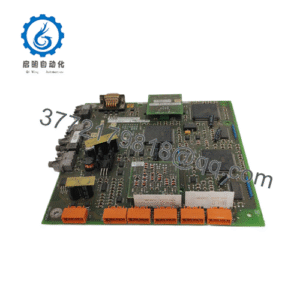
Because the ECC1-1 has limited publicly indexed documentation, confirm the exact electrical interface from the OEM manual or a clear photograph of the nameplate and terminals. Contact technical support with the complete label, revision, application symptoms, supply measurements, I/O status screenshots, and wiring photographs if the fault remains unresolved.
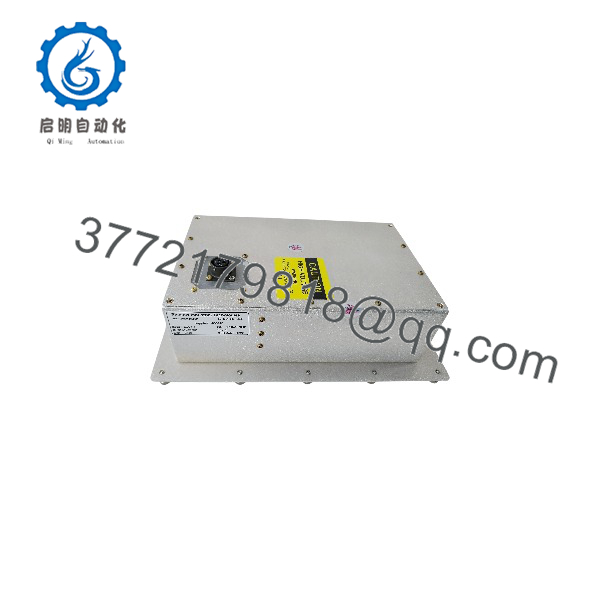
ECC1-1
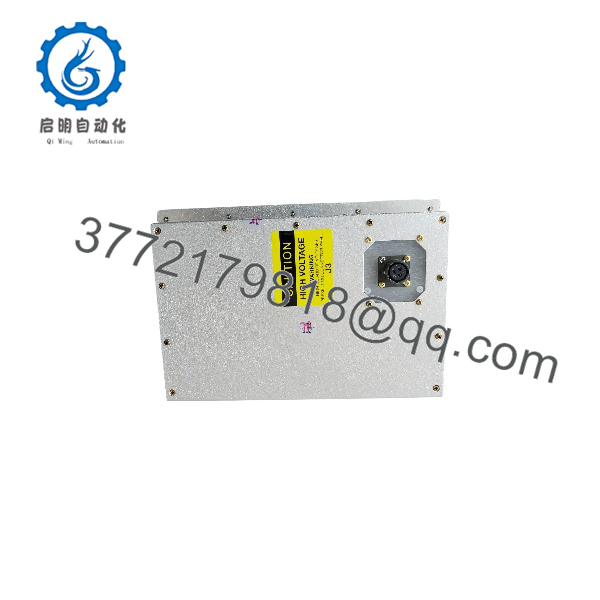
ECC1-1
Frequently Asked Questions (FAQ)
What is the TRAZAR ECC1-1?
It is described as a compact embedded industrial control module for distributed process and machine control. The listed hardware includes 24 VDC power, 16 digital inputs, four configurable analog inputs, and eight relay outputs.
Is the ECC1-1 a PLC?
It functions like a compact embedded controller, but the available public information does not establish compatibility with a specific mainstream PLC programming environment. Confirm the programming software, application-loader method, firmware version, and communication protocol before treating it as a direct PLC replacement.
Are the analog inputs 0–10 VDC or 4–20 mA?
The available listing identifies four software-configurable analog channels that can accept either 0–10 VDC or 4–20 mA. Verify the selected mode in software and check whether external loop power or a wiring link is required for the specific hardware revision. cite
Can I replace an with any unit carrying the same model number?
No. Match the manufacturer, hardware revision, firmware, terminal arrangement, input type, relay rating, application program, and communication option. The identifier “” appears in unrelated product listings, so the brand and complete nameplate are essential for correct identification. cite
Is the DIN-rail mounted?
The available TRAZAR listing specifies IEC 60715 35 mm DIN-rail mounting and dimensions of approximately 100 × 120 × 90 mm. Measure the existing panel cutout, terminal clearance, and cable routing before ordering a replacement. cite
Will the existing program remain in the replacement module?
Do not assume it will. Back up the application, parameter file, I/O mapping, firmware version, and communication settings before removing the old unit. A physically identical replacement may still require program loading, calibration, or address configuration.
Why is an surplus unit cheaper than a factory replacement?
The unit may be unused project stock, discontinued inventory, refurbished equipment, or a used module removed from service. The seller should state the condition precisely and provide photographs of the label, connectors, board condition, and test results. For this model, request proof of the exact manufacturer because the same identifier is used in unrelated online listings.