WhatsApp: +86 16626708626
 Email:
  Phone: +86 16626708626
Description
Key Technical Specifications
- Manufacturer: Triconex (Schneider Electric / Invensys legacy)
- Model: EPI3382 (also referenced as 7400221 in some listings)
- Product Type: Enhanced Processor Interface / Main Processor Module for Tricon SIS
- System Architecture: Triple Modular Redundant (TMR), 3 synchronized processors
- Processor Speed: 36 MHz (triple-synchronized)
- Safety Integrity Level: SIL 3 per IEC 61508
- Power Supply: 24 VDC ±10% (redundant inputs supported)
- I/O Capacity (typical system): Up to 64 digital / 32 analog points per controller configuration (depends on chassis and I/O modules)
- Fault Detection Time: <5 ms (hardware diagnostics)
- Communication:
- TriBus / I/O bus to Tricon I/O modules
- Optional comms via TCM/NCM/EICM modules (Ethernet, serial) in full Tricon systems
- Isolation: High isolation between logic and I/O (typ. 2500 V AC class in Tricon family)
- Operating Temperature: −40 to +70 °C
- Storage Temperature: −40 to +85 °C (typical for Tricon modules)
- Relative Humidity: 5–95% RH non-condensing
- Protection Class: IP20 (cabinet-mounted)
- Mounting: 3U rack / Tricon chassis slot (guide rails, hot-swap capable in supported systems)
- Dimensions: Approx. 315 × 45 × 200 mm (3U card)
- Weight: ~2.3 kg
- Certifications: SIL 3, ATEX, IECEx, UL Class I Div 2 (system-level; verify exact unit markings)
- MTBF: ~150,000 hours (module-level, typical)
Product Introduction
The Triconex EPI3382 (7400221) is an Enhanced Processor Interface module that serves as the main CPU for Tricon v11 / TriStation 3000 triple modular redundant (TMR) safety instrumented systems. It executes safety logic for ESD, fire & gas, and other SIL 3 applications while continuously synchronizing three independent processors and comparing results for fault tolerance.
This module is kept in service on legacy Tricon installations where the safety philosophy, I/O architecture, and application logic are already validated under SIL 3. Replacing a failed EPI3382 with an identical unit avoids re-qualification of the safety loop and extensive re-commissioning that a migration to a new SIS platform would require.
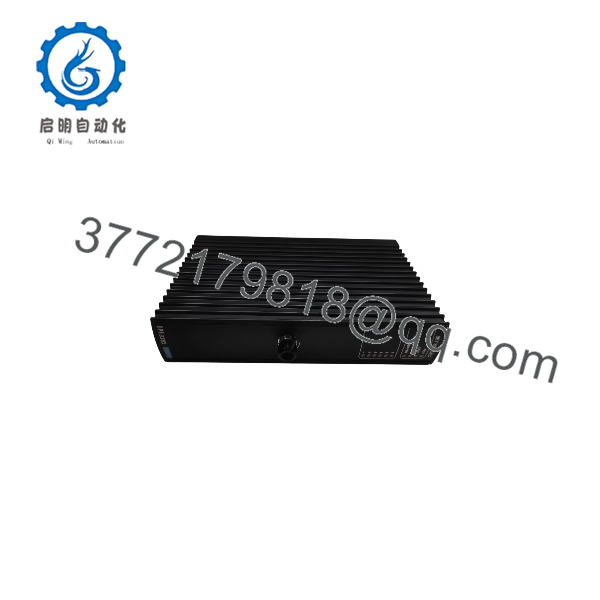
EPI3382
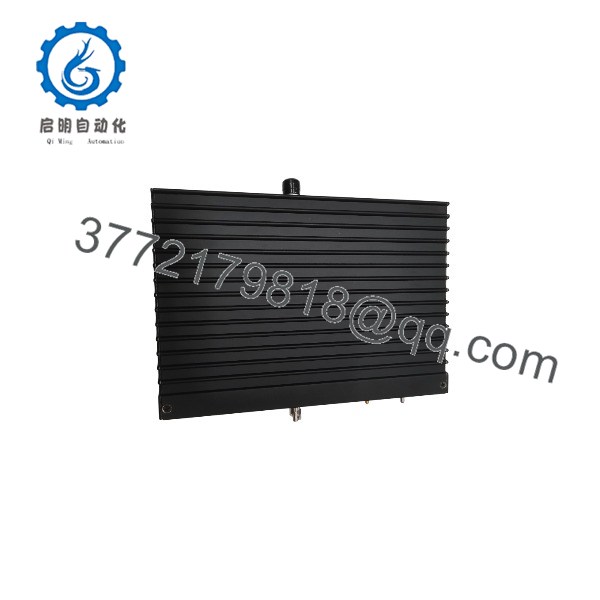
EPI3382
Troubleshooting Quick Reference
| Symptom | Possible Cause | Relevance to this Part | Quick Check Method | Recommendation |
|---|---|---|---|---|
| No LEDs, module appears dead | 24 VDC missing, reversed polarity, or chassis power fault | ✅ High | Measure 24 VDC at chassis power terminals and backplane; verify polarity and fuses | Restore correct 24 VDC and check chassis power distribution before blaming the CPU |
| “Processor Fault” / “Majority Fault” alarms | One processor leg failed, sync loss, or firmware mismatch | ✅ High | Review TriStation diagnostics for processor status and sync errors; check firmware version | If one leg consistently faults, replace EPI3382; ensure firmware matches system baseline |
| Communications loss to TriStation/SCADA | Network module (TCM/NCM) fault, IP/gateway misconfig, or cable issue | ❌ Medium | Ping Ethernet ports; check TCM/NCM LEDs; verify IP, subnet, and gateway in config | Fix network settings and cabling first; then suspect comms modules, not necessarily the EPI3382 |
| Spurious trips or erratic outputs | External I/O fault, wiring issue, or process noise; less often CPU | ❌ Low–Medium | Check field wiring, terminal boards, and I/O module diagnostics; review event log for input glitches | Address field/I/O issues; CPU is rarely the root cause of isolated spurious trips |
| Module boots but application will not download | Firmware incompatibility, corrupted logic, or version mismatch | ✅ Medium | Compare firmware and TriStation project version with site backup; attempt download with known-good project | Reload validated application; if repeated failures, suspect CPU or comms path |
If you are unsure, photograph the nameplate (EPI3382 / 7400221), chassis configuration, and TriStation diagnostic screens, then share system details with technical support.
Frequently Asked Questions (FAQ)
Q: What exactly is the used for?
A: It is the main TMR processor module for Tricon v11 / TriStation 3000 safety systems, executing SIL 3 logic for ESD, fire & gas, and other critical functions. It is not a general-purpose PLC CPU.
Q: What supply voltage does it need?
A: 24 VDC ±10%, typically fed via the Tricon chassis with redundant power paths. Do not apply 110/220 VAC directly to the module; power is distributed through the system’s power modules.
Q: Is the hot-swappable?
A: In supported Tricon chassis and configurations, Tricon CPU and I/O modules are designed for hot-swap with redundancy. Always follow your site’s MOC and safety procedures; never hot-swap in a degraded or non-redundant state without approval.
Q: Can I replace with a different Tricon CPU?
A: Only if the replacement is a compatible Tricon v11/v10 main processor approved for your firmware and application. Mixing incompatible CPU types can break TMR operation and invalidate SIL 3 claims. Match the exact model and firmware class where possible.
Q: Is this still a current-production product?
A: No. The is a legacy Tricon v11 component. It is sourced as surplus, refurbished, or repaired stock for existing installations. Treat it as a discontinued spare for brownfield SIS systems.
Q: What is the difference between and 7400221?
A: is the functional model designation; 7400221 is a catalog/ordering part number used by some distributors for the same module. For replacements, treat them as the same core module but verify firmware and revision.
Q: What condition are available units in?
A: Listings vary between new surplus, new old stock, and refurbished/tested. For SIL 3 systems, request test details (power-up, diagnostics, basic I/O and comms checks) and confirm firmware compatibility with your existing TriStation project.