WhatsApp: +86 16626708626
 Email:
 Phone: +86 16626708626
Description
3. Key Technical Specifications
| Parameter | Value / Description |
|---|---|
| Model | LDP1WC/250P-16 |
| Manufacturer | United Electric Controls (UE) / Precision Sensors |
| Type | Differential / low differential pressure switch/monitor |
| Series | ECHOLINE LDP |
| Typical Range | Low differential pressure (inches WC / low psi variants) |
| Output | SPDT dry contacts and/or analog (0–10 V / 4–20 mA) |
| Display | Digital LED pressure display |
| Setpoints | Independent high and low limits, adjustable |
| Time Delay | Selectable (common values 1–30 s) |
| Media | Clean, dry air or inert gases (typical) |
| Enclosure | Industrial panel or field mount |
| Application | Exhaust monitoring, HVAC, cleanroom, gas cabinets |
4. Product Introduction
The UE LDP1WC/250P-16 is a precision differential pressure switch/monitor from the ECHOLINE LDP series by United Electric Controls (Precision Sensors). It is designed for accurate low differential pressure monitoring in applications such as gas cabinet exhaust systems, HVAC, cleanrooms, and process ventilation.
The unit features a digital display of the measured pressure, independently adjustable high and low alarm setpoints, selectable time delay to avoid nuisance trips, and diagnostic features (including Electronic Circuit Health Output on some versions). It provides reliable switching or analog output for control system interlocks while minimizing false alarms during maintenance or system balancing.
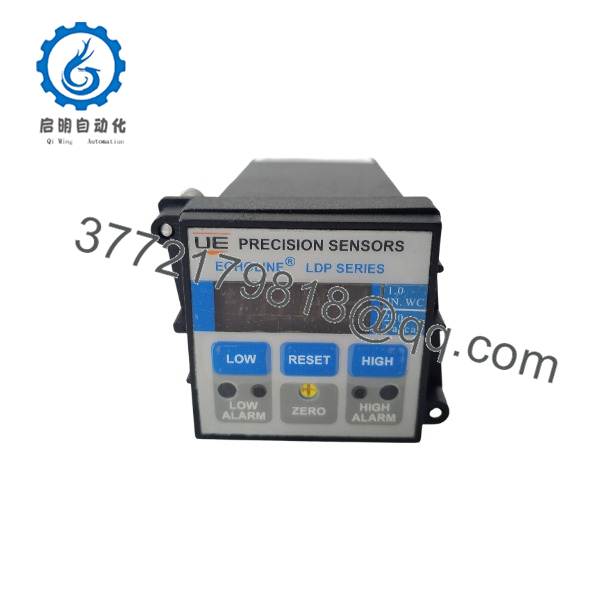
LDP1WC/250P-16
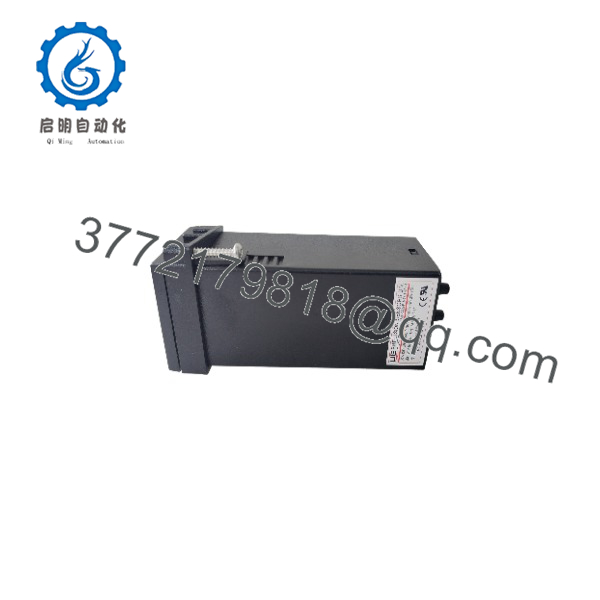
LDP1WC/250P-16
5. Troubleshooting Quick Reference
| Symptom | Possible Cause | Relevance to this Part | Quick Check Method | Recommendation |
|---|---|---|---|---|
| No display or power | Power supply or wiring fault | ✅ High | Verify supply voltage and polarity | Restore correct power; check fuse if present |
| Reading does not change | Blocked sensing lines or sensor fault | ✅ High | Check tubing for blockage or leaks | Clear lines; verify sensor function |
| Nuisance high/low alarms | Setpoints too tight or no time delay | ✅ High | Review setpoint values and delay setting | Widen deadband or increase time delay |
| Output does not switch | Contact failure or wiring error | ✅ High | Force alarm condition and measure contacts | Test contacts; replace unit if failed |
| Display shows error or zero | Calibration drift or electronics fault | ✅ Medium | Compare with known reference pressure | Recalibrate or replace |
| Intermittent operation | Loose tubing or electrical connection | ✅ Medium | Inspect fittings and terminals | Secure connections and retest |
Always isolate the process and follow lockout/tagout before servicing. Use only clean, dry air or compatible media for testing.
6. Frequently Asked Questions (FAQ)
Q: What is the LDP1WC/250P-16 used for?
It monitors low differential pressure, commonly in exhaust systems, HVAC, cleanrooms, and gas cabinet applications to detect abnormal pressure conditions.
Q: Does it have a digital display?
Yes. It includes a digital LED display of the measured pressure along with high/low status indicators.
Q: Can the setpoints and time delay be adjusted?
Yes. High and low limits are independently adjustable from the front panel, and a selectable time delay helps prevent false trips.
Q: What media is it suitable for?
Typically clean, dry air or inert gases. Confirm compatibility with the specific wetted materials and application.
Q: Is this model still available?
UE / Precision Sensors products in the ECHOLINE and LDP families remain supported. New, surplus, and tested refurbished units are commonly supplied for maintenance.
Q: What should I check before replacement?
Confirm the pressure range, output type (contacts and/or analog), power supply, and process connections. Photograph the existing unit labels and wiring for reference.
Install with correct tubing orientation, set the desired high/low limits and time delay, and verify operation against a known pressure source. This ensures reliable differential pressure monitoring and interlock performance.