 WhatsApp: +86 16626708626
 Email:
  Phone: +86 16626708626
Description
Product Role & System Fit
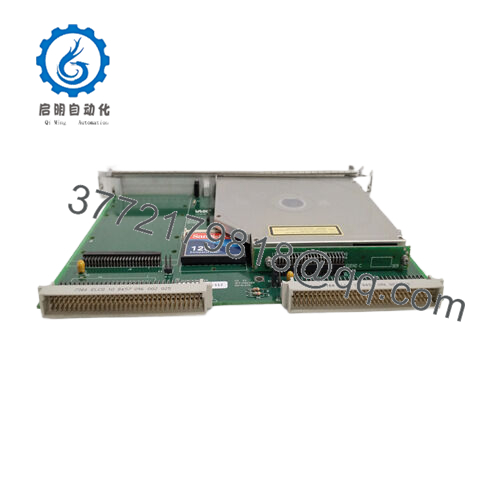
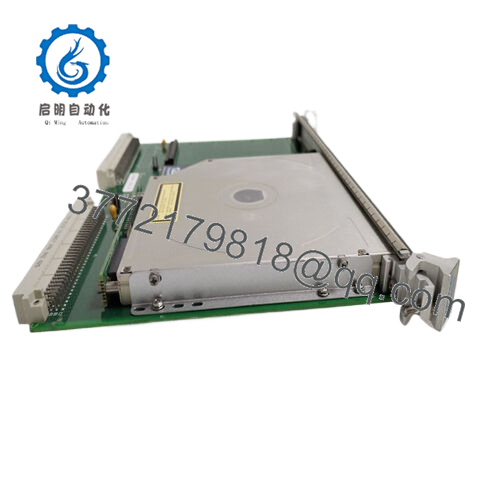
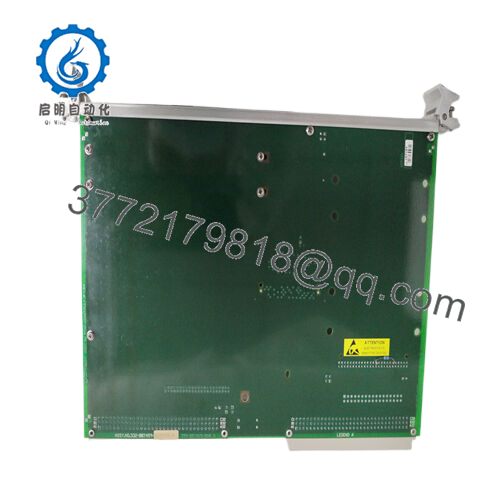
The VME7807RC is positioned as a high-performance “bridge” module within the VMEbus ecosystem. While many legacy VME boards were limited by single-core processing power, the VME7807RC introduced the Intel Core Duo architecture to the 6U form factor. This makes it the ideal system controller for applications transitioning from simple ladder logic to complex, multi-threaded algorithms. It acts as the primary master in a VME64 backplane, capable of orchestrating high-speed communication between legacy I/O cards and modern Ethernet-based peripherals.
Compatibility is a major strength of the VME7807RC. It was designed to support a wide array of operating systems, including Windows XP Embedded, Linux, and real-time environments like VxWorks. This versatility allows it to fit into diverse system architectures—from a shipboard radar processing unit to a high-speed semiconductor fabrication controller. By supporting both PMC and XMC expansion standards, the VME7807RC ensures that users can integrate high-speed serial fabrics like PCI Express alongside traditional parallel PCI mezzanine cards, effectively future-proofing the VME rack.
Applications & Industry Context
In the demanding world of aerospace and defense, as well as heavy power generation, the “RC” (Ruggedized/Conduction-cooled) variants of the VME series are legendary. The VME7807RC is frequently found in environments where standard air cooling is insufficient or where the ambient atmosphere is too hazardous for open-ventilation systems. Imagine a naval engine room or a remote pipeline monitoring station; these are places where vibration and thermal soak are constant threats to uptime. The VME7807RC addresses these challenges with a stiffened PCB and components rated for extended temperature ranges.
Beyond defense, we see the VME7807RC heavily utilized in the medical imaging and scientific research fields. In these sectors, the operational challenge is the sheer volume of raw data that must be processed in real-time. For example, a high-resolution MRI or a particle accelerator diagnostic system requires a processor that can ingest gigabytes of data from the VME backplane without creating a bottleneck. The dual-core L7400 processor in the VME7807RC allows one core to handle the heavy data lifting while the second core maintains the user interface and network heartbeats, ensuring the system remains responsive under maximum load.

- VME7807RC
Technical Specifications Table
| Specification | Details |
| Processor | Intel Core Duo L7400 (1.67 GHz) |
| L2 Cache | 4 MB Shared |
| Front Side Bus | 667 MHz |
| System Memory | Up to 4 GB DDR2-667 SDRAM |
| VME Interface | VME64 (Tundra Tsi148 Bridge) |
| Expansion Slots | 2x PMC/XMC (PCI Express x8 supported) |
| Network | 2x 10/100/1000Base-T Gigabit Ethernet |
| Video | Integrated Intel GMA 950 (VGA Support) |
| Storage | 3x SATA-150 interfaces, 1x EIDE interface |
| USB Ports | 4x USB 2.0 (Front and Rear access) |
| Serial Ports | 2x RS-232/422 COM ports |
| Power Requirements | +5V, +12V, -12V (standard VME rails) |
Technical Features & Benefits
The primary benefit of moving to the VME7807RC is the massive leap in computational density. By utilizing the L7400 processor, GE Fanuc managed to provide a low-power (31W TDP) yet high-performance solution that doesn’t overwhelm the cooling capacity of standard industrial enclosures. The integrated Tundra Tsi148 VME-to-PCI bridge is another critical feature; it provides the VME7807RC with full 2eSST (Two-Edge Source Synchronous Transfer) capabilities, allowing for theoretical VMEbus transfer rates of up to 320 MB/s. This is nearly four times faster than the original VME64 standard.
Reliability is bolstered by the board’s comprehensive health monitoring system. The VME7807RC includes a specialized thermal sensor and a watchdog timer that can be configured to reset the system or trigger a non-maskable interrupt (NMI) if the software hangs. Furthermore, the 4GB memory capacity is ECC (Error-Correcting Code) protected. In high-radiation or high-EMI environments, ECC memory is a non-negotiable requirement to prevent bit-flips that could lead to catastrophic system failure. When you choose the VME7807RC, you are choosing a board that prioritizes data integrity as much as raw speed.
Installation & Maintenance Insights
Having worked with these boards in the field, I can tell you that the most common installation pitfall is the VME backplane configuration. The VME7807RC is a high-bandwidth device, and it demands a clean signal environment. If your rack is over ten years old, I strongly recommend inspecting the P1 and P2 connectors for oxidation. A light cleaning with an electronics-grade solvent can prevent the “intermittent bus error” headaches that often plague older VME systems.
From a maintenance perspective, the VME7807RC is remarkably diagnostic-friendly. It features a POST (Power-On Self-Test) code display that can be accessed via the serial console. If the board fails to boot, the console output will tell you exactly which subsystem—be it the RAM, the VME bridge, or the Ethernet controller—is failing. For those using the conduction-cooled version, ensure that the wedge-locks are torqued precisely to the manufacturer’s specification. Over-tightening can warp the board, while under-tightening leads to poor thermal transfer and eventual overheating. Regular firmware updates are also vital; GE released several BIOS revisions for the VME7807RC to improve SATA drive compatibility and PXE boot reliability.
Warranty & Support
The VME7807RC belongs to a class of hardware that often remains in service for twenty years or more. As such, our support approach is built around longevity. We provide a full 12-month warranty on every VME7807RC unit, backed by rigorous bench testing that includes full VME backplane stress tests and memory burn-ins. Because these boards are often “mission-critical,” we also offer expedited repair and replacement services to minimize your facility’s downtime.
Technical support for the VME7807RC includes assistance with BIOS configuration and driver integration for legacy operating systems. If you are trying to get an old Windows NT 4.0 kernel to recognize the dual-core architecture of the VME7807RC, our engineers have the experience to guide you through the necessary HAL (Hardware Abstraction Layer) modifications. We don’t just sell the hardware; we provide the engineering bridge to keep your legacy infrastructure operational in a modern world.
Related Models
- VME7807: The standard air-cooled version of the board, suitable for office-grade or clean-room environments.
- VME7805: A predecessor model featuring a single-core Pentium M processor, often replaced by the VME7807RC for performance gains.
- VMIPC4-7301: A much older Pentium III based VME controller with lower memory ceilings and legacy I/O.
- V7768: A later generation Intel Core i7 based VME board for users needing even higher thread counts and integrated graphics.
- VME7807RC-SL: A specialized “Symmetric Lubrication” variant designed for extreme mechanical wear environments.
- XVME-652: A competing high-performance VME processor often cross-referenced with the GE series for redundancy.
- PMC-706: A common digital I/O PMC card frequently paired with the VME7807RC for plant-floor interface.
Field Observation: The Power of the Dual XMC/PMC Interface
One of the most underutilized features of the VME7807RC is the dual expansion capability. In a recent project involving a high-speed bottling line, we used the primary PMC slot for a dedicated Profibus master card while using the XMC slot for a high-speed SSD storage module. This configuration allowed the VME7807RC to act as both the machine controller and the local data logger, eliminating the need for a separate industrial PC.
The “RC” designation also means this board is built with high-retention connectors. If you are installing this in a mobile station—such as a mining vehicle or a crane—the physical security of the mezzanine cards is significantly higher than on standard consumer-grade boards. This “set it and forget it” reliability is exactly why the VME7807RC remains a staple in the industrial automation catalog. Whether you are performing a mid-life logic upgrade or building a new ruggedized station from scratch, this module provides the balance of legacy VME support and modern Intel processing that is hard to find elsewhere.