WhatsApp: +86 16626708626
 Email:
 Phone: +86 16626708626
Description
Core Product Summary (Brand / Model / Key Attributes)
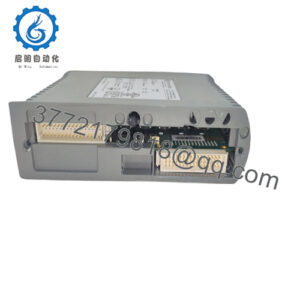
The VORTRAN Stradus 405 is a fully integrated, high-precision continuous wave (CW) direct-diode laser module operating at a nominal wavelength of 405 nm. Designed and manufactured by VORTRAN Laser Technology, this compact laser system is engineered for demanding scientific, medical, and industrial instrumentation applications, including flow cytometry, confocal microscopy, fluorescence excitation, and semiconductor inspection.
The Stradus 405 housing contains the laser diode, precision temperature control electronics, optical shaping elements, and drive circuitry in a single self-contained head. Operating on a 12 VDC supply, the unit delivers a circular, diffraction-limited TEM00 beam with exceptional beam pointing stability and low optical noise. Control and monitoring are achieved via onboard RS-232 serial and USB communication interfaces, complemented by analog and digital modulation inputs.
Key Technical Specifications
| Parameter | Specification |
| Product Type | Continuous Wave (CW) Direct-Diode Laser Module |
| Brand / Series | VORTRAN Stradus Series |
| Nominal Center Wavelength | 405 nm |
| Beam Spatial Mode | TEM00 (circularized, diffraction-limited) |
| Output Power Options | Configurable up to 100 mW (model dependent) |
| Beam Diameter | ~1.0 mm to 1.3 mm (at 1/e²) |
| Beam Divergence | < 1.0 mrad |
| Power Stability | < 0.5% over 24 hours |
| RMS Noise (20 Hz to 20 MHz) | < 0.2% RMS |
| Modulation Capabilities | Digital (TTL) up to 200 MHz; Analog up to 500 kHz |
| Control Interfaces | RS-232 serial, USB interface, and graphic user software |
| Operating Voltage | 12 VDC |
Detailed Product Overview
The VORTRAN Stradus 405 serves as an optical excitation source in high-performance imaging and analytical instruments. By integrating thermal management, optical conditioning, and control drive electronics into a standardized physical footprint, the Stradus 405 eliminates the need for external driver boxes, simplifying instrument design and space allocation.
The module features internal active temperature regulation (TEC) to lock the laser diode junction temperature, maintaining tight wavelength stability, consistent output power, and minimal spectral drift under variable ambient laboratory conditions. Its optical design shapes the naturally elliptical beam of the 405 nm laser diode into a clean, circular TEM00 spatial profile suitable for fiber coupling or direct free-space optical delivery.
Interfacing with the module is straightforward through standard serial protocols (RS-232 or USB), allowing system engineers to adjust output power, monitor diode operating hours, read junction temperatures, and execute remote interlock functions via simple software command sets.
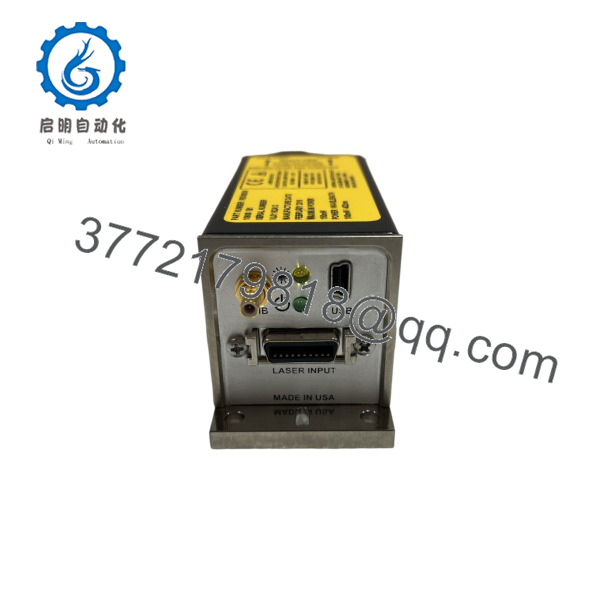
Stradus 405
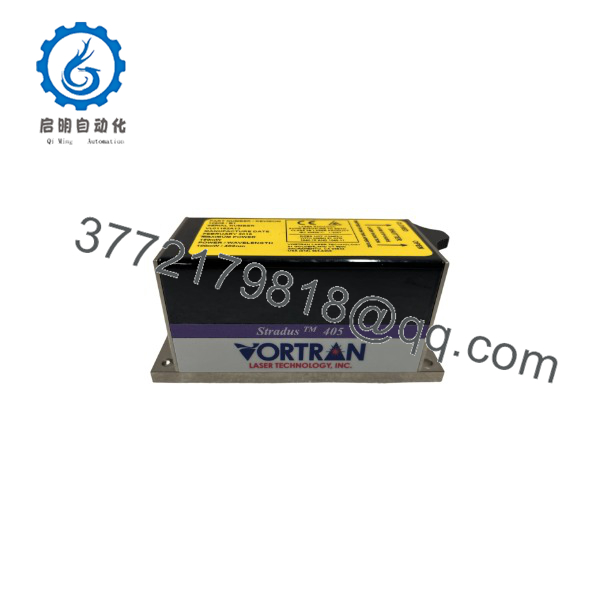
Stradus 405
Engineering Selection Highlights
- Fully Integrated OEM Design: Combines diode, drive circuit, thermoelectric cooler, and beam-shaping optics inside a single compact head.
- Superior Spatial Quality: Provides a circularized TEM00 beam with low divergence for precise focusing and efficient optical fiber coupling.
- Ultra-Low Noise Profile: RMS optical noise below 0.2% ensures high signal-to-noise ratios in sensitive fluorescence and imaging systems.
- Dual Modulation Modes: Supports high-speed digital switching (up to 200 MHz) and linear analog power control (up to 500 kHz).
- Standardized Control Communications: USB and RS-232 serial control enable full parameter readout and remote adjustment in automated instruments.
System Compatibility & Integration Requirements
| Item / Dependency | Verified Compatibility or Requirement | Practical Note |
| Main Input Power | 12 VDC Regulated Power Supply | Requires clean DC voltage input for optimal noise performance |
| Control Interfaces | USB Type-B / RS-232 Serial Port | Uses standard ASCII command set for software interface |
| Modulation Inputs | External SMA / BNC Control Connectors | Accepts standard TTL digital and 0–5V analog modulation signals |
| Heat Dissipation | Flat mounting surface / external heatsink | Must be mounted to a thermally conductive base plate to maintain internal TEC efficiency |
Dimensions, Mounting & Connection Notes
- Physical Form Factor: Standardized Stradus series enclosure for uniform mounting across different wavelength variants.
- Thermal Management: The baseplate must be securely fastened to a suitable optical bench, metal plate, or instrument chassis acting as a heat sink.
- Power Connection: Accepts 12 VDC input via a dedicated power interface connector.
- Optical Safety Interlock: Features hardware remote interlock connections to satisfy IEC / FDA Class 3B laser safety system integration rules.
FAQ
- What is the VORTRAN Stradus 405?
It is a compact, self-contained 405 nm continuous wave (CW) diode laser module engineered for biomedical and precision optical instrumentation.
- Which applications commonly utilize the Stradus 405?
It is widely used in flow cytometry, confocal microscopy, DNA sequencing, fluorescence analysis, and semiconductor inspection.
- Does the Stradus 405 require an external controller chassis?
No, all drive circuitry, temperature control, and communication hardware are integrated inside the laser head itself, requiring only a 12 VDC supply.
- What control interfaces are provided on the module?
It provides USB and RS-232 serial communication ports for setup, control, and telemetry diagnostics.
- What modulation modes are supported by this laser?
It supports both fast digital TTL modulation (up to 200 MHz) and analog power modulation (up to 500 kHz).
Verification & Troubleshooting Notes
- Heat Sink Thermal Verification: Monitor the module baseplate temperature during extended operation; insufficient heatsinking can cause internal TEC saturation and automatic thermal shutdown.
- Laser Safety Interlocks: If the laser emission indicator remains off upon applying 12 VDC and sending serial enable commands, verify that the physical remote interlock loop is shorted/closed.
- Cleanliness of Output Window: Inspect the optical exit window for dust or contamination prior to alignment; clean only using approved optical-grade wipes and isopropyl alcohol to avoid damaging optical coatings.