WhatsApp: +86 16626708626
 Email:
  Phone: +86 16626708626
Description
Key Technical Specifications
- Manufacturer: Watlow Anafaze
- Manufacturer Part Number: 997D-11CC-JURG
- Product Series: Watlow Series 997
- Product Identification: Temperature / Limit / Process Controller
- Primary Role: Independent temperature-limit monitoring and protective shutdown for thermal equipment
- Form Factor: 1/8 DIN vertical panel-mount controller
- Mounting Orientation: Vertical 1/8 DIN format; verify cutout dimensions and bezel orientation before replacement
- Typical Applications: Industrial ovens, furnaces, kilns, heaters, dryers, thermal-process skids, and equipment requiring an independent over-temperature trip
- Control Architecture: Model-specific configuration; do not assume this exact suffix is a universal-input PID controller, dual-channel controller, or relay-only model without verifying the nameplate and wiring diagram
- Input Type: Must be confirmed from the physical label and original configuration; Series 997 variants may differ by thermocouple, RTD, process-input, or other configured input options
- Output Type: Must be confirmed from the full model-code documentation and installed wiring; verify relay, alarm, limit, or logic-output arrangement before purchase
- Reset Behavior: High-limit controllers may require manual reset after a trip, depending on the exact configuration; confirm the installed safety logic before commissioning
- Configuration Retention: Record programmed limits, alarm values, input type, control action, output assignment, calibration offsets, and password settings before replacement
- Lifecycle Status: Legacy Watlow Anafaze Series 997 equipment; supply is commonly through surplus, used, or tested-refurbished stock
Public listings consistently identify 997D-11CC-JURG as a Watlow Series 997 temperature controller or vertical limit controller. Several listings make conflicting claims—such as dual-channel PID control, universal input, or Woodward manufacture—that are not supported by consistent manufacturer documentation in the available results. Treat the full suffix as configuration-critical and verify the physical label, terminals, input sensor, programmed settings, and wiring before ordering.
Product Introduction
The Watlow Anafaze 997D-11CC-JURG is a Series 997 panel-mount temperature limit or process controller used in thermal equipment such as furnaces, ovens, heaters, dryers, and process skids. Its primary job is to monitor temperature and initiate a protective response when the configured limit condition is exceeded.
A Series 997 limit controller should not be treated as an interchangeable standard PID controller. In a proper thermal safety circuit, it provides an independent trip path separate from normal temperature control. Match the exact suffix, sensor input, output contacts, reset method, supply wiring, panel cutout, and configured limit before replacing it.
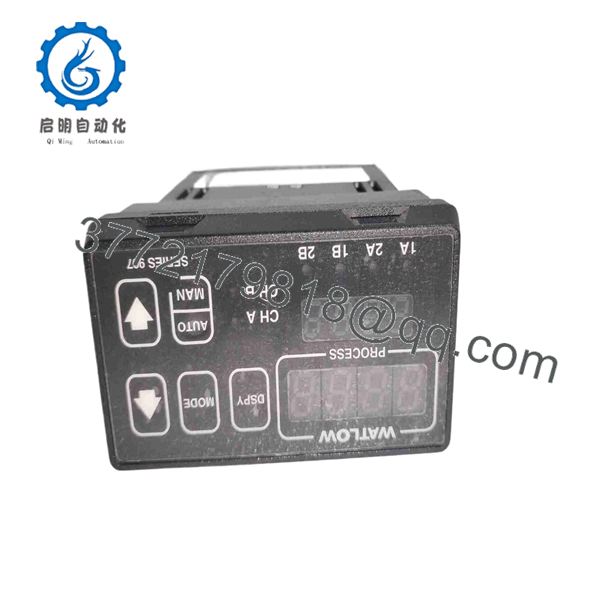
997D-11CC-JURG
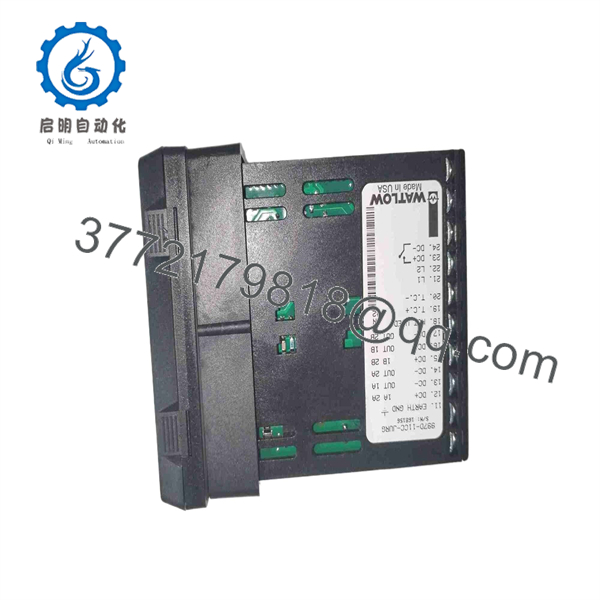
997D-11CC-JURG
Troubleshooting Quick Reference
| Symptom | Possible Cause | Relevance to this Part | Quick Check Method | Recommendation |
|---|---|---|---|---|
| Display is blank or controller does not power up | Missing control power, blown fuse, loose terminal, failed power supply, internal controller failure | ✅ Medium | Isolate the panel safely. Verify the rated supply voltage at the controller power terminals using a calibrated Fluke 115 or equivalent meter, referencing the wiring diagram. | Check upstream fuses, disconnects, transformer output, and terminals before replacing the controller. |
| Limit controller trips immediately after startup | Temperature above configured limit, wrong sensor input type, open sensor circuit, reversed wiring, incorrect limit setting | ✅ High | Read the displayed process value and compare it with an independent calibrated thermometer. Inspect the configured high-limit setpoint and sensor type. | Correct sensor wiring, input selection, or setpoint before replacing the unit. Do not bypass a limit trip. |
| Display shows sensor error or implausible temperature | Open thermocouple, failed RTD, cable damage, polarity reversal, moisture in terminal box, failed input circuit | ✅ Medium | With power removed, inspect sensor terminals and measure sensor continuity. For an RTD, compare resistance against the applicable temperature table. For a thermocouple, verify polarity and extension-wire type. | Repair the sensor and wiring first. Replace the controller only if a verified-good sensor produces an error at the input terminals. |
| Heater will not energize even though temperature is low | Limit tripped, manual reset not completed, failed external contactor, safety relay open, heater circuit fault | ✅ Medium | Check the limit-controller status and reset condition. Trace the safety output through the contactor or safety relay using the electrical schematic. | Confirm the limit is healthy and reset correctly. Check external switching hardware before replacing the controller. |
| Heater stays energized above the limit | Welded contactor, shorted SSR, incorrectly wired safety circuit, failed output contact, bypassed limit loop | ✅ High | Put the system in a safe state immediately. Compare controller output status with actual contactor or SSR state and inspect the final switching device. | Treat this as a safety fault. Replace failed external switching hardware and restore an independent limit path before operation. |
| Display is stable but temperature is inaccurate | Sensor placement issue, calibration offset, wrong input type, damaged sensor, electrical noise | ✅ Medium | Compare the controller reading with a traceable reference at the sensing location. Verify sensor configuration, extension-wire type, shield grounding, and offset parameters. | Correct configuration and sensor installation first. Calibrate or replace the controller only after field checks pass. |
| New controller trips or behaves differently | Wrong suffix/configuration, incompatible sensor type, incorrect jumper or parameter setup, swapped output wiring | ✅ High | Photograph the old controller’s label and wiring before removal. Record every parameter, setpoint, alarm, and sensor type. Compare terminals and output logic against the old unit. | Stop commissioning. Verify exact model-code compatibility and reconfigure before connecting live heaters. |
| Controller resets intermittently or display flickers | Weak control transformer, loose neutral/common, electrical noise, poor grounding, internal power-supply issue | ✅ Medium | Trend supply voltage during heater switching. Inspect terminals, grounding, panel bonding, and separation from VFD or SCR power wiring. | Correct supply and wiring issues first. Replace the controller if it still resets on verified stable power. |
| Burned terminals, odor, or heat discoloration | Loose termination, overcurrent, incorrect voltage, failed relay/contact, external wiring short | ✅ High | De-energize using lockout/tagout. Inspect controller terminals, wiring insulation, and downstream loads before fitting another unit. | Replace damaged parts and correct the wiring fault before energizing a replacement. |
❗ Do not bypass a tripped limit controller: If a high-limit trip occurs, find out why. I have seen a technician jumper around a limit just to finish a heat cycle, then discover the actual cause was a welded solid-state relay. That is how heaters run away.
❗ Model suffix matters: “997D-11CC-JURG” is not a generic Series 997 label. The suffix can define electrical supply, sensor input, outputs, alarm behavior, and option configuration. Verify every character on the original nameplate.
❗ Photograph the terminals before removal: Take a clear photo of the controller wiring, output contacts, sensor terminals, shields, and supply conductors. A one-terminal error can convert a safety trip into a nuisance trip—or worse, remove the intended trip function.
❗ Validate the sensor independently: A failed thermocouple, RTD, extension lead, or terminal is more common than a controller failure. Compare the controller’s displayed value with a calibrated reference before replacing hardware.
❗ Check the final switching device: A limit controller can command shutdown correctly while a welded contactor or shorted SSR keeps the heater energized. Confirm the actual heater contactor or SSR state, not only the display.
Keep these checks in mind and you will save yourself 90% of typical rework time. If you are stuck, contact technical support with photos of the full label, wiring terminals, sensor type, displayed process value, programmed limit, output status, and thermal-process alarm history.
Frequently Asked Questions
What is the Watlow 997D-11CC-JURG?
The 997D-11CC-JURG is a Watlow Anafaze Series 997 temperature limit or process controller in a vertical 1/8 DIN panel format. Public listings describe it as a temperature/limit/process controller and a dedicated vertical limit controller used for thermal-process protection.
Is 997D-11CC-JURG made by Woodward?
No verified evidence in the available product records establishes Woodward as the OEM. The consistent identification is Watlow or Watlow Anafaze Series 997. A reseller listing that names Woodward conflicts with other records and should not be used for procurement decisions. Verify the physical manufacturer label on the installed device.
Is this a PID temperature controller or a safety limit controller?
It may provide temperature or process-control functions depending on its exact option configuration, but multiple listings identify the Series 997 as a dedicated high-limit device. Do not assume this exact suffix provides ordinary PID control, dual-channel control, or universal input capability. The right answer comes from the full nameplate, programmed parameters, wiring diagram, and original equipment documentation.
Can I hot-swap the 997D-11CC-JURG?
No. Do not hot-swap a panel-mounted thermal limit controller. Removing it energized can open or short safety contacts, damage input wiring, create false trips, or leave heating equipment without an independent high-limit path. Place the process in a safe state, isolate electrical energy, apply lockout/tagout, and verify zero energy before replacing it.
Will I lose my temperature-limit setpoint when I replace it?
Possibly. The new controller may arrive with factory-default settings, and the exact configuration can include high-limit values, input type, alarm behavior, output action, calibration offsets, manual-reset behavior, and access password. Record all existing settings before removal. If your site procedure permits it, capture parameter screens or make a written commissioning sheet.
Why does the controller trip even though the heater is not hot?
Common causes include an open or reversed thermocouple, a failed RTD, wrong input type selection, a damaged extension cable, an incorrect configuration, or a limit setpoint below normal ambient temperature. Start by comparing the displayed process value with an independent reference measurement at the sensor. Do not bypass the trip until the cause is identified.
Why does the heater stay on after the controller indicates a limit trip?
The most likely issue is often outside the controller: a welded contactor, a failed-on SSR, a wiring bypass, or an incorrectly designed safety loop. Verify whether the controller’s output contact changes state during the trip, then inspect the external contactor, safety relay, SSR, and heater circuit. Treat this as an urgent safety fault.
Is the 997D-11CC-JURG obsolete?
The Series 997 is generally treated as legacy Watlow Anafaze equipment, with availability often found through used, surplus, and refurbished channels. Confirm actual stock, condition, nameplate photos, configuration, lead time, functional test scope, and warranty before ordering.
What testing should I request before buying a surplus unit?
Request high-resolution photos of the full nameplate, front display, rear terminals, and any option labels. Ask for inspection covering cracked bezel, damaged terminals, corrosion, display readability, keypad operation, and signs of overheating. For a tested unit, request a documented power-on test, sensor-input simulation, displayed-value verification, limit-trip test, output-contact test, reset verification, and a dated test report. Test videos and photos should be available upon request.