WhatsApp: +86 16626708626
 Email:
  Phone: +86 16626708626
Description
Key Technical Specifications
| Parameter | Specification / Value |
| Manufacturer | Watlow / Anafaze |
| Model Series | CLS208 (CLS200 Series) |
| Number of Control Loops | 8 independent PID heat/cool loops |
| Input Channels | 8 universal inputs (Thermocouple, RTD, 0–10 V DC, 4–20 mA) |
| Input Resolution | > 14-bit (0.006% resolution) |
| Measurement Accuracy | ±0.03% of full scale at 25 °C |
| Control Algorithms | Auto-tuning PID, On/Off, Manual, Heating/Cooling |
| Communications | RS-232, RS-485 (Modbus RTU / Serial protocol) |
| Digital Outputs | Configurable SSR, electromechanical relay, or alarm outputs |
| Supply Power | 12–24 V DC (nominal 0.8 A) or 100–240 V AC (model-dependent) |
| Enclosure & Protection | IP65 front panel rating for splash and dust resistance |
| Operating Temperature | 0 to 50 °C (32 to 122 °F) |
Product Introduction & Supply Chain Strategy
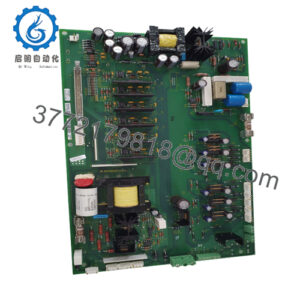
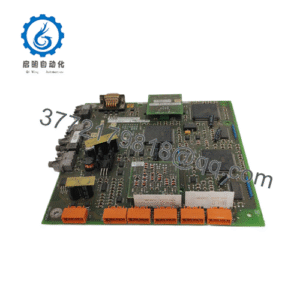
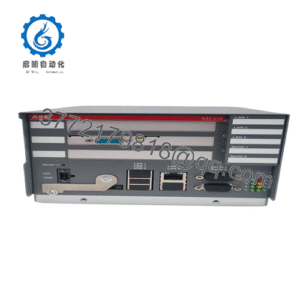
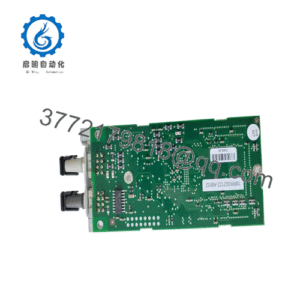
The Watlow Anafaze CLS208 multi-zone temperature controller manages up to eight distinct PID heating and cooling loops within a single compact industrial unit. It integrates high-resolution analog measurement, auto-tuning algorithms, and serial communications for applications like injection molding, heat treating, chemical processing, and environmental chambers.
Maintaining verified New Surplus units of the CLS208 is a critical supply chain safeguard for facilities running legacy Watlow architecture. Because the CLS200 series has been discontinued by the manufacturer, sourcing unused surplus stock avoids expensive cabinet retrofits and PLC re-programming costs during hardware failures. Carrying 1–2 replacement units on-site minimizes downtime risk and optimizes Total Cost of Ownership (TCO).
Installation & Configuration Guide
1.Stage 1: Pre-Installation (Prep & Safety):Prerequisites & LOTO.
Isolate main power to the control enclosure using lock-out/tag-out (LOTO) procedures. Wear an ESD wrist strap to protect internal circuitry. Document existing DIP switch configurations, node addresses, baud rates, and terminal wiring layouts before removing the failed controller.
2.Stage 2: Removal:Safe Extraction.
Disconnect the 50-pin SCSI/terminal block connections and serial communication cables. Carefully unbolt or release the mounting brackets securing the legacy CLS208 controller to the panel, ensuring no backplane pins or terminal wires are strained during extraction.
3.Stage 3: Installation (Clone & Seat):Mechanical Mounting.
Set the DIP switches and hardware jumpers on the replacement CLS208 to match the original unit’s node address and communication settings exactly. Secure the unit in the panel cutout, reconnect all sensor inputs (Thermocouple/RTD) to their designated channels, and attach the digital output and power harnesses.
4.Stage 4: Power-On & Testing:Loop Verification.
Apply control power and verify that all 8 channels perform self-diagnostics without triggering sensor break alarms. Confirm communication handshakes with your supervisory HMI/PLC system over RS-232/RS-485, verify ambient temperature readouts across all active channels, and execute an autotune cycle if process dynamics have changed.
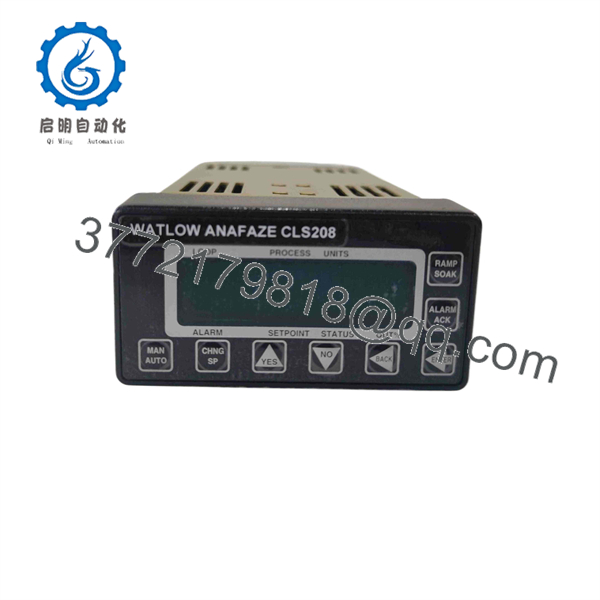
CLS208
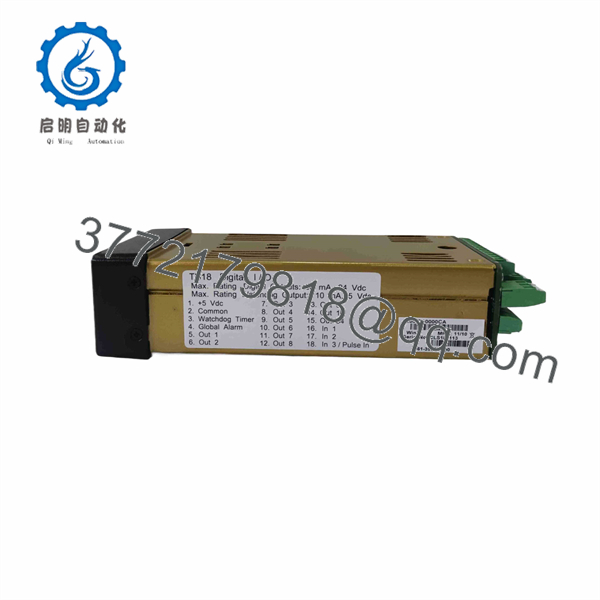
CLS208
Firmware/Software Versions & Upgrade Notes
- Firmware Dependencies: Ensure the firmware revision loaded on the replacement CLS208 matches your host supervisory system configuration. Firmware mismatches between major generation releases can alter register mapping for serial communications.
- Compatibility Notes: The utilizes 50-pin SCSI-style interface options or pluggable terminal blocks depending on part suffix configuration. Verify that the output module configuration (SSR drive vs. mechanical relay) matches your field actuator voltage specs.
- Upgrade Risks: Avoid performing unnecessary firmware flashing on legacy units during an active hardware swap. Upgrading firmware mid-replacement can cause register misalignments with older SCADA or PLC driver interfaces.
Frequently Asked Questions (FAQ)
Q: This product is a Brand New Surplus unit. Is it used, pulled, or refurbished?
A: This product is a Brand New Surplus unit. It is not used, not pulled from a decommissioned plant, and not refurbished. All modules undergo rigorous quality verification to ensure OEM-level reliability. The casing shows zero panel-wear scuffs, terminal pins are free of corrosion, and internal components maintain 100% factory integrity.
Q: Why buy New Surplus instead of taking a chance on a refurbished controller?
A: Refurbished process controllers often suffer from degraded internal power supply capacitors and heat-stressed multiplexer switches that fail under continuous thermal cycles. Paying a lower initial price for a refurbished unit risk incurring tens of thousands of dollars in emergency downtime. New Surplus guarantees 10–15 years of operational lifespan and eliminates early-life failure risks.
Q: Is the Watlow Anafaze still actively manufactured by the OEM?
A: No. The Anafaze CLS200 series (including the CLS204, , and CLS216) has reached End of Life (EOL) status. Sourcing New Surplus from verified global inventory is the fastest way to drop in an exact mechanical and electrical replacement without redesigning your control architecture.
Q: Can I mix different sensor types (e.g., Thermocouples and 4–20 mA inputs) on the same unit?
A: Yes. The supports mixed universal inputs across its 8 channels. Thermocouples, RTDs, linear DC voltages, and 4–20 mA process currents can be configured per channel via parameter software or display setup.
Q: Does the unit retain its PID setpoints and job parameters when power is lost?
A: Yes. The stores parameter settings, tuning values, setpoints, and job profiles in non-volatile memory. Configuration data remains preserved without requiring battery backup during extended plant shutdowns.
Q: What warranty and quality verification backs this New Surplus unit?
A: Every unit undergoes full functional testing, including channel-by-channel sensor simulation, power-on self-diagnostics, communication port handshakes, and burn-in testing. We back each unit with a 1-year replacement warranty and complete QC sign-off documentation.