WhatsApp: +86 16626708626
 Email:
  Phone: +86 16626708626
Description
Key Technical Specifications
| Parameter | A740512E Specification |
|---|---|
| Manufacturer | Waukesha |
| Brand Family | Waukesha / INNIO |
| Part Number | A740512E |
| Product Description | Filter, DSM |
| Product Type | Engine-system filter |
| Associated System | Detonation Sensing Module (DSM) |
| Application | Waukesha gas engine |
| Part Family | A740512-series DSM filters |
| Electrical Function | None identified |
| Mechanical Function | Filtration within the DSM-related system |
| Installation | Engine/DSM filtration circuit |
| Exact filter media | Not verified from available public documentation |
| Filter rating | Not verified from available public documentation |
| Flow capacity | Not verified from available public documentation |
| Dimensions | Not verified from available public documentation |
| OEM status | Exact current lifecycle status should be confirmed before procurement |
Part-specific records consistently identify A740512E as “FILTER, DSM.” Waukesha parts inventories list A740512A, A740512B, A740512C, A740512E, A740512J, and A740512K under the same DSM filter description.
Historical trade records also identify A740512E as a Waukesha gas-engine spare described as a DSM filter, confirming that this is a physical engine-system spare rather than a PLC or electronic control module.
Important identification note: public records do not provide sufficient primary-source information to establish the filter element’s exact media, micron rating, pressure drop, dimensions, or service interval. Those values should not be inferred from another A740512-series variant.
Product Introduction
The Waukesha A740512E is a DSM filter used in Waukesha gas-engine systems. Available parts documentation places it within the engine’s detonation-sensing architecture and distinguishes it from the DSM electronics themselves. Waukesha-related parts listings also show dedicated DSM-to-filter harnesses and DSM/filter connection components, supporting its role as a physical filtration component in this subsystem.
For maintenance teams, the key issue is correct part identification. Several A740512 variants carry the same basic “FILTER, DSM” description, so replacing an solely because another variant looks similar is not recommended. The exact suffix should be checked against the engine configuration, parts documentation, and installed component before ordering.
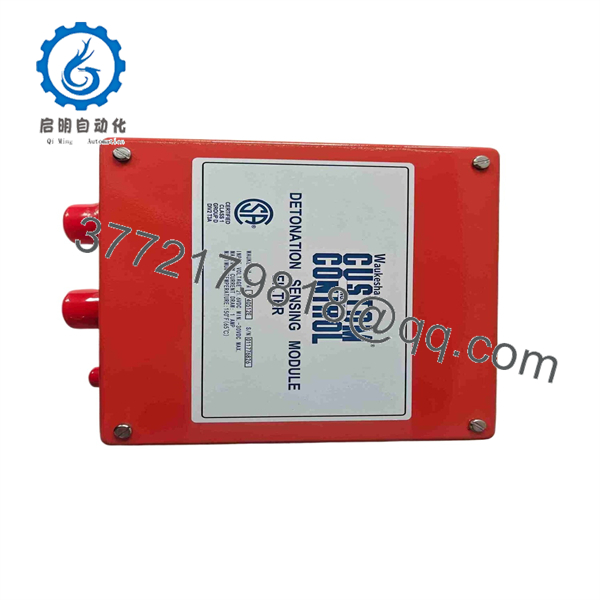
A740512E
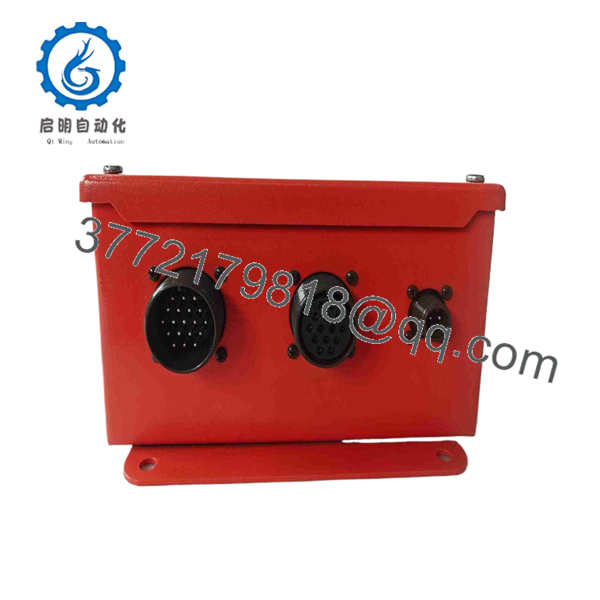
A740512E
Installation & Configuration Guide
Stage 1 — Pre-Installation Preparation
Before replacing :
- Identify the Waukesha engine model and serial number.
- Confirm the installed component is marked .
- Review the applicable engine maintenance procedure.
- Shut down the engine and apply the site’s LOTO procedure.
- Allow the relevant engine systems to reach a safe maintenance condition.
- Isolate any associated pneumatic, fuel, electrical, or process energy as required by the maintenance procedure.
- Photograph the existing filter installation.
- Record hose, fitting, connector, and mounting orientation.
- Obtain the correct replacement seals, fittings, or associated service hardware if required.
Do not assume that the is interchangeable with A740512A, B, C, J, or K simply because the catalog description is similar. The suffix is part of the identification.
Stage 2 — Removing the Existing Filter
- Confirm the engine is secured against unintended startup.
- Isolate the relevant DSM/filter circuit according to the Waukesha service procedure.
- Inspect the area around the filter for contamination or leakage.
- Disconnect the associated lines or fittings carefully.
- Prevent dirt from entering the open circuit.
- Remove the existing filter.
- Inspect the removed component for:
- Excessive contamination
- Oil or fuel contamination, where applicable
- Physical damage
- Cracks or deformation
- Blockage
- Damaged sealing surfaces
- Inspect adjacent tubing, fittings, and harness routing before installing the replacement.
The condition of the removed filter can provide useful maintenance information. An unusually contaminated element may indicate an upstream contamination problem rather than simply normal filter loading.
Stage 3 — Installing
- Verify the replacement marking: .
- Compare the replacement against the removed component.
- Verify the connection arrangement and physical orientation.
- Inspect all sealing surfaces.
- Install new seals or associated service hardware where required by the engine maintenance procedure.
- Install the filter without forcing the fittings.
- Tighten connections according to the applicable Waukesha service specification.
- Route connected lines so they are protected from vibration, heat, and mechanical interference.
- Confirm that the filter is securely supported.
- Do not modify the filter housing or substitute filter media without an approved engineering basis.
No PLC programming or software configuration is associated with the filter itself. The relevant configuration is mechanical and system-specific.
Stage 4 — Startup & Verification
After installation:
- Inspect all connections before startup.
- Verify that the filter is installed in the correct flow path.
- Confirm that no line is kinked or obstructed.
- Start the engine under the approved commissioning procedure.
- Check the DSM-related system for abnormal indications.
- Inspect the replacement filter and connections for leakage or abnormal vibration.
- Verify that the detonation-monitoring system operates normally.
- Record the replacement date, engine hours, part number, and supplier traceability.
If a DSM-related fault remains after filter replacement, do not assume the filter is the root cause. The investigation may need to include the DSM, associated sensors, wiring/harnesses, connectors, and engine operating conditions.
Frequently Asked Questions (FAQ)
1. What is Waukesha ?
is identified in Waukesha parts documentation as “FILTER, DSM.” It is associated with the detonation-sensing system used on Waukesha gas engines.
2. Is an electronic DSM module?
No. Available records identify it as a filter, not the electronic Detonation Sensing Module itself. Trade records that describe it as a “module engine filter detonation sensing DSM” should therefore not be interpreted as saying is the DSM electronics.
3. Are A740512A, A740512B, A740512C, A740512J, and A740512K interchangeable with ?
Not automatically. All are listed as DSM filters, but the available public documentation does not establish that their dimensions, filtration characteristics, connections, or application ranges are identical. The exact engine configuration should be checked before substitution.
4. What are the filter micron rating and pressure-drop specifications?
I could not verify reliable public OEM specifications for the filtration rating, media, pressure drop, or flow capacity of . These values should be obtained from the applicable Waukesha parts or service documentation rather than inferred from a generic filter.
5. Is used on Waukesha gas engines?
Yes. Historical spare-parts records explicitly list as a Waukesha gas-engine spare, described as “FILTER, DSM.”
6. What should be checked when purchasing ?
At minimum, verify:
- Exact part number:
- Waukesha engine model and serial number
- Installed filter configuration
- Connection/interface arrangement
- Filter condition if purchasing used stock
- Original packaging or traceability where available
- Supplier inspection records
- Applicable seals or associated service hardware
- Storage condition
- Warranty or return terms
7. Can a generic filter be substituted?
Do not substitute solely based on physical appearance. The filter’s filtration characteristics, flow restriction, mechanical interfaces, sealing arrangement, and compatibility with the DSM system must be equivalent and approved for the specific Waukesha engine configuration. For a critical gas-engine protection or monitoring system, an unverified filter substitution creates an avoidable maintenance risk.