WhatsApp: +86 16626708626
 Email:
  Phone: +86 16626708626
Description
Key Technical Specifications
- Product Type: Digital Speed Sensor Module — reads MPU and proximity probe inputs directly, no potentiometer calibration required
- System Compatibility: MicroNet control platform
- Channels: 4, each usable with a passive magnetic pickup unit or a proximity probe
- Input Frequency Range: 0.5 to 25,000 Hz
- Input Amplitude: 3.5 to 32 Vdc
- Input Impedance: 2,000 Ω
- Resolution: 16 bits (one distributor lists “12 bits minimum” — confirm the figure against your specific hardware revision)
- Accuracy: Reported between ±0.03% and ±0.1% of full scale depending on the source — verify against the OEM datasheet before specifying for a tight-tolerance application
- Repeatability: ±0.02% of full scale
- Available Power: 12 Vdc or 24 Vdc
- Output: 0 to 10 Vdc
- Filter Time Constant: Selectable at 8 ms or 16 ms via application software
- Channel Protection: 100 mA fuse per channel on 24 Vdc; short-circuit protected on 12 Vdc
Product Introduction
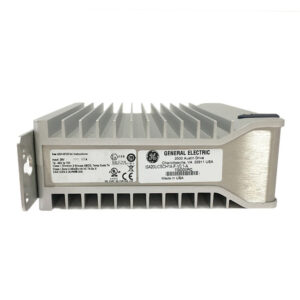
The Woodward 5464-658 is a Digital Speed Sensor Module built for the MicroNet control platform. It reads speed signals directly from MPU or proximity probe inputs across four channels and hands digitized speed data to the application program — no potentiometer tuning, no periodic calibration adjustment.
Because it eliminates the analog signal conditioning older speed-sensing setups relied on, plants keep this module in service on running MicroNet turbine and engine control systems rather than reworking the speed-sensing loop around different hardware. With Woodward having discontinued the part, sourcing a tested spare ahead of a failure is worth doing now rather than after a unit trips out.
Troubleshooting Quick Reference
| Symptom | Possible Cause | Relevance to this Part | Quick Check Method | Recommendation |
|---|---|---|---|---|
| One speed channel reads zero or erratic | Failed MPU/proximity probe, or broken field wiring to that channel | ✅ High | Measure the raw pickup signal directly at the probe with a scope or multimeter | Verify the probe and wiring before condemning the module |
| Speed reading drifts or is noisy at low speed | Filter time constant set too short for the application, or a marginal probe gap | ⚠️ Medium | Check the configured filter setting (8 ms vs 16 ms) in the application software | Try the longer filter setting before assuming a module fault |
| All channels show no output | Loss of 12 Vdc/24 Vdc module power, or a blown per-channel fuse | ✅ High | Measure the module’s power input terminals with a multimeter | Confirm supply voltage and check channel fuses before replacing the module |
| Speed reading pegs at a fixed maximum value | Signal amplitude out of the 3.5–32 Vdc input range, causing clipping | ✅ High | Measure actual pickup output amplitude at the probe under running conditions | Correct probe gap or signal conditioning upstream rather than swapping the module |
| Intermittent speed dropouts under vibration | Loose connector at the module or probe cable termination | ⚠️ Medium | Inspect and reseat all connector pins at the module and probe cable ends | Fix the connection before assuming an internal module fault |
If these checks don’t isolate the problem, contact technical support with the affected channel number and, if available, a logged trace of the erratic speed reading.
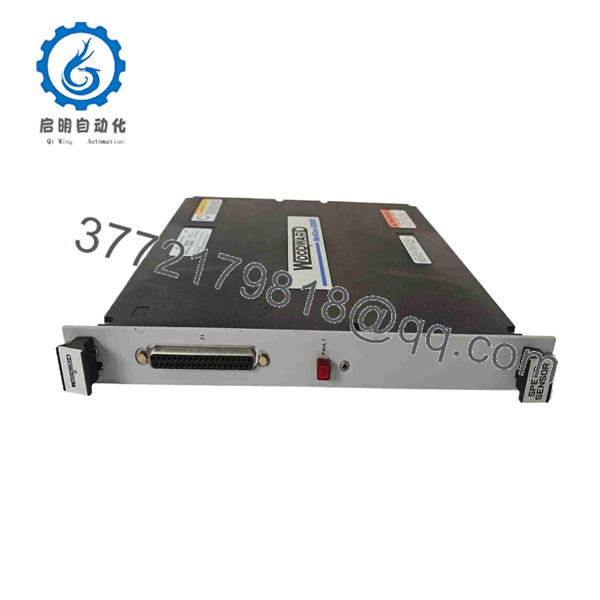
5464-658
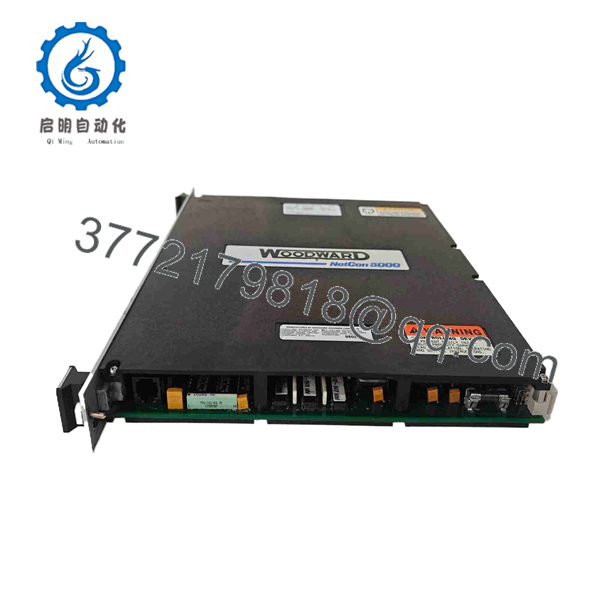
5464-658
Frequently Asked Questions (FAQ)
Is the 5464-658 still available new from Woodward?
No — it’s discontinued by the manufacturer. What’s on the market now comes from new surplus stock, remanufactured exchange units, or repaired cores rather than a current factory run.
Can I use this with either MPU or proximity probe inputs on the same channel?
Yes, each of the four channels is designed to accept either signal type, but confirm your application software is configured to match whichever sensor type is actually wired to that channel — a mismatch here reads as a bad signal even when the wiring and probe are fine.
Will swapping this module require reconfiguring my speed control settings?
The filter time constant (8 ms or 16 ms) is set in the application software, not on the module itself, so that setting carries over automatically. Just confirm the replacement module’s firmware revision matches what your system expects.
Can I hot-swap this while the turbine or engine is running?
No. Speed sensor modules feed a running control loop directly — pulling one live risks a false overspeed or underspeed trip. De-energize the loop or follow your system’s documented bumpless-transfer procedure first.
Why do accuracy specs vary between listings I’ve seen?
Distributor pages for this part don’t fully agree — some list ±0.1% of full scale, others ±0.03%. If your application has a tight speed-accuracy requirement, don’t rely on a reseller’s number; pull the OEM Woodward datasheet for the exact figure.
What’s the difference between “new surplus” and “remanufactured” for this part?
New surplus generally means unused stock pulled from decommissioned equipment, with no guarantee it was bench-tested. Remanufactured should mean the module was tested, and any worn components replaced, before resale. Ask the seller directly which applies, since that affects how much confidence you can put in it going straight into a running system.
What warranty should I expect on a discontinued part like this?
Terms vary — some sellers offer 12 months. Get the specific coverage in writing, and factor in that lead time on a second replacement could be longer than usual given the part’s discontinued status.