 WhatsApp: +86 16626708626
 Email:
  Phone: +86 16626708626
Description
Key Technical Specifications
| Parameter | Value |
| Manufacturer | Woodward |
| Part Number | 5466-253 |
| Processor Architecture | Motorola ColdFire (High-Performance Freescale) |
| System Compatibility | MicroNet TMR and MicroNet Plus Control Systems |
| Ethernet Interfaces | 2 RJ45 Ports (10/100 Base-TX) |
| CAN Bus Interfaces | 2 Galvanically Isolated Ports |
| Serial Communications | 1 RS-232 Port / 1 RS-422/485 Port |
| Redundancy Support | Hardware-implemented 2-out-of-3 (2oo3) voting logic |
| Configuration Interface | AppManager utility software |
| Operating Temperature | 0 to +60°C |
| Cooling Requirement | Forced air via chassis fan tray |
Product Introduction & Supply Chain Strategy
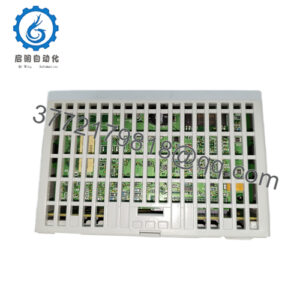
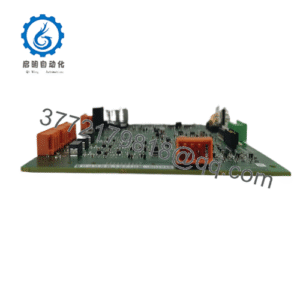
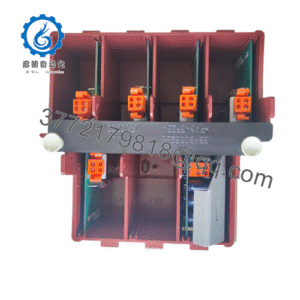
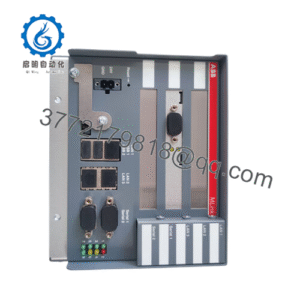
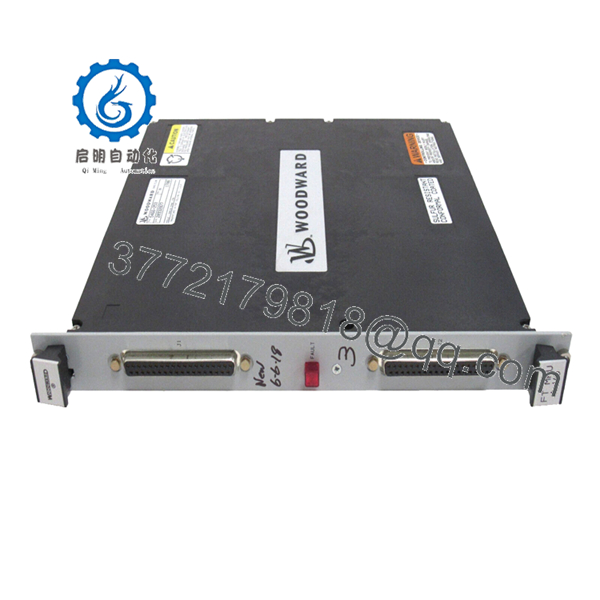
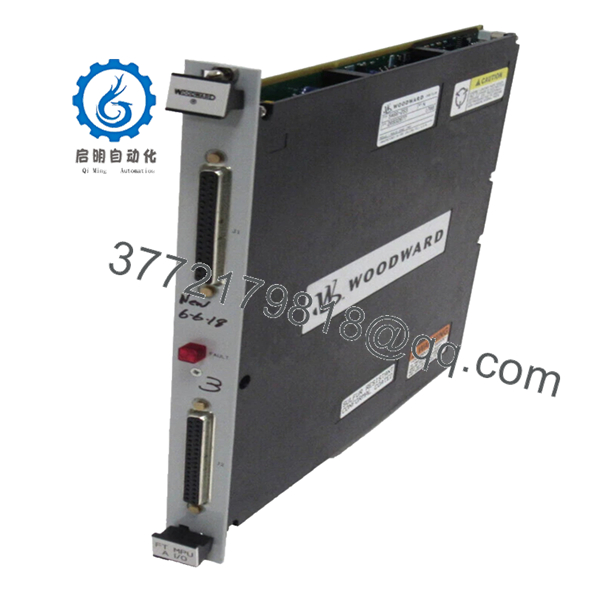
The Woodward 5466-253 serves as the high-compute processing engine for critical MicroNet Triple Modular Redundant (TMR) systems, managing complex governor, fuel control, and sequencing algorithms for large-scale industrial steam and gas turbines. Utilizing a robust hardware-voted platform, this CPU coordinates synchronous data pathways across redundant paths to execute code within strict deterministic windows. Its communication backplane integrates high-speed Ethernet and isolated CAN interfaces directly, removing processing bottlenecks and ensuring immediate loop response to transient field conditions.
From a procurement perspective, this CPU represents a high-risk failure point if left unmanaged in a warehouse strategy. Because it serves as the central brain of the entire control system, an unexpected CPU failure on an un-buffered asset results in immediate, catastrophic plant downtime. Sourcing this legacy component as a verified New Surplus unit avoids the long lead times associated with factory repair pathways and completely removes the operational vulnerabilities of unverified second-hand hardware. Maintaining at least one factory-sealed unit on-site acts as a high-value insurance policy, ensuring complete plant reliability and dropping your recovery window from days to minutes.

- 5466-253
- 5466-253
Installation & Configuration Guide
Stage 1: Pre-Installation (Prep & Safety)
Isolate the turbine or prime mover system and ensure the asset is in a safe, offline condition. Put on a grounded anti-static wrist strap and connect it directly to the bare metal of the MicroNet chassis frame. Use the Woodward AppManager software utility to upload and save a complete, verified backup of the current running application configuration code, tuning parameters, and network IP maps from the active CPU.
Stage 2: Removal
Loosen the upper and lower captive thumbscrews on the faceplate of the 5466-253 module. If the CPU is currently active within a running TMR cluster, verify that the remaining redundant processors are safely holding the control loop before proceeding. Firmly pull the top and bottom injector/ejector handles outward to detach the multi-pin high-density rear connectors from the backplane, then slide the card smoothly out of the chassis guides.
Stage 3: Installation (Clone & Seat)
Inspect the rear backplane pins of the new surplus 5466-253 module for any physical defects or debris. Align the board with the specific CPU slot guides inside the MicroNet rack and slide it inward until you feel structural resistance. Simultaneously push both faceplate handles inward until they snap flush against the module face, forcing the card completely into the socket, and then tighten the retaining screws.
Stage 4: Power-On & Testing
Connect the network communication cables to the designated RJ45 and CAN ports on the front plate. Energize the chassis power loop and watch the diagnostic LEDs closely during boot initialization. The green RUN LED must turn on solid, and the network activity indicators must flash actively, confirming a successful hardware handshake. Use AppManager to deploy the saved software application structure and check that the module successfully synchronizes with parallel CPU nodes.
Firmware/Software Versions & Upgrade Notes
The 5466-253 CPU operates under precise application runtime operating systems compiled via Woodward GAP (Graphical Application Program) architecture. During hardware replacement, matching the exact firmware version of the existing processor is critical to prevent total system initialization failures. A discrepancy between the operating software version on the CPU card and the legacy driver files loaded into your control loops can trigger immediate configuration mismatches and prevent the module from completing its diagnostic self-test.
Critical Safety Note: Never flash firmware updates down to an active CPU card while it is mounted inside a running or armed control rack. Firmware mismatches will wipe the flash memory initialization block, forcing the module into an unbootable state that requires specialized service bench recovery.
Frequently Asked Questions (FAQ)
What makes this New Surplus CPU safer than a lower-cost refurbished module?
Refurbished processor cards often suffer from invisible thermal stress, micro-fractures in the PCB layers, and degraded surface-mount capacitors that simple bench testing cannot identify. Because the CPU governs the entire safety and control envelope of your turbine asset, a refurbished failure can trigger catastrophic plant trips. Our New Surplus units provide original OEM integrity with zero operational run hours, ensuring maximum MTBF (Mean Time Between Failures).
Can the 5466-253 module be hot-swapped while the turbine is running?
Yes, but only if it is installed within a properly configured, fully operational MicroNet TMR redundant system where the remaining online processors are successfully holding the load. If you are operating in a single-processor (non-redundant) chassis configuration, pulling the CPU module will instantly drop the control loops and cause an immediate emergency turbine shutdown.
Do I need to program the network settings manually before inserting the new card?
The card ships with factory-default configuration matrices. Network identification addresses, serial parameters, and operational logic must be transferred to the new module flash memory via the Woodward AppManager tool over a direct Ethernet or serial link once the card is physically seated and powered on.
What is the exact function of the CAN ports on the front faceplate?
The two isolated CAN interfaces are dedicated to high-speed communication loops with peripheral expansion blocks, actuator drivers, and distributed I/O manifolds. They allow the CPU to transmit deterministic control commands and read diagnostic data back from external field devices at microsecond intervals.
How do I verify if this CPU is running in redundant mode?
The faceplate LED status array provides instant visual verification. When paired in a working TMR cluster, specific indicators will signal whether the card is acting as the primary system master, an active tracking partner, or if it has failed to synchronize with the voting network.
What standard warranty applies to this New Surplus hardware?
Every single New Surplus Woodward 5466-253 processor module we supply is protected by a solid, comprehensive 1-year operational warranty, providing your plant engineering team with complete coverage against component defects or functional performance issues.