 WhatsApp: +86 16626708626
 Email:
  Phone: +86 16626708626
Description
Key Technical Specifications
| Parameter | Value |
| Manufacturer | Woodward |
| Part Number | 5466-353 |
| Revision Level | Revision A (REV A) |
| Product Framework | Netcon Main Chassis Controller Framework |
| Communication Ports | 2-Port Transceiver Interface |
| Input Logic Voltage | 24 VDC Nominal |
| Signal Input Impedance | 33K Ohms |
| Power Supply Isolation | Built-in 900 VDC Transient Protection |
| Mounting Architecture | Chassis Slot Mountable |
| Operating Temperature | −40 to +85°C |
| Physical Dimensions | 19.1 cm × 2.5 cm × 23.5 cm |
| Net Weight | 1.76 lbs (approx. 0.8 kg) |
Product Introduction & Supply Chain Strategy
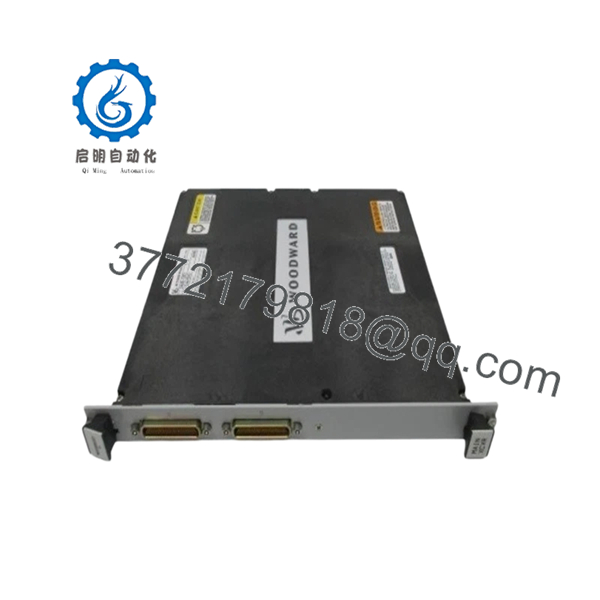
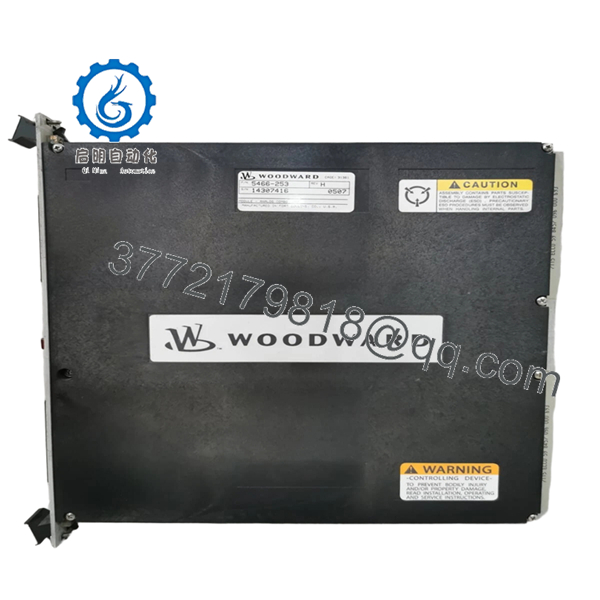
The Woodward 5466-353 REV A functions as the primary backbone coordinator for legacy Netcon 5400 and early-generation MicroNet turbine control topologies. Operating as a Main Chassis Transceiver Interface, this specific module handles high-speed, deterministic data synchronization between the main control rack and remote expansion chassis. By matching signal impedance across a 33K Ohm threshold and isolating communication lines with 900 VDC of transient protection, the module keeps baseline CPU data paths completely immune to localized electrical noise, grounding shifts, and severe ambient interference typical in large-scale power generation or marine steam/gas propulsion plants.
Because the Netcon series has long passed its official manufacturer obsolescence window, the 5466-353 REV A represents a massive vulnerability within your asset lifecycle management strategy. A failure on a main transceiver completely isolates down-loop I/O racks, resulting in an unrecoverable system failure. Procurement of this board as a verified New Surplus unit bypasses unpredictable factory repair timelines and removes the high failure risks common with unverified second-hand modules. Maintaining this specific hardware revision on-site as an insurance policy drops your facility’s operational risk exposure, ensuring predictable Total Cost of Ownership (TCO) and turning weeks of potential lead time variability into immediate hardware remediation.

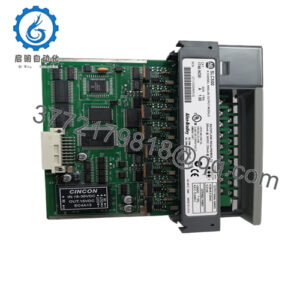
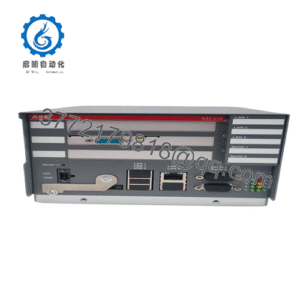
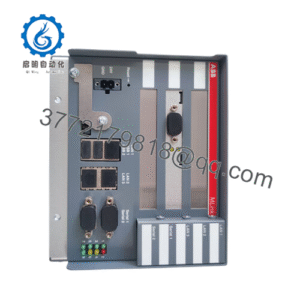
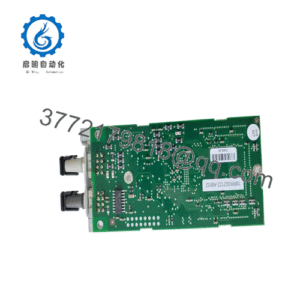
- 5466-353 REV A
- 5466-353 REV A
Installation & Configuration Guide
Stage 1: Pre-Installation (Prep & Safety)
Enforce standard lock-out/tag-out (LOTO) procedures across the entire control panel, cutting all master 24 VDC power lines routed to the Netcon chassis rack. Wear an ESD-safe wrist strap clamped directly to a bare metal chassis ground points to protect the board’s transceiver arrays. Before extracting the failed unit, document any physical cable layouts and inspect adjacent module status indications.
Stage 2: Removal
Loosen the upper and lower captive panel-mount screws holding the module front plate to the chassis rack. Firmly squeeze the top and bottom extraction tabs outward to unseat the card from the active backplane bus. Carefully slide the module out of its slot guides, keeping the component perfectly horizontal to protect surface-mount components from catching on adjacent card tracks.
Stage 3: Installation (Clone & Seat)
Verify that the replacement card matches the 5466-353 part number and the specific REV A hardware profile. Gently guide the New Surplus card into the empty slot tracks. Slide the module completely forward until the backplane connector meets the rack receiver interface, then lock the board into place by snapping the faceplate levers inward until flush. Secure the upper and lower faceplate retention screws.
Stage 4: Power-On & Testing
Securely reconnect the 2-port communication transceiver cables back to their designated remote chassis links. Re-energize the Netcon system power supply and check the main rack status loop. The system CPU must establish an immediate network handshake through the transceiver without generating protocol errors or synchronization timeouts. Run automated line diagnostic sweeps to confirm data continuity across the 33K Ohm signal framework.
Firmware/Software Versions & Upgrade Notes
The 5466-353 REV A is a hardware-level transceiver designed to translate and propagate data protocols across a physical rack backplane layer. Because it is a Revision A component, it uses hardcoded component parameters tailored for legacy system timings. When dropping this card into an older Netcon array, it must match the hardware revision profile expected by the runtime application compiled via legacy Woodward tools.
Critical Safety Note: Replacing a legacy transceiver module with a later revision block (such as REV C or newer) without auditing your system’s master hardware mapping profiles can result in backplane protocol failures or data packet dropouts. Never execute firmware upgrades or software recompilations on an operational turbine rack while physically swapping a critical network transceiver board.
Frequently Asked Questions (FAQ)
Why is the REV A designation so critical for this specific module?
Industrial turbine controls rely on deterministic timing profiles. Woodward components undergo subtle component updates across revision levels. Sourcing the exact 5466-353 REV A ensures your legacy backplane maintains identical physical circuit values, preventing communication timeouts or parameter mismatch trips that later revisions might cause in an older rack setup.
How does a New Surplus transceiver compare to a cheaper used unit?
A transceiver card is constantly exposed to high-frequency signals and thermal cycling. Used units often carry micro-fractures in copper traces or breakdown in their 900 VDC transient protection circuits from past field overvoltages. Our New Surplus cards give you 100% factory-level component life, full structural reliability, and long-term MTBF that used parts cannot offer.
Does the 5466-353 REV A require software programming before it can run?
No, this card acts strictly as a hardware interface layer. It does not contain an independent user-programmable control application block. Once seated into the correct chassis slot and connected to its remote lines, it automatically handles signal routing driven by the master system CPU.
What causes a transceiver module to fail under normal operating conditions?
The most frequent failure vectors are localized voltage surges traveling along long remote communication cables, grounding loop differentials between separate chassis locations, and simple component fatigue from long-term exposure to high ambient temperatures near turbine enclosures.
Can this transceiver module be hot-swapped while the turbine loop is active?
Pulling the main chassis transceiver module will immediately cut the data connection to all remote chassis expansion blocks. If your system depends on real-time data loops passing through this card to monitor fuel controls or emergency trips, a hot-swap will cause an immediate plant shutdown.
What specific warranty covers this legacy Woodward card?
We back this genuine New Surplus Woodward 5466-353 REV A module with an ironclad, 1-year operational warranty, ensuring full component protection and zero financial risk for your maintenance budget.