WhatsApp: +86 16626708626
 Email:
  Phone: +86 16626708626
Description
Key Technical Specifications
| Parameter | Value |
|---|---|
| Manufacturer | Woodward |
| Model | 8237-2597 |
| Product Family | ProTech-GII |
| Product Type | Overspeed Protection Device |
| Mounting | Panel Mount |
| Voltage Configuration | HV/LV |
| Relay Configuration | Independent Relays |
| Safety Architecture | Triple Modular Redundancy (TMR) |
| Speed Input | Active or passive speed probe |
| Passive MPU Frequency | 100 Hz to 32 kHz |
| Passive MPU Input | 1 Vrms to 35 Vrms |
| Passive MPU Impedance | 1.5 kΩ |
| Active Probe Frequency | 0.5 Hz to 25 kHz |
| Active Probe Supply | 24 V ±10% |
| Speed Accuracy | ±0.04% of current speed, depending on specified operating conditions |
| Acceleration Detection | 0–25,000 RPM/s |
| Maximum Speed Signal Cable | 1,500 ft / 457 m |
| Communications | Modbus |
| Analog Speed Output | 4–20 mA |
| Power Input | 90–264 VAC / 47–63 Hz or 100–150 VDC, configuration dependent |
| Power Consumption | Approximately 30 W per module |
| Isolation | 500 VAC, input-to-chassis and input-to-other circuits |
Woodward’s industrial turbine catalog identifies 8237-2597 specifically as ProTech-GII, Panel Mount, HV/LV, Independent Relays. This distinction matters: the neighboring 8237-2598, -2599, and -2600 part numbers use different voltage and relay configurations.
Woodward documentation also provides the speed-input characteristics for the ProTech-GII family. Passive MPU inputs cover 100 Hz to 32 kHz, while active-probe inputs cover 0.5 Hz to 25 kHz. The documented passive-input amplitude range is 1 Vrms to 35 Vrms, with 500 VAC isolation from the input to chassis and other circuits.
Product Introduction
The Woodward 8237-2597 ProTech-GII is a panel-mounted turbine overspeed protection system configured for HV/LV power and independent trip relays. It monitors turbine speed and acceleration and provides an independent shutdown function when configured protection thresholds are exceeded. The system is designed for critical rotating equipment such as steam, gas, and hydro turbines.
The TMR architecture allows the protection system to make a trip decision using redundant measurement and voting logic. The 8237-2597 also provides speed-related analog and Modbus information for integration with plant monitoring systems. For a replacement, match the complete Woodward part number rather than selecting another ProTech-GII variant by appearance alone.
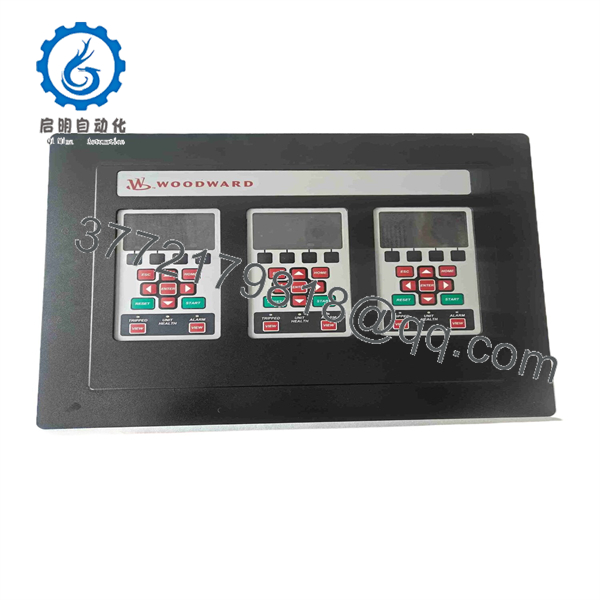
8237-2597
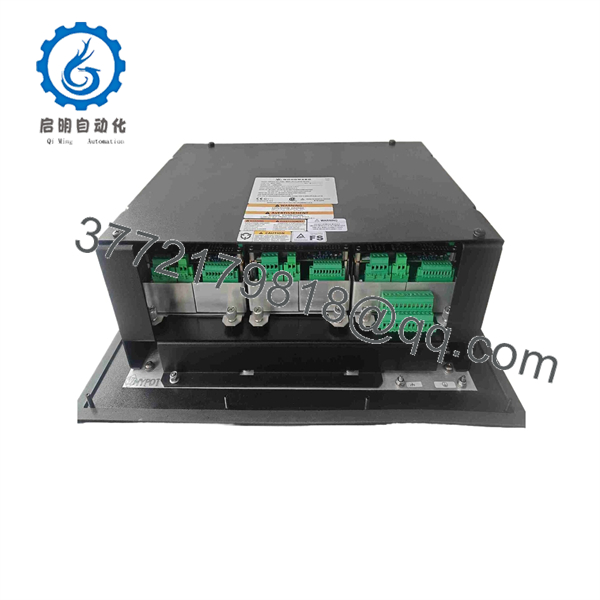
8237-2597
Installation & Configuration Guide
Stage 1: Pre-Installation Preparation
Estimated time: 30–60 minutes
- Notify operations and the turbine protection owner before maintenance.
- Place the turbine in the plant-approved maintenance condition.
- Apply the required LOTO procedure.
- Verify that alternative overspeed protection or approved maintenance coverage is active before taking the protection system out of service.
- Isolate the applicable AC/DC power sources.
- Wait at least 5 minutes for stored energy to discharge.
- Wear an ESD wrist strap when handling electronic modules.
- Prepare:
- Digital multimeter
- PH1 screwdriver
- Wire labels
- Camera/phone
- Approved ProTech-GII documentation
- Existing configuration records
- Turbine trip-system drawings
- Photograph the complete existing installation.
- Record the complete 8237-2597 nameplate, revision, serial number, and configuration information.
- Document speed-probe type, wiring, relay wiring, power inputs, analog output, and communications.
⚠️ This is turbine overspeed protection equipment. Do not treat the replacement as a routine PLC card swap. The turbine must retain an approved protective layer while the ProTech-GII is under maintenance.
Stage 2: Removing the Old Module
Estimated time: 30–45 minutes
- Confirm the turbine is in the approved maintenance state.
- Verify all applicable power sources are isolated.
- Label every external connection.
- Photograph relay terminals and speed-input wiring before removal.
- Record whether the speed probe is active or passive.
- Disconnect power connections.
- Disconnect speed-probe wiring.
- Disconnect relay outputs, analog output, and communications wiring as applicable.
- Release the panel mounting hardware.
- Remove the ProTech unit carefully.
- Inspect wiring terminals for loose conductors, corrosion, overheating, or damaged insulation.
- Keep the old unit available until the replacement has completed commissioning.
⚠️ Do not change the speed-probe wiring while replacing the protection device unless the approved engineering procedure requires it. Probe type and signal level directly affect speed detection.
Stage 3: Installing the New Module
Estimated time: 30–60 minutes
- Verify the replacement nameplate reads Woodward 8237-2597.
- Confirm the panel-mount / HV-LV / independent-relay configuration.
- Compare the mounting dimensions and terminal arrangement with the existing unit.
- Secure the unit in the panel.
- Connect the approved power inputs.
- Reconnect the speed probe using the original documented polarity and wiring.
- Reconnect independent trip-relay circuits.
- Reconnect the 4–20 mA speed output if used.
- Reconnect Modbus communication if used.
- Verify shield and grounding arrangements.
- Perform continuity checks before energizing.
- Confirm that no trip output is unintentionally energized during maintenance.
⚠️ Do not substitute an 8237-2598, 8237-2599, or 8237-2600 solely because the enclosure appears similar. Woodward assigns different voltage and relay configurations to these part numbers.
Stage 4: Power-On & Testing
Estimated time: 60–120 minutes
- Confirm all trip-system wiring against the approved drawing.
- Verify the supply voltage before applying power.
- Energize the ProTech-GII under controlled maintenance conditions.
- Check module status and diagnostic indications.
- Verify that all redundant protection channels initialize correctly.
- Confirm the speed input detects the installed probe correctly.
- Compare displayed speed with an independent calibrated reference.
- Verify the configured overspeed and over-acceleration thresholds.
- Test the configured trip logic using the approved maintenance/test procedure.
- Verify each independent relay output.
- Verify the 4–20 mA speed signal if connected.
- Verify Modbus communication if used.
- Check alarm and fault indications.
- Record test results and configuration data.
- Return the protection system to service only after the plant’s approved functional validation is complete.
⚠️ Do not test an overspeed trip by simply forcing the turbine toward an unsafe speed. Use the manufacturer’s approved test facilities, internal test functions, or an engineered simulation procedure.
Woodward service documentation identifies 8237-2597 among ProTech-GII units potentially affected by specific service bulletins. Therefore, check the unit’s revision, configuration, and applicable Woodward service notices before commissioning a replacement.
Frequently Asked Questions (FAQ)
1. What is the Woodward 8237-2597?
The 8237-2597 is a Woodward ProTech-GII panel-mount overspeed protection system configured for HV/LV power and independent relay outputs. It is used to protect turbines and other critical rotating equipment against overspeed and related conditions.
2. Is the 8237-2597 a TMR system?
Yes. ProTech-GII uses a Triple Modular Redundant (TMR) architecture. The exact voting behavior depends on the installed configuration and relay arrangement. The 8237-2597 specifically uses independent relays, rather than the voted-relay configuration assigned to other ProTech-GII part numbers.
3. What is the difference between 8237-2597 and 8237-2599?
Both are ProTech-GII panel-mount variants, but their configurations differ. The 8237-2597 is specified as HV/LV with independent relays, while 8237-2599 is specified as HV/LV with voted relays. They should not be treated as interchangeable without an engineering review.
4. What type of speed probe can the 8237-2597 use?
The ProTech-GII supports both passive magnetic pickup (MPU) and active proximity/eddy-current probes, subject to configuration. The documented passive-input frequency range is 100 Hz to 32 kHz, while active-probe input is specified from 0.5 Hz to 25 kHz.
5. Does the 8237-2597 provide Modbus communication?
Yes. ProTech-GII systems provide Modbus communication for integration with plant monitoring or control systems. Do not use Modbus as the sole basis for the turbine’s independent overspeed protection function; the protection system’s dedicated trip architecture is the critical safety path.
6. Can I directly replace an older ProTech-GII part with 8237-2597?
It depends on the original part number and revision. Woodward’s own conversion documentation shows specific earlier ProTech-GII part numbers converting to 8237-2597, including 8237-1247 Rev D or newer and 8237-1597. The same document emphasizes matching identification/serial information during certain module replacements.
7. What should I verify before purchasing a used or surplus 8237-2597?
Request photographs of the actual nameplate, revision, serial number, front panel, terminals, and internal/module condition. Confirm that it is genuinely 8237-2597, because the neighboring ProTech-GII variants have different power and relay configurations. For turbine protection equipment, also request evidence of functional testing and configuration status rather than relying only on a supplier’s statement that the unit is “tested.”