WhatsApp: +86 16626708626
 Email:
  Phone: +86 16626708626
Description
3. Key Technical Specifications
| Parameter | Specification Value |
| Manufacturer | Woodward |
| Part Number | 9905-971 |
| Control Series | 2301A Load Sharing & Speed Control |
| Power Supply Input | High-Voltage: 85–132 VAC (45–440 Hz) or 90–150 VDC |
| Power Consumption | 15 W maximum |
| Speed Sensor Input | Magnetic Pickup Unit (MPU) signal (1.0 to 30 VRMS) |
| Control Modes | Isochronous or Droop speed control |
| Actuator Output Signal | 0–200 mA output for hydraulic/electric actuators |
| Operating Temperature | −40°C to +85°C (−40°F to +185°F) |
| Signal Inputs | Speed trim, SPM synchronizer, forward/reverse acting inputs |
| Mounting Architecture | Sheet-metal chassis, base mount with terminal screw blocks |
4. Product Introduction & Supply Chain Strategy
The Woodward 9905-971 is a high-voltage 2301A speed control module engineered to manage speed regulation and load sharing for steam turbines, gas turbines, and industrial diesel or gas engines. Operating on an 85–132 VAC or 90–150 VDC power input, it processes signals from a magnetic pickup unit (MPU) to drive a 0–200 mA actuator output, providing tight speed control during transient load shifts.
This product is a Brand New Surplus unit. It is not used, not pulled from a decommissioned plant, and not refurbished. All modules undergo rigorous quality verification to ensure OEM-level reliability. Holding a factory-fresh 9905-971 in reserve eliminates extended lead times for legacy high-voltage speed controls and safeguards operations against unprogrammed shutdowns. Refurbished speed controllers often suffer from internal component aging, thermal stress on the high-voltage power stage, and degraded potentiometer tracks that lead to speed hunting or engine runaway risks. Securing genuine New Surplus hardware guarantees original circuit tolerances, zero pin wear, and total process peace of mind.
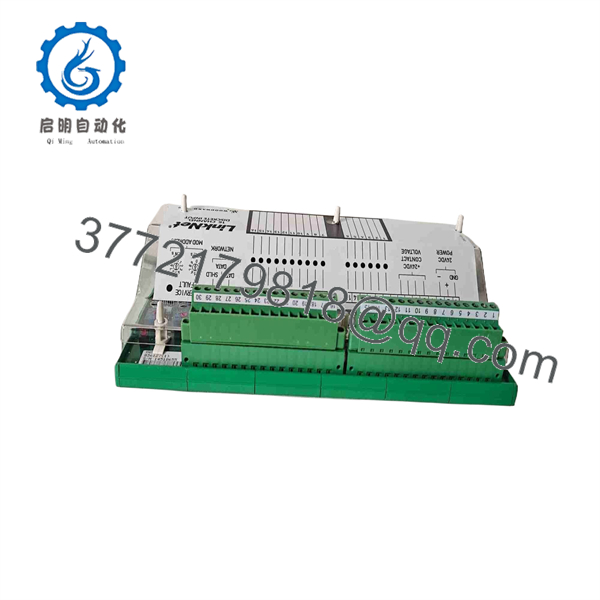
9905-971
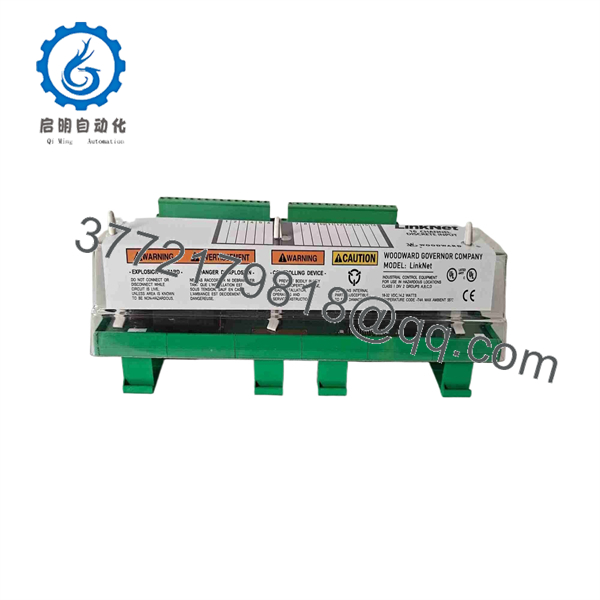
9905-971
5. Installation & Configuration Guide
1.Pre-Installation Preparation & Safety:Enforce LOTO on high-voltage lines and prime mover starter.
Verify that all Lockout/Tagout (LOTO) procedures are strictly applied to the AC/DC power supply feeds and engine starter circuits. The 9905-971 operates on high voltage (up to 132 VAC / 150 VDC); exercise extreme caution to prevent electrical shock. Wear a grounded ESD wrist strap before handling terminal connection covers.
2.Legacy Module Removal:Label wires and disconnect terminal blocks safely.
Document and photograph all field wiring terminations on the existing chassis. Carefully disconnect the high-voltage power wires, MPU sensor cables, load sensor leads, and actuator drive outputs from the screw terminal strip. Remove the chassis mounting hardware and extract the old unit.
3.Mechanical Mounting & Trim Calibration:Mount unit and match potentiometer baseline settings.
Secure the new 9905-971 module to the panel enclosure. Before applying power, measure the physical potentiometer settings (Rated Speed, Idle Speed, Gain, Stability, Actuator Compensation) on the original unit and mirror these positions on the new module as an initial calibration baseline. Terminate all wiring securely.
4.Power-On Commissioning & Signal Verification:Verify high-voltage AC/DC power and tune loop stability.
Energize the control power and verify that input voltage falls within 85–132 VAC or 90–150 VDC. Crank the prime mover and measure the MPU voltage (minimum 1.5 VRMS required). Once running at rated speed, adjust the Gain and Stability potentiometers to achieve a smooth, stable engine response to step-load changes without frequency oscillations.
6. Firmware/Software Versions & Upgrade Notes
- Hardware Architecture: The 9905-971 utilizes an analog circuit design with discrete components, requiring no firmware downloads, software configuration files, or digital programming tools.
- High-Voltage Caution: Note that the 9905-971 is a high-voltage input unit (85–132 VAC / 90–150 VDC). Do not confuse this with low-voltage 24 VDC models (such as the 9905-726); connecting 120 VAC to a 24 VDC model will cause catastrophic board damage.
- Actuator Drive Output: Verify jumper orientation on the terminal strip to ensure the actuator output range (0–200 mA) matches the current requirements of your hydraulic actuator coil.
7. Frequently Asked Questions (FAQ)
Q: Is this Woodward 9905-971 control unit a New Surplus component or a refurbished unit?
A: This unit is 100% Brand New Surplus stock. It has never seen field duty, has zero operating hours, and retains factory-original anti-static packaging and physical condition.
Q: Why should I buy New Surplus instead of a refurbished high-voltage governor control?
A: High-voltage governor controls contain power conditioning capacitors and power resistors that deteriorate significantly over time and thermal cycles. Refurbished boards may have clean exteriors, but internal component aging can cause frequency drift or power supply failure under full engine load. Buying New Surplus ensures full expected service life and eliminates catastrophic overspeed risks.
Q: What is the primary difference between the 9905-971 and low-voltage 2301A speed controls?
A: The main distinction is the operating supply voltage. The 9905-971 accepts high-voltage power inputs (85–132 VAC or 90–150 VDC), making it suitable for installations powered directly from station battery banks or control transformers without requiring a separate 24 VDC power supply.
Q: How do I resolve speed instability or engine hunting after installing this module?
A: Engine speed hunting is usually fixed by fine-tuning the Gain and Stability potentiometers. Turn the Gain slightly counter-clockwise to lower system sensitivity, then adjust the Stability potentiometer until the speed oscillations settle out cleanly across both no-load and full-load states.
Q: What warranty coverage is provided with this New Surplus Woodward module?
A: This Woodward 9905-971 speed control module includes a full 1-year replacement warranty covering operational performance and functional integrity.