WhatsApp: +86 16626708626
 Email:
  Phone: +86 16626708626
Description
Key Technical Specifications
- Function: Full-authority speed control and load sharing for prime movers
- Speed Setting Input: 4-20 mA or 1-5 VDC
- Control Mode: Isochronous or droop speed control, selectable
- Voltage Class: Low-voltage model, control power 10 to 40 VDC (high-voltage variants of the 2301A series accept 88-132 VAC or 90-150 VDC — confirm which your specific unit is)
- Actuator Current: 0-200 mA
- Frequency Range: 2k-6k Hz (per nameplate on this specific unit)
- Actuator Configuration: Individual actuator system, reverse-acting
- Deceleration Ramp: Not equipped on this configuration
- Compatibility: Works with Woodward SPM-A synchronizers and load sensors via auxiliary/SPM inputs
- Certification: CE approved
- Manufacturing Location: Fort Collins, CO, USA (Cage Code 31361)
- ⚠️ Exact Enclosure Dimensions, Weight, Terminal Torque Spec: Not confirmed from an OEM datasheet in this pass — verify against the 9905/9907 Series Installation and Operation Manual before wiring.
Product Introduction
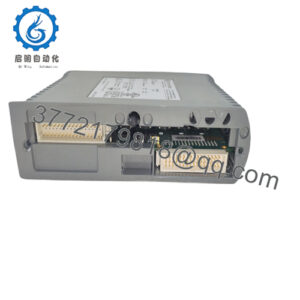
The Woodward 9907-019 is a low-voltage 2301A Load Sharing and Speed Control built for full-authority speed setting on diesel engines, gas turbines, and generators. It accepts a 4-20 mA or 1-5 VDC speed reference and runs either isochronous or droop control depending on how the plant’s paralleling scheme is set up.
This particular configuration is an individual actuator, reverse-acting unit without a deceleration ramp, running on 10-40 VDC control power with a 0-200 mA actuator output. It’s designed to work alongside Woodward SPM-A synchronizers through its auxiliary and SPM inputs, which matters if you’re replacing one unit in a system that already has synchronizers wired in.
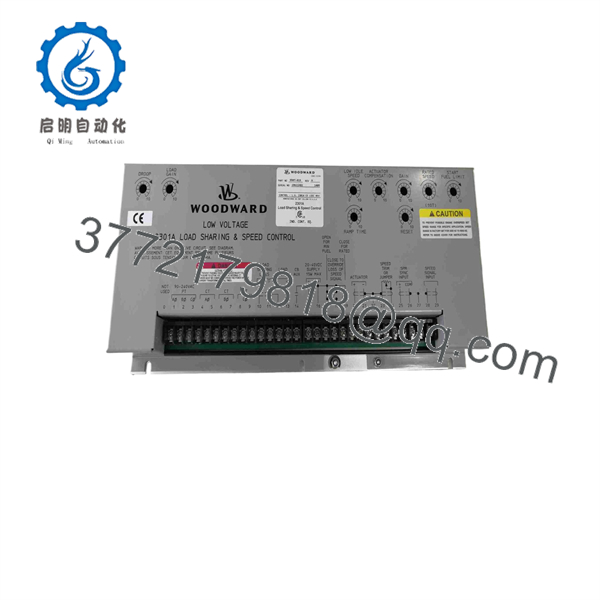
9907-019
Troubleshooting Quick Reference
| Symptom | Possible Cause | Relevance to this Part | Quick Check Method | Recommendation |
|---|---|---|---|---|
| Engine takes longer than normal to start | Control not positioning actuator correctly at start fuel level | ✅ High | Time the start sequence and compare to baseline | Check start fuel potentiometer setting before replacing the control |
| Speed hunts or oscillates after reaching setpoint | Dynamics/gain settings mismatched to the prime mover | ❌ Low | Review dynamics adjustments against the engine/turbine combination | Retune before assuming module failure |
| No actuator response at all | Control power fault or actuator wiring issue | ✅ High | Measure control power at input terminals (10-40 VDC) | Confirm power before condemning the control unit |
| Loss of speed signal doesn’t trigger start fuel position | Reverse-acting logic fault or wiring issue | ✅ High | Verify wiring matches reverse-acting configuration per manual | Confirm wiring before replacing; this is a common install error |
| Load sharing not working with paired units | SPM-A synchronizer communication or auxiliary input fault | ⚠️ Medium | Check auxiliary/SPM input wiring between units | Verify synchronizer compatibility and wiring before replacing |
Send your specific wiring diagram and start-sequence timing to technical support if a swap doesn’t resolve the issue — reverse-acting units get miswired more often than people expect.
Frequently Asked Questions (FAQ)
Is this the low-voltage or high-voltage version, and does it matter?
This is the low-voltage model, running on 10-40 VDC control power. The 2301A series also comes in a high-voltage variant (88-132 VAC or 90-150 VDC). These aren’t interchangeable — confirm your existing system’s voltage class before ordering.
What does “reverse-acting” mean here, and why does it matter?
On loss of speed signal, this control positions the actuator to the start fuel level rather than shutting fuel off — that’s by design, to let a backup governor take over. If you’re replacing a forward-acting unit with this reverse-acting one, your fuel-loss behavior changes. Check your system design before swapping.
Can I add a synchronizer to this control later, or does it need to be there from the start?
You can add Woodward SPM-A synchronizers or load sensors at any time using the auxiliary or SPM inputs — it’s not something that has to be configured at initial installation.
Why is this priced below a factory-new quote?
This unit dates to a 1997-era production revision and isn’t in current manufacture. What’s available now is surplus or reconditioned stock. Ask your supplier for the specific revision and test documentation.
Does this unit include a deceleration ramp feature?
Not on this configuration — confirm whether your application needs one, since not all 2301A order codes include it. If your process requires controlled deceleration, verify before ordering this exact part number.
Is programming or configuration required after installation?
Yes — expect to set high/low speed adjustments, dynamics, and start fuel limits to match your specific engine or turbine. This isn’t a plug-and-play swap; treat it as a commissioning task with the manual in hand.