WhatsApp: +86 16626708626
 Email:
  Phone: +86 16626708626
Description
Key Technical Specifications
| Parameter | Value |
|---|---|
| Manufacturer | Yaskawa |
| Model Number | SGMAS-06ACA |
| Product Family | Sigma-III |
| Motor Family | SGMAS |
| Product Type | AC rotary servo motor |
| Rated Output | 600 W |
| Intended Function | High-response rotary positioning and speed control |
| Required Companion Equipment | Compatible Yaskawa Sigma-III SERVOPACK, motor power cable, encoder/feedback cable, and appropriate machine controller |
| Feedback System | Integrated encoder system; confirm exact encoder and connector configuration from the motor nameplate before replacement |
| Brake Configuration | Confirm from the complete suffix and nameplate; do not assume a holding brake is installed |
| Mechanical Interface | Verify shaft diameter, keyway or shaft-end style, flange dimensions, mounting-hole pattern, and cable-exit orientation before release |
| Lifecycle Status | Discontinued / legacy |
| Stocking Recommendation | Min: 1 verified on-site motor per critical installed configuration; Max: 2 for high-utilization equipment, long lead times, or a multi-machine common motor population |
| Procurement Control | Match the full Yaskawa model string, including every suffix, before purchase; SGMAS-06ACA alone may not capture shaft, brake, encoder, or connector variation |
The available market data identifies the SGMAS-06ACA as a 600 W Sigma-III AC servo motor. Yaskawa’s discontinuation notice lists the SGMAS family among Sigma-III motors that entered legacy status in 2012 and were discontinued in 2014.
Product Introduction & Supply Chain Strategy
The Yaskawa SGMAS-06ACA is a 600 W Sigma-III AC rotary servo motor for controlled speed, position, and motion-axis applications. It operates with a matched Yaskawa SERVOPACK and machine controller in equipment such as packaging machines, material-handling systems, machine tools, semiconductor equipment, and automated assembly stations.
This product is a Brand New Surplus unit. It is not used, not pulled from a decommissioned plant, and not refurbished. All modules undergo rigorous quality verification to ensure OEM-level reliability. Since Yaskawa discontinued the Sigma-III SGMAS family, a verified on-site spare protects against EOL stock-outs and lead time variability. The right strategy is a controlled last-time-buy based on installed population, failure exposure, and Total Cost of Ownership (TCO), not unrestricted inventory accumulation.
Installation & Configuration Guide
Stage 1: Pre-Installation
- Stop the machine through its approved shutdown procedure and capture active servo alarms, axis faults, and controller diagnostics.
- Apply lock-out/tag-out to all machine power sources, including main AC supply, servo power, 24 V control supply, stored-energy circuits, pneumatic systems, gravity-loaded axes, and external motion sources.
- Verify zero energy using approved test equipment. Servo systems can retain hazardous DC bus voltage after power removal.
- Wear a grounded ESD wrist strap when handling feedback connectors, encoder cables, control boards, or servo-drive interfaces.
- Photograph the existing motor nameplate, shaft end, flange, cable routing, connectors, grounding points, coupling, brake wiring, and any field-installed terminal labels.
- Record the complete motor part number and all suffixes. Confirm the replacement matches the rated output, mechanical mounting, shaft configuration, encoder type, brake option, connector arrangement, and environmental specification.
- Back up servo-drive parameters and controller motion data before disconnecting the original motor. Save electronic gear ratio, encoder configuration, motor selection, position limits, speed limits, torque limits, tuning values, brake timing, and homing parameters.
- Inspect the driven mechanism for binding, damaged couplings, worn bearings, excessive load, contamination, or alignment problems. Correct the mechanical cause before installing the replacement motor.
Stage 2: Removal
- Confirm the servo drive’s DC bus has discharged according to the applicable Yaskawa and machine documentation.
- Mark the motor-to-load relationship before removing the coupling, belt, pulley, gearbox adapter, or timing component. Preserve any timing marks required for the machine’s home reference.
- Secure vertical or gravity-loaded axes with a mechanical support. Do not rely on a servo holding brake to support an axis during maintenance.
- Disconnect feedback, motor power, ground, and brake wiring by connector housing or terminal hardware. Do not pull on cable conductors.
- Protect the encoder connector from impact, moisture, oil, or static discharge. Encoder damage can create intermittent position loss that appears only after production resumes.
- Support the motor’s weight before removing mounting bolts. Avoid side loading the shaft or striking the encoder end.
- Inspect the coupling, key, shaft, mounting face, cable, and connector contacts. Replace damaged components before fitting the New Surplus motor.
Stage 3: Installation
- Compare the replacement nameplate to the recorded motor data one final time. Stop the installation if any suffix, connector, brake, shaft, or flange feature differs from the removed unit.
- Mount the motor squarely to the machine interface. Tighten mounting bolts to the machine manufacturer’s specified torque.
- Align the coupling or drive element carefully. Misalignment increases bearing load, generates vibration, and can cause position errors or premature servo faults.
- Ensure the shaft key, coupling clamp, pulley, or gear interface is fully secured according to the machine specification.
- Reconnect protective earth first, then motor power, encoder feedback, brake wiring, and any thermal or auxiliary connections.
- Route feedback wiring away from motor power conductors and high-noise circuits. Restore original shielding and grounding practices exactly.
- Verify that all connectors are fully latched and that cable strain relief prevents movement at the motor connector.
- Restore the matched motor parameters in the SERVOPACK only after verifying that the parameter backup belongs to this exact motor configuration.
Stage 4: Power-On & Testing
- Before energizing the servo system, test the 24 V control rail and confirm no control-to-ground or power-to-ground short exists.
- Apply control power first, where the machine sequence permits. Check the servo drive for encoder, motor, overcurrent, and communication alarms before applying servo power.
- Verify that the axis holds safe status and that the emergency-stop chain, overtravel limits, interlocks, and brake-release logic operate correctly.
- Enable the axis at low speed with the process area clear. Confirm motor direction, encoder feedback, actual position, command position, following error, current draw, and brake response.
- Perform a low-speed jog and then a controlled homing cycle. Do not run automatic production motion until homing and position feedback are verified.
- Run the axis through low-load, medium-load, and normal operating tests. Monitor servo alarms, vibration, heat, noise, following error, and motor current.
- Restore production logic only after the axis passes the documented acceptance test. Record the installed motor serial number, parameter revision, test results, and buffer-stock balance.
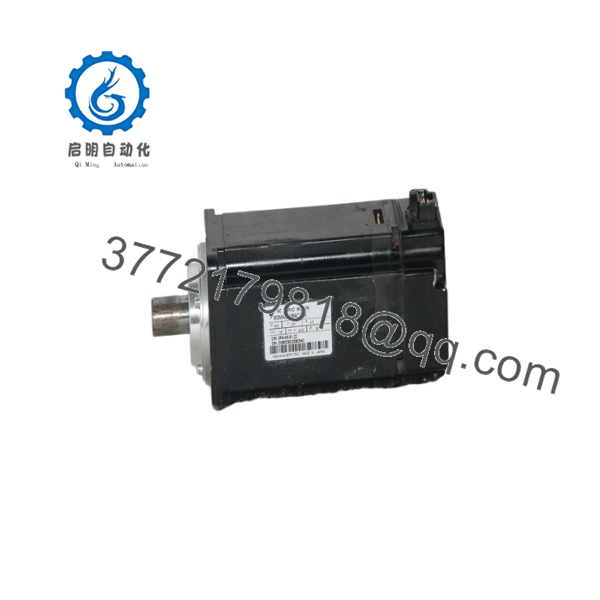
SGMAS-06ACA
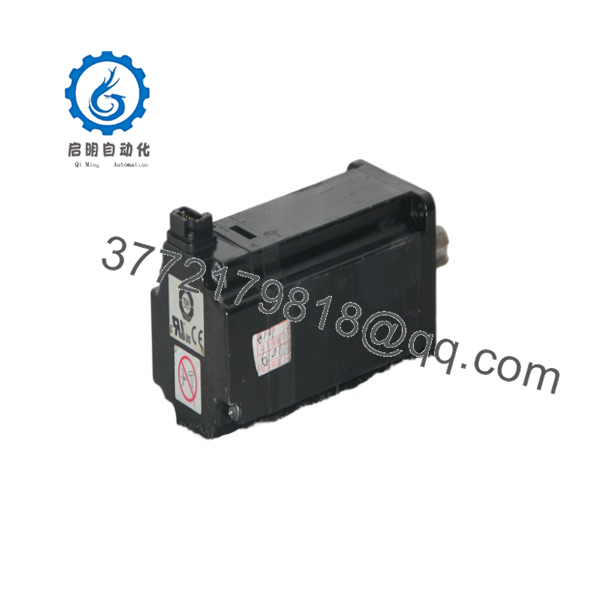
SGMAS-06ACA
Firmware/Software Versions & Upgrade Notes
- Recommended firmware version: Use the installed Sigma-III SERVOPACK firmware and motor parameter set already validated by the machine builder. The motor itself is not normally field-upgraded in the same manner as a servo amplifier; integration risk sits primarily in the matched SERVOPACK firmware, encoder compatibility, and configured motor data.
- Motor selection rule: Configure the SERVOPACK for the exact full SGMAS-06ACA motor code shown on the nameplate. Do not select a similar 600 W motor family simply because its power rating matches.
- Compatibility requirement: The SGMAS family belongs to the Yaskawa Sigma-III platform. Yaskawa’s product notice lists Sigma-III SGMAS motors and Sigma-III SGDS/SGDK amplifiers as discontinued products. Confirm any proposed amplifier conversion against the machine controller, feedback interface, cables, tuning requirements, and safety circuit before purchase.
- Backward compatibility: A later Yaskawa servo platform may not directly accept Sigma-III encoder feedback, motor cables, parameter files, or control interfaces. A newer drive can require replacement cables, controller changes, parameter conversion, and axis retuning.
- Forward compatibility: Do not install a newer motor or amplifier as an emergency substitution without a documented engineering review. A mechanical fit does not verify feedback, torque, acceleration, brake, tuning, or machine-safety compatibility.
- Upgrade warning: Do not upgrade the SERVOPACK firmware during an urgent motor replacement unless the original version is unavailable and the upgrade path has been tested. Firmware changes can alter communications, alarm behavior, parameter interpretation, or tuning results.
- Downgrade warning: Do not downgrade a replacement drive without a verified firmware image, a recovery procedure, and compatibility confirmation. An unsuccessful downgrade can remove the only available motion axis from service.
- Spare-control recommendation: Store the spare motor with a full nameplate photograph, confirmed cable part numbers, a controller/drive parameter backup, axis tuning records, and an approved commissioning checklist.
Frequently Asked Questions (FAQ)
Are these really new units?
Yes. This inventory requirement is for New Original / New Surplus stock only. A New Surplus motor is original OEM-manufactured inventory that has not operated in production equipment. Incoming inspection should confirm original labeling, serial-number traceability, connector condition, shaft condition, mounting-face condition, packaging integrity, and zero evidence of installation wear.
Why is New Surplus pricing lower than OEM new but higher than low-cost alternatives?
OEM new pricing reflects current manufacturer sales channels and support structures. New Surplus pricing reflects the cost of locating, validating, preserving, and warranting genuine legacy inventory after normal supply has ended. Low-cost alternatives can carry undocumented operating hours, degraded bearings, worn encoder components, moisture exposure, altered feedback hardware, or unknown service history. On a critical motion axis, avoiding one extended outage generally outweighs the apparent purchase-price savings.
Is the Yaskawa SGMAS-06ACA obsolete or EOL?
Yes. Yaskawa’s May 2014 product announcement states that Sigma-III SGMAS motors entered legacy status in March 2012 and were discontinued in 2014. After remaining inventory was depleted, support was limited to service or migration paths, subject to component availability.
For a critical active machine, maintain one verified on-site buffer stock motor. Consider a second unit only if multiple machines use the exact same full motor code, replacement lead time is uncertain, or the financial impact of an axis failure exceeds the carrying cost.
Can I hot-swap the ?
No. Do not connect or disconnect a servo motor while the servo system is energized. The motor interfaces with high-energy power circuits, encoder feedback, brake circuits, and machine motion. Isolate power, verify DC bus discharge, secure the axis mechanically, and follow the machine manufacturer’s approved replacement procedure.
Will replacing the motor erase the machine program?
The PLC, CNC, or motion controller normally retains its machine logic. However, the servo drive can hold critical motor-selection, feedback, tuning, homing, speed-limit, torque-limit, and brake-timing parameters. Back up the SERVOPACK and controller before removal, then verify all motion settings before placing the axis back into automatic operation.
Can I substitute another 600 W Yaskawa motor?
Not without an engineering-approved cross-reference. Matching 600 W output alone is insufficient. You must verify the exact full motor code, rated speed, torque curve, encoder system, feedback connector, brake configuration, shaft dimensions, flange pattern, cable compatibility, load inertia, controller interface, and SERVOPACK motor selection. Treat any substitution as an axis retrofit, not a standard spare replacement.
What warranty and QC records should accompany this spare?
Specify a written 12- to 24-month warranty, subject to approved storage and installation conditions. Request serial-number photographs, original-package verification, shaft and connector inspection records, insulation and ground-continuity checks where appropriate, encoder-feedback verification, and final QC sign-off. Retain these records in the asset file so maintenance can deploy the motor quickly during a stock-out event.