WhatsApp: +86 16626708626
 Email:
  Phone: +86 16626708626
Description
Key Technical Specifications
| Parameter | Specification |
|---|---|
| Model | AFV30D-S41252 |
| Manufacturer | Yokogawa Electric Corporation |
| Product Type | Duplexed Field Control Unit |
| System | CENTUM VP |
| FCU Model | AFV30D |
| Controller | CP461 |
| Network | Dual-redundant Vnet/IP |
| I/O Network | FIO |
| Power Input | 220–240 V AC |
| Frequency | 50/60 Hz |
| Power Consumption | Approximately 230 VA |
| Power Architecture | Dual-redundant power supply |
| Mounting | 19-inch rack |
| Mounting Hardware | M5 × 8 screws |
| READY Contact | 2 terminals, NC/C |
| Weight | Approximately 8.0 kg |
| Explosion Protection | Basic type, no explosion protection |
| Version | R6.01 or later |
| Country of Manufacture | Singapore is shown on the Yokogawa nameplate documentation |
Yokogawa’s documentation gives 220–240 V AC, 50/60 Hz and 230 VA for the AFV30D-S41252 power configuration. It also specifies 19-inch rack mounting and approximately 8.0 kg for the AFV30D.
A field-control-unit configuration with dual-redundant Vnet/IP and power is explicitly associated with the 4 suffix. The standard -S configuration is for CP461, while the final 2 corresponds to R6.01 or later.
Product Introduction
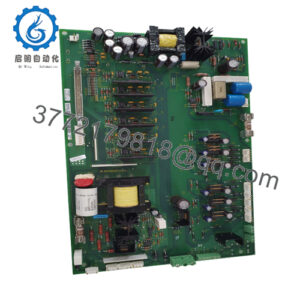
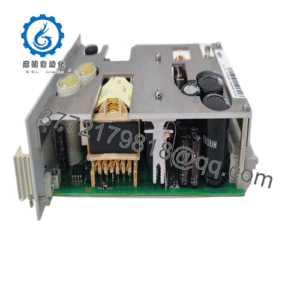
The Yokogawa AFV30D-S41252 is a duplexed Field Control Unit used in Yokogawa CENTUM VP systems for Vnet/IP and FIO applications. It is designed for 19-inch rack installation and uses CP461-compatible architecture. The specified configuration provides dual-redundant Vnet/IP and dual-redundant power, with a 220–240 V AC supply.
This model should be treated as a system-level FCU rather than a conventional plug-in I/O module. Replacement requires attention to the CP461 configuration, Vnet/IP redundancy, FIO architecture, power arrangement, and CENTUM VP revision. The exact suffix should be matched rather than substituting another AFV30D variant based only on the base model number.
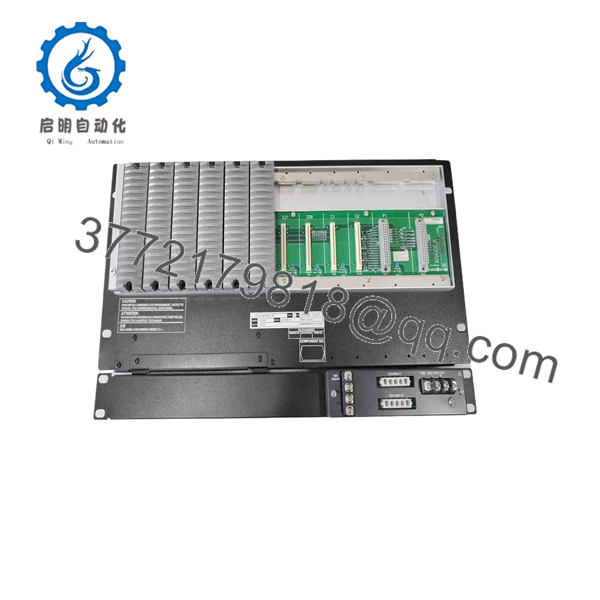
AFV30D-S41252
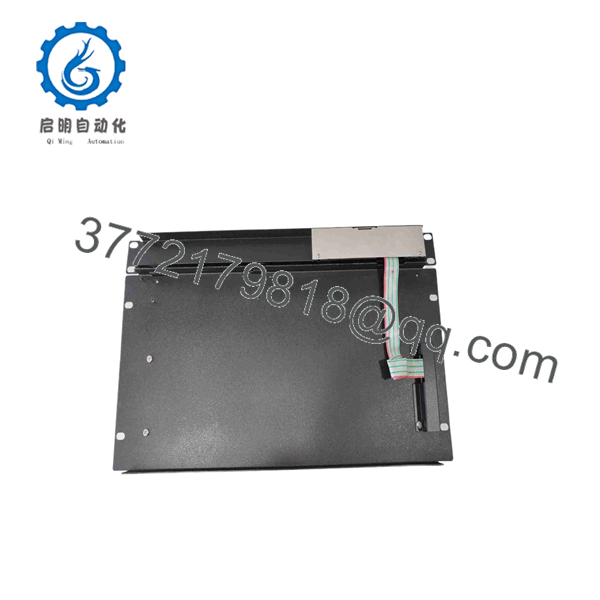
AFV30D-S41252
Installation & Configuration Guide
Stage 1 — Pre-Installation Preparation (~10 min)
- Confirm the complete nameplate: AFV30D-S41252.
- Verify that the existing FCU uses CP461 and the expected CENTUM VP configuration.
- Confirm the plant uses the dual-redundant Vnet/IP configuration.
- Record the two network connections and their physical assignments.
- Document the FIO/ESB-related connections associated with the FCU.
- Verify that the cabinet supply is 220–240 V AC, 50/60 Hz.
- Back up the applicable CENTUM VP configuration and engineering data.
- ⚠️ Follow the site’s shutdown and lockout/tagout procedure before disconnecting the FCU.
Stage 2 — Removing the Old Module (~5 min)
- Place the affected control domain in its approved maintenance state.
- Confirm that the redundant control architecture has been placed in the appropriate maintenance condition.
- Isolate the AC power according to the Yokogawa installation procedure and plant electrical rules.
- Verify absence of hazardous voltage before opening the power connections.
- Label both Vnet/IP connections and all FCU-associated cables.
- Disconnect the power, grounding, network, and READY-contact wiring as applicable.
- Remove the M5 × 8 rack-mount hardware.
- Carefully withdraw the approximately 8 kg FCU from the 19-inch rack.
Stage 3 — Installing the New Module (~5 min)
- ⚠️ Use ESD precautions when handling the replacement FCU and internal control hardware.
- Confirm that the replacement is AFV30D-S41252, not AFV30D-S41251 or another suffix.
- Install the unit into the same 19-inch rack position.
- Secure the chassis using the specified rack hardware.
- Reconnect protective grounding.
- Reconnect the dual-redundant AC power connections.
- Reconnect both Vnet/IP network paths according to the original topology.
- Reconnect FIO/field-network connections.
- Confirm the READY contact wiring before commissioning.
Stage 4 — Power-On & Testing (~10–15 min)
- Restore power according to the approved CENTUM VP startup procedure.
- Confirm that both redundant power paths are healthy.
- Verify FCU initialization and processor status.
- Check both Vnet/IP paths and confirm expected redundancy status.
- Verify communication with the CP461 and associated FIO nodes.
- Check the READY/fault indication.
- Confirm that the CENTUM VP engineering and HIS/SCS environment reports the FCU normally.
- ⚠️ Do not return the control domain to automatic operation until redundant communication and FIO availability have both been verified.
FAQ
What is the Yokogawa -S41252?
It is a duplexed Field Control Unit (FCU) for Yokogawa CENTUM VP systems. The platform supports Vnet/IP and FIO and is designed for 19-inch rack installation.
What does the S41252 suffix mean?
The suffix identifies the specific hardware configuration. Available Yokogawa-related documentation identifies -S as the standard type, 4 as dual-redundant Vnet/IP and dual-redundant power, 2 as the 220–240 V AC supply configuration, 5 as the basic non-explosion-protected type, and the final 2 as the R6.01-or-later configuration.
What powery does require?
This specific configuration uses 220–240 V AC, 50/60 Hz, with approximately 230 VA power consumption. The family also has other supply configurations, so the complete suffix must be checked before replacement.
Is explosion protected?
No. The 5 in this configuration corresponds to the basic type with no explosion protection. Yokogawa’s installation documentation separately identifies an explosion-protected configuration with a different suffix.
What is the difference between5?
Both are associated with the , 220 V, basic configuration. The published ordering information distinguishes S41251 as the R5-or-earlier configuration and as the R6.01-or-later configuration. Therefore, the revision requirement should be checked before substitution.
Ce with another ?
Not automatically. units can differ in power configuration, redundancy, explosion protection, processor compatibility, and revision. Match the complete suffix code and the CENTUM VP system revision before installing a substitute.
What should I verify before purchasing this FCU?
Verify the complete designation, compatibility, dual-redundant Vnet/IP requirement, 220–240 V AC power configuration, R6.01-or-later requirement, and non-explosion-protected status. For a critical DCS replacement, a photograph of the existing nameplate and rack configuration is also useful for confirming the exact hardware variant.