WhatsApp: +86 16626708626
 Email:
  Phone: +86 16626708626
Description
Key Technical Specifications
| Parameter | AIP171 |
|---|---|
| Model | AIP171 |
| Manufacturer | Yokogawa |
| Product Type | Transceiver Control Unit |
| Primary Function | V Net transceiver / repeater control |
| System Family | Yokogawa CENTUM |
| Network | V Net |
| Application | V Net repeater and DCS communication infrastructure |
| Mounting / Form | PC board / control unit; exact mechanical arrangement depends on assembly |
| Weight | Approximately 0.2 kg reported by secondary supplier documentation |
| Dimensions | Approximately 32 × 120 × 130 mm reported by one supplier |
| Power Supply | Not sufficiently verified from Yokogawa primary documentation |
| Operating Temperature | Not sufficiently verified from Yokogawa primary documentation |
Multiple supplier sources identify AIP171 as a Transceiver Control Unit, specifically associated with a V Net repeater.
There is conflicting secondary-market information that describes AIP171 as a 16-channel analog input module. That identification conflicts with the more consistent “Transceiver Control Unit / V Net Repeater” references and should not be used for technical procurement without checking the module nameplate.
Product Introduction
The Yokogawa AIP171 is identified primarily as a Transceiver Control Unit for a V Net repeater, used within Yokogawa control-system communication infrastructure. It is associated with the CENTUM family and appears in Yokogawa spare-parts listings alongside V Net grounding, termination, coupler, and optical-transceiver components.
For replacement work, AIP171 should be treated as a communication/repeater component rather than a conventional analog I/O module. Because third-party listings contain contradictory specifications, the complete nameplate and installed assembly should be checked before selecting a replacement.
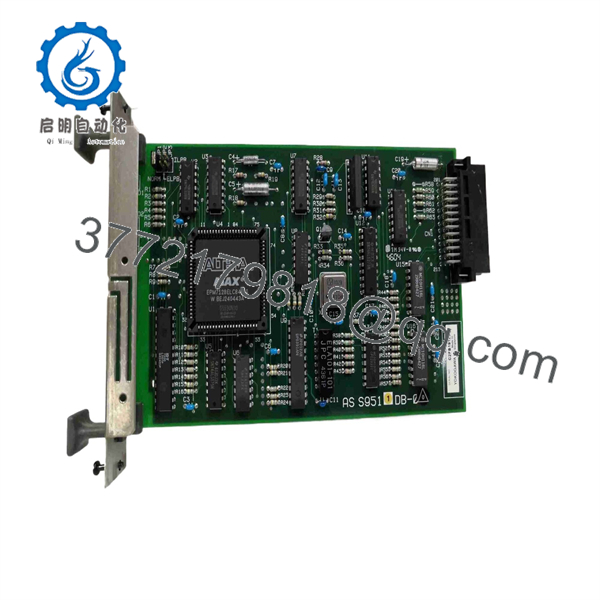
AIP171
Installation & Configuration Guide
Stage 1 — Pre-Installation Preparation (~10 min)
- Record the installed module’s complete part number, revision, and serial information.
- Confirm that the installed assembly is a Yokogawa V Net repeater/transceiver application.
- Back up relevant DCS configuration and communication parameters.
- Review the approved Yokogawa maintenance procedure for the specific CENTUM installation.
- Prepare ESD protection, labels, insulated tools, and the applicable wiring/communication drawings.
⚠️ Do not substitute an based solely on the model number. Verify the hardware revision and physical assembly.
Stage 2 — Removing the Existing Module (~5 min)
- Place the affected communication segment in the plant-approved maintenance state.
- Follow the site’s DCS shutdown and communication-isolation procedure.
- Identify and label all communication connections before removal.
- Disconnect the module using the approved connector procedure.
- Inspect connectors, board contacts, cables, and repeater hardware for contamination or mechanical damage.
Stage 3 — Installing the Replacement Module (~5 min)
- Compare the replacement with the removed unit, including board layout and connectors.
- ⚠️ Use ESD protection when handling the PCB.
- Install the module in its designated assembly or repeater position.
- Secure the board according to the applicable Yokogawa hardware procedure.
- Reconnect communication wiring exactly as documented.
- Check connector seating and cable routing before restoring power.
Stage 4 — Power-On & Testing (~10–15 min)
- Restore power according to the approved sequence.
- Check module and repeater status indications.
- Verify that the associated V Net communication segment initializes correctly.
- Check communication diagnostics from the applicable CENTUM engineering or maintenance station.
- Confirm communication with the connected control-system nodes.
- Monitor for network faults, repeater alarms, or intermittent communication.
- Return the segment to normal operation only after the approved communication test passes.
FAQ
Is Yokogawa an analog input module?
The stronger available evidence identifies as a Transceiver Control Unit for a V Net repeater, not a conventional analog input module. Some reseller pages incorrectly describe it as a 16-channel analog input card, so the nameplate and original system documentation should be used for final identification.
What does the do?
Its primary documented role is V Net transceiver/repeater control. It belongs to the communication infrastructure supporting Yokogawa control systems rather than serving as a standard process analog I/O module.
Which Yokogawa systems use ?
Supplier documentation associates the unit with Yokogawa CENTUM systems and V Net communication infrastructure. The exact supported system generation should be confirmed against the installed repeater assembly before replacement.
Can I replace directly with another ?
Potentially, but part-number and hardware-revision matching is essential. Check the board markings, connector configuration, repeater assembly, and system documentation before installation.
Does need configuration after replacement?
The module’s role is primarily hardware-level communication/repeater control, but the associated V Net segment should still be tested after replacement. Any system-level communication parameters should be verified against the existing configuration.
Is still manufactured?
The part appears predominantly in legacy Yokogawa spare-parts markets. I could not verify a current Yokogawa lifecycle statement from sufficiently authoritative public documentation, so procurement should be based on the exact revision and available condition.
What information should I provide when sourcing an ?
Provide a clear photograph of the nameplate/PCB markings, the complete part number or suffix, connector side, and the Yokogawa repeater or CENTUM equipment in which it is installed. This is particularly important because current reseller data contains conflicting descriptions of the model.