WhatsApp: +86 16626708626
 Email:
  Phone: +86 16626708626
Description
Key Technical Specifications
| Parameter | Value |
|---|---|
| Part Number | AIP512 (AIP512-S1, AIP512-S2) |
| Module Type | RIO Bus Coupler / ESB Bus Remote I/O Interface |
| Compatible Systems | Yokogawa CENTUM CS 3000, CENTUM VP Field Control System (FCS) |
| Bus Type | RIO Bus (Remote I/O Bus); ESB Bus (Ethernet-based Sub Bus) |
| Number of Channels | 1 RIO bus interface (supports up to 31 remote I/O devices per bus) |
| Transmission Rate | 1 Mbps (RIO bus) |
| Maximum Devices | 31 remote I/O nodes per RIO bus |
| Redundancy Support | Yes (duplex RIO bus configuration with two AIP512 modules) |
| Communication Protocol | Yokogawa proprietary RIO bus protocol; integrates with V-Net/V-Net/IP |
| Isolation | Signal isolation between RIO bus and FCS backplane |
| Connector Type | Screw terminal block for RIO bus wiring (typically 6 terminals per bus) |
| Mounting | 19-inch rack-mountable Field Control Unit (FCU) or node chassis |
| Power Supply | Derived from FCU backplane (typically 5 VDC, 24 VDC for I/O) |
| Operating Temperature | 0°C to +55°C (typical for CENTUM FCS modules) |
| Storage Temperature | −20°C to +70°C |
| Humidity Rating | 5–95% RH, non-condensing |
| Dimensions (approx.) | ~100 mm × 150 mm × 25 mm (varies by revision and suffix) |
| Weight | ~0.3–0.5 kg (module only) |
| Country of Origin | Japan |
| Typical Use | Remote I/O networking in process control (refining, petrochemical, power generation) |
| Related Modules | AIP511 (older RIO bus coupler), AIP502/AIP503 (V-Net coupler), YNT512D (V-Net bus repeater) |
Product Introduction
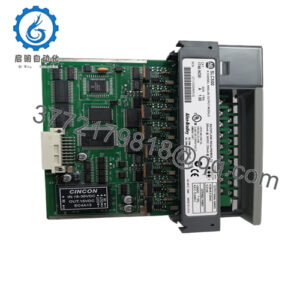
The Yokogawa AIP512 (AIP512-S1, -S2) is a RIO bus coupler module used in Yokogawa CENTUM CS 3000 and CENTUM VP Field Control Systems (FCS). It provides the interface between the FCS controller and remote I/O (RIO) devices over a proprietary 1 Mbps RIO bus, supporting up to 31 remote nodes per bus with optional duplex redundancy.
This module is chosen for its proven reliability in large-scale process control applications where distributed I/O architecture is required. The integrates with V-Net and V-Net/IP control networks, enabling seamless communication between field control units and operator stations in refining, petrochemical, and power generation plants.
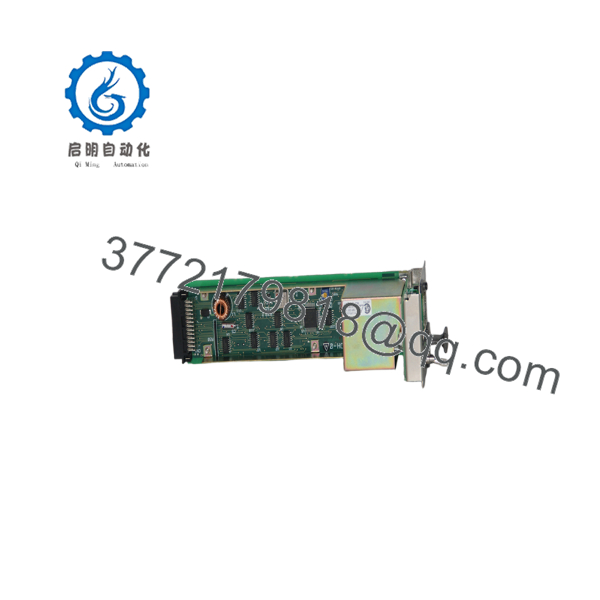
AIP512
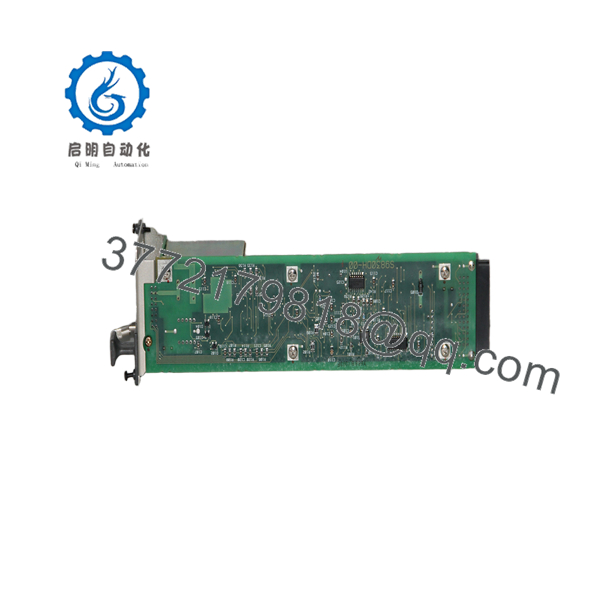
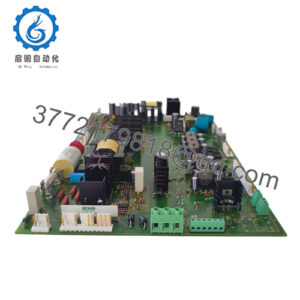
AIP512
Troubleshooting Quick Reference
| Symptom | Possible Cause | Relevance to this Part | Quick Check Method | Recommendation |
|---|---|---|---|---|
| RIO bus communication fault alarm | RIO bus coupler failure or wiring issue | ✅ High | Check RIO bus status on CENTUM engineering station; verify bus termination and wiring | Usually requires coupler replacement or bus wiring repair |
| All remote I/O nodes offline | RIO bus power supply or coupler fault | ❌ Low | Measure 24 V DC at RIO bus power terminals; check coupler status LEDs | Check PSU, fuses, and bus power distribution before replacing module |
| Intermittent node dropouts | Loose terminal block, noise, or cable damage | ⚠️ Medium | Reseat RIO bus terminal block; inspect cable shielding and routing | Clean contacts, reseat firmly; replace RIO bus cable if damaged |
| Duplex bus mismatch alarm | One coupler failed in redundant pair | ✅ High | Compare status of Bus 1 and Bus 2 couplers; check for mismatch alarms | Replace faulty coupler; verify both buses are terminated correctly |
| V-Net communication error | V-Net coupler or network issue (not RIO bus) | ❌ Low | Check V-Net status on CENTUM diagnostics; verify V-Net coupler (AIP502/AIP503) | Issue is likely at V-Net layer, not the RIO coupler |
| Module fails after swap | Wrong suffix (-S1 vs -S2) or revision mismatch | ✅ High | Compare old module label (-S1 vs -S2, revision) before removal | Match exact part number and suffix on replacement |
If you’re stuck, send photos of the module label, RIO bus terminal wiring, and any CENTUM alarm screens. We’ll review them before you commit to a swap.
Frequently Asked Questions (FAQ)
Q: What’s the difference between -S1 and -S2?
A: Both are RIO bus coupler modules for CENTUM CS 3000/VP. The -S1 and -S2 suffixes indicate hardware/style revisions. Electrically, they perform the same RIO bus interface function, but -S2 is a newer revision with updated components. Always match the suffix when replacing in an existing system to avoid compatibility issues.
Q: Is this module hot-swappable?
A: No. CENTUM CS 3000/VP RIO bus couplers are not designed for hot-swap. Pulling or inserting them under power can damage the backplane or adjacent modules. Follow your plant’s approved procedure—usually this means taking the Field Control Unit (FCU) offline before swapping.
Q: Can I use this module in non-Yokogawa DCS systems?
A: No. The is built for Yokogawa CENTUM CS 3000 and CENTUM VP Field Control Systems. It uses proprietary RIO bus protocol and backplane architecture that won’t work in Allen-Bradley, Siemens, or other vendor DCS/PLC systems.
Q: Will my I/O mapping and configuration survive a coupler swap?
A: Yes. The I/O addresses, tag mapping, and configuration live in the FCS controller memory, not on the RIO bus coupler itself. As long as you replace it with the same type and keep RIO bus wiring identical, the configuration remains valid. Always back up your FCS database before hardware changes.
Q: How many remote I/O devices can one support?
A: One RIO bus interface supports up to 31 remote I/O nodes per bus. In a duplex (redundant) configuration, two modules are installed—one for Bus 1 and one for Bus 2—each serving the same 31 nodes for redundancy.
Q: Why is this cheaper than buying direct from Yokogawa?
A: This is new surplus or inspected stock from decommissioned systems and authorized distributors. It’s genuine Yokogawa hardware, function-tested, but sold as surplus rather than factory-direct new. That’s why the price is lower while still carrying a 1-year replacement warranty.
Q: What condition is the unit in—new, used, or refurbished?
A: We list each unit explicitly: “New Original / New Surplus” means factory-sealed or unused surplus with original packaging; “Refurbished (tested)” means cleaned, electrically tested, and verified functional on a CENTUM CS 3000/VP test rig. The product page or quote will state which applies.
Q: Do you provide test reports or bus communication logs?
A: Yes. For refurbished units, we can supply a basic functional test report (power-up, RIO bus handshake, node enumeration, duplex redundancy check) and short test video on request. Just ask before purchase.