WhatsApp: +86 16626708626
 Email:
  Phone: +86 16626708626
Description
Key Technical Specifications
| Parameter | Specification / Value |
| Manufacturer | Yokogawa Electric Corporation |
| Part Number | AIP571 BUS2 (AIP571-S50 / BUS2 suffix) |
| System Compatibility | CENTUM VP, CENTUM CS 3000 Distributed Control Systems (DCS) |
| Power Supply | Supplied via node unit backplane (5 V DC / 24 V DC internal rails) |
| Power Consumption | Max 5.5 W |
| Bus Interface | Dual-redundant control bus interface (BUS1 / BUS2 connector layout) |
| Transmission Rate | High-speed real-time control bus communication |
| Operating Temperature | 0 to +55 °C (+32 to +131 °F) |
| Form Factor / Mounting | Baseplate card slot mount (Standard Yokogawa I/O slot) |
| Weight | Approx. 0.35 kg (0.77 lbs) |
Product Introduction & Supply Chain Strategy
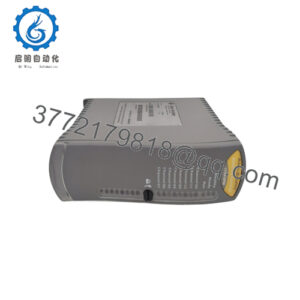
The Yokogawa AIP571 BUS2 is an essential control bus interface adapter module utilized within Yokogawa CENTUM VP and CENTUM CS 3000 Distributed Control Systems (DCS). Operating as a critical link between field control stations (FCS) and human interface stations (HIS), the AIP571 card facilitates real-time, deterministic data exchange across redundant control network buses.
Maintaining an unused New Surplus AIP571 BUS2 module in your plant inventory provides immediate risk reduction against process interruptions. As legacy DCS components transition through OEM lifecycle phases, acquiring original unused stock safeguards operations against extended lead times and secondary failure hazards common in used equipment. Keeping a verified spare on-site lowers Total Cost of Ownership (TCO) by mitigating expensive unscheduled unit shutdowns during DCS bus communications failures.
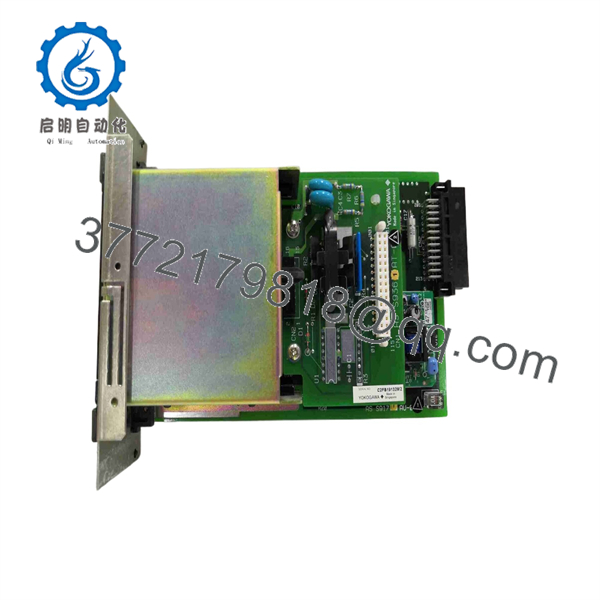
AIP571 BUS2
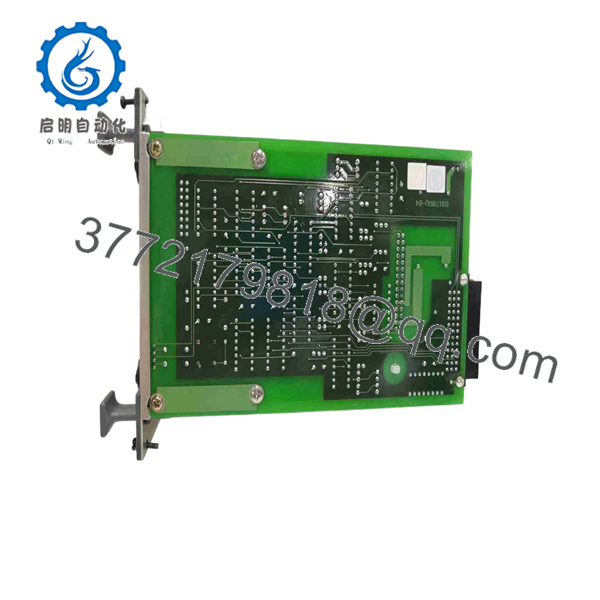
AIP571 BUS2
Installation & Configuration Guide
1.Pre-Installation & Safety Preparation:De-energize node power and observe ESD safety rules.
- Lock out and tag out power to the target Yokogawa node unit or field control cabinet.
- Attach a grounded ESD wrist strap to prevent static electricity from damaging onboard microprocessors and bus transceiver ICs.
- Document and mark all connecting bus cables (BUS1 and BUS2) to ensure proper channel pairing upon reassembly.
2.Card Extraction & Slot Inspection:
- Unlatch the bus cable retaining clips and carefully disconnect the control network cables.
- Release the top and bottom card locking levers on the front faceplate of the old AIP571 module.
- Slide the card smoothly out of the baseplate guide rails, avoiding direct contact with backplane pin assemblies.
3.Hardware Alignment & Module Insertion:
- Inspect the backplane connectors on the replacement for clean, undamaged pin contacts.
- Align the replacement module card edges into the baseplate guides and push firmly until the locking levers snap into position.
- Reconnect the BUS1 and communication cables securely to their respective front panel ports.
4.Power-On Validation & System Synchronization:
- Restore power to the node unit and monitor the module faceplate status LEDs (STATUS, RDY, ACT).
- Verify from the CENTUM system maintenance console that the node registers the new bus adapter online without channel fault errors.
- Perform a manual failover test between BUS1 and channels to confirm full redundancy operation.
Firmware/Software Versions & Upgrade Notes
- System Revision Matching: Ensure that the card revision matches the software revision running on the host Field Control Station (FCS). Mismatched hardware revisions can lead to bus synchronization errors.
- Redundancy Configuration: The “” designation identifies dual-channel redundant bus interface capability. Always verify that both bus channels are enabled in the Yokogawa System Generation (SysGen) project files.
- Firmware Integrity: Module operational parameters are initialized by the host controller upon startup; no field firmware flashing is required on the adapter board itself.
Frequently Asked Questions (FAQ)
Is this Yokogawa module brand new or pulled from a decommissioned plant?
This module is New Surplus (Original New). It is unissued, unused OEM stock sourced from plant construction overstock, canceled integration projects, or strategic spare reserves. It has never been placed into continuous operation or pulled from a scrapped cabinet.
Why is buying New Surplus safer than buying a lower-cost refurbished DCS board?
DCS control bus cards operate continuously in harsh thermal environments inside industrial control rooms. Refurbished boards often carry aged surface-mount capacitors and heat-stressed transceivers that can fail without warning. Buying New Surplus guarantees factory-fresh component life, ensuring your DCS network remains 100% reliable.
Is the module hot-swappable in a running system?
While certain Yokogawa CENTUM I/O cards support online insertion, hot-swapping control bus interface cards in a single-bus or non-redundant rack configuration can interrupt live system communications. Always follow official Yokogawa DCS maintenance procedures and de-energize the specific node or switch to secondary redundant control before card extraction.
Does the require external software configuration?
No separate software programming is needed for the card itself. Node address assignments and bus protocols are automatically recognized by the CENTUM FCS system configuration during bootup.
What warranty coverage is provided with this surplus card?
We provide a 1-Year Comprehensive Replacement Warranty on all New Surplus Yokogawa hardware. Each module passes visual inspection and backplane power-on validation prior to dispatch.