WhatsApp: +86 16626708626
 Email:
  Phone: +86 16626708626
Description
Key Technical Specifications
| Parameter | Value |
|---|---|
| Model / Suffix | ALR121-S00, Serial Communication Module (RS-422/RS-485, 2-port, for N-IO/FIO) |
| Number of ports | 2 |
| Electrical interface | RS-422 / RS-485 |
| Connection method | Point-to-point (RS-422) or multipoint (RS-485) |
| Communication mode | Half-duplex |
| Synchronization | Start-stop (asynchronous) |
| Transmission speed | 1,200 / 2,400 / 4,800 / 9,600 / 19,200 / 38,400 bps |
| Transmission code | ASCII or binary |
| Character length | 7 or 8 bits |
| Stop bit length | 1 or 2 bits |
| Parity check | None / even / odd |
| Lag time after transmission | 1 ms |
| Transmission distance | 1,200 m maximum, total extended length |
| Wiring connection | Terminal block, M4 screws, 5 poles × 2 |
| Recommended cable | 3-pair shielded cable, AKB161 or AKB162 |
| Subsystem stations | Max. 30 stations per port |
| Communication definitions | 128 definitions per module |
| I/O data capacity | 1,000 words per module |
| Current consumption | 0.5 A |
| Dimensions (W × H × D) | 32.8 × 130 × 142.9 mm (depth includes terminal block) |
| Weight | Approx. 0.30 kg |
| Mounting | AFV30, AFV40, A2FV50, A2FV70, ANB10 (ESB bus node), ANB11 (optical ESB bus node) |
| Redundancy | Dual-redundant capable — two identical modules, adjacent odd/even slots, same node unit |
| Max modules per FCS | 32 units (16 dual-redundant pairs), counted with ALE111, ALP111/ALP121, AGS813, AGP813 |
Supported communication functions:
| Function | Redundancy support |
|---|---|
| FA-M3 / FA500 (dedicated control protocol) | Dual-redundant |
| Modbus RTU | Dual-redundant |
| MELSEC-A (format 4) | Dual-redundant |
| YS communication, direct connection (ALR121 only) | Single only |
| YS communication via SCIU (ALR121 only) | Single only |
| SLC500 (DF1 binary) | Single only |
| PLC-5 (half-duplex protocol) | Single only |
Product Introduction
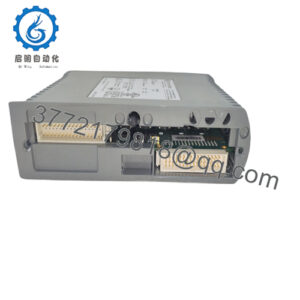
The Yokogawa ALR121-S00 is a 2-port RS-422/RS-485 serial communication module for CENTUM VP and CS 3000 FIO systems. It links a Field Control Station to subsystems — FA-M3 PLCs, Modbus RTU devices, MELSEC-A, SLC500, PLC-5, and YS-series instruments — and maps that data into the FCS I/O image.
Differential signaling is what makes it the right card over the ALR111. It reaches 1,200 m of total cable length and supports RS-485 multidrop with up to 30 stations per port. It also handles YS instrument communication, which the ALR111 cannot.
Troubleshooting Quick Reference
| Symptom | Possible Cause | Relevance to this Part | Quick Check Method | Recommendation |
|---|---|---|---|---|
| No communication on both ports, module LED dark | Node unit power or ESB bus fault | ❌ Low | Check node unit power supply and ESB bus cable seating | Look upstream before pulling the card |
| Comms fail on one port only | Wiring, termination, or subsystem fault | ⚠️ Medium | Swap the field cable to the other port and retest | If the other port works with the same cable, the port is suspect |
| Subsystem responds intermittently, retries climbing | Missing or doubled termination resistors on the RS-485 segment | ❌ Low | Power down and measure across the pair — a correctly terminated segment reads roughly half the terminator value | Terminate at the two physical ends only. This is the single most common RS-485 fault |
| Garbled data, framing errors | Baud rate, parity, stop bit, or ASCII/binary mismatch | ❌ Low | Compare builder settings against the subsystem’s serial parameters, line by line | Configuration, not hardware. Verify before ordering anything |
| One station unreachable, others fine on the same multidrop | Duplicate or wrong station address | ❌ Low | Check the address switches on the subsystem device | Card is almost certainly healthy |
| Both ports need different protocols, one won’t work | One module supports only one communication function | ✅ High (design issue) | Check the communication function assigned in the builder | Not a fault. You need a second module — see FAQ |
| Redundant pair won’t hand over | Non-redundant protocol, or slot placement wrong | ✅ High | Confirm the protocol is FA-M3, Modbus, or MELSEC-A, and that both cards sit in adjacent odd/even slots on the same node | YS, SLC500, and PLC-5 do not support redundancy at all |
| Polarity reversed, no traffic at all | A/B (TXD+/TXD−) swapped at the terminal block | ⚠️ Medium | Swap the two signal wires on one pair and retest | Costs nothing to try. Do this before condemning a card |
Honest assessment: this card rarely dies. In most callouts the real problem is termination, grounding, a baud mismatch, or a subsystem device that stopped answering. Prove the port dead with a known-good loopback or a laptop on the segment before you spend money.
Stuck? Send us photos of the module label, the terminal block wiring, and the builder’s communication definition screen. We’ll work through it with you.
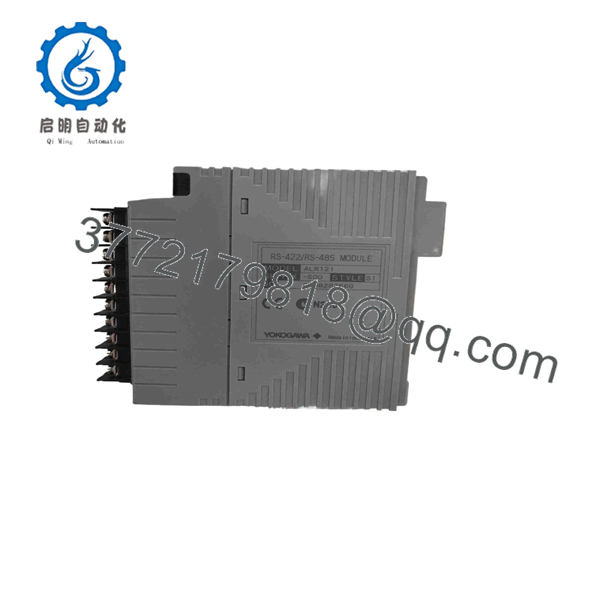
ALR121-S00
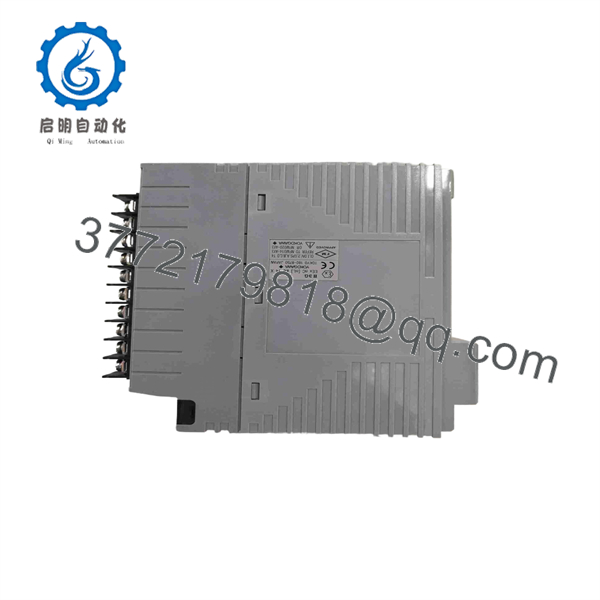
ALR121-S00
Frequently Asked Questions
Q: Can I run Modbus on port 1 and FA-M3 on port 2?
No, and this catches people out regularly. A communication module selects one communication function, and both ports must use it. Two protocols means two modules. Plan your slot budget accordingly — you get a maximum of 32 communication modules per FCS across ALR111, ALR121, ALE111, ALP111/ALP121, AGS813, and AGP813 combined.
Q: What’s the difference between ALR121 and ALR111?
ALR111 is RS-232C, point-to-point only, 15 m maximum, D-sub 9-pin connectors. is RS-422/RS-485, multidrop capable, 1,200 m, and wires to an M4 screw terminal block. also supports YS instrument communication, which ALR111 does not. They are not interchangeable — different physical layer, different connector, different cable.
Q: Does this support dual-redundant communication?
For FA-M3, Modbus, and MELSEC-A, yes. For YS communication, SLC500, and PLC-5, no — single only, regardless of what hardware you install. Redundancy takes two complete modules in adjacent odd and even slots on the same node unit, not the two ports on one card. One more thing worth knowing: the one-shot write specification cannot be used once dual-redundant communication is set.
Q: Is it hot-swappable?
In a configured dual-redundant pair, you pull the standby and insert the replacement while the control module keeps running. In a simplex setup, pulling the card drops every subsystem link on it. Know which loops and interlocks depend on that data before you touch it, and coordinate with operations.
Q: How many devices can I hang on one RS-485 port?
Up to 30 subsystem stations per port on the standard protocols. For YS communication it’s tighter — 10 units per port, 20 per module. And remember the 1,200 m figure is total extended length across the whole segment, not per drop.
Q: What does “New Surplus” mean, and why is it cheaper than the factory price?
Factory-new, unused stock from a cancelled project, a spare parts pool, or excess channel inventory — not from Yokogawa’s current order desk. Same part, same build, usually still sealed. It’s cheaper because it’s already on a shelf with no factory lead time behind it. Being straight with you: some units may have a dated carton or a marked label. We state the condition before you pay and send photos of the actual unit on request.
Q: Does it come with cable and terminal hardware?
The module ships with its integral terminal block. Field cable is separate — Yokogawa specifies 3-pair shielded cable, AKB161 or AKB162. If you’re replacing a card in a live cabinet you almost certainly already have the wiring in place and only need the bare module. Tell us what you need and we’ll quote it.
Q: Will my communication definitions carry over to the new card?
Yes. All 128 communication definitions live in the FCS project database, not on the module. Replace the card, let it come up, and the FCS pushes the configuration down. ❗ What you should still do is photograph the terminal block wiring before you disconnect anything. Five poles per port, and A/B polarity is unforgiving. Wiring it back from memory is how a ten-minute swap becomes a two-hour argument with a multimeter.
Q: What warranty do you offer?
One year from ship date on new original units. Every module is bench-tested before shipment — powered up on a genuine CENTUM VP node unit, both ports verified against a Modbus RTU simulator at 9,600 and 19,200 bps, and continuity checked on the terminal block. QC report goes in the box. Test photos or video available before shipment on request.