WhatsApp: +86 16626708626
 Email:
  Phone: +86 16626708626
Description
3. Key Technical Specifications
| Parameter | Value |
|---|---|
| Input Signal | 4–20 mA DC (2-wire transmitter) |
| Number of Inputs | 16 |
| Allowable Input Current | ≤24 mA (or ≤40 mA depending on revision) |
| Transmitter Power Supply | 19.0–25.5 V DC (typ. 23.5–24.5 V DC); output limit ~25–60 mA |
| Input Resistance | ~250–350 Ω (power-up); ≥500 kΩ (power-down); selectable 70 Ω with barrier |
| Signal Isolation | No isolation between channels; field-to-system isolation on some revisions (1500 V AC / 1 min) |
| Data Update Period | 1 s (classic); 10 ms on certain upgraded variants |
| Accuracy | ±16 μA |
| Temperature Drift | ±16 μA / 10 °C |
| Power Consumption | ≤4 A at 5.0 V DC or ~600 mA at 24 V DC (revision dependent) |
| Operating Temperature | 0 to 50 °C (typical) |
| Mounting | I/O module nest (terminal connection via M4 screws) |
| Weight | Approx. 0.3–1.0 kg (variant dependent) |
Verify exact revision (S3/S4/T) against the OEM datasheet and system configuration before installation.
4. Product Introduction
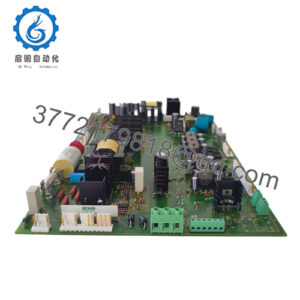
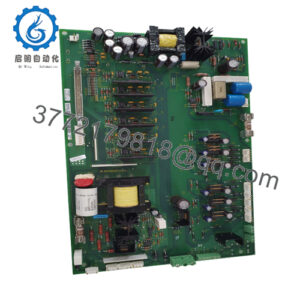
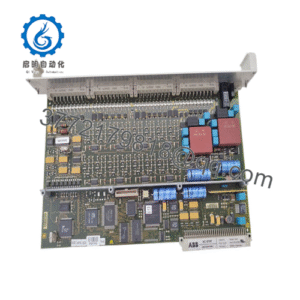
The Yokogawa AMM42 is a 2-wire transmitter input multiplexer module used in Yokogawa CENTUM and RIO distributed control systems. It accepts up to 16 channels of 4–20 mA signals from field transmitters, supplies transmitter power, and presents the multiplexed data to the control system.
Engineers select the AMM42 when maintaining or expanding existing multipoint analog input configurations where space and wiring density matter. It provides a direct functional fit for legacy nests; later isolated modules such as AAI143-HM serve as the modern upgrade path for systems moving off the original RIO architecture.
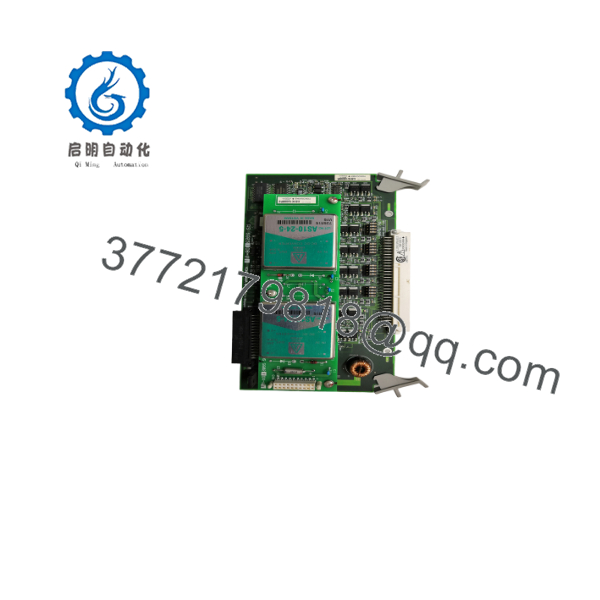
AMM42
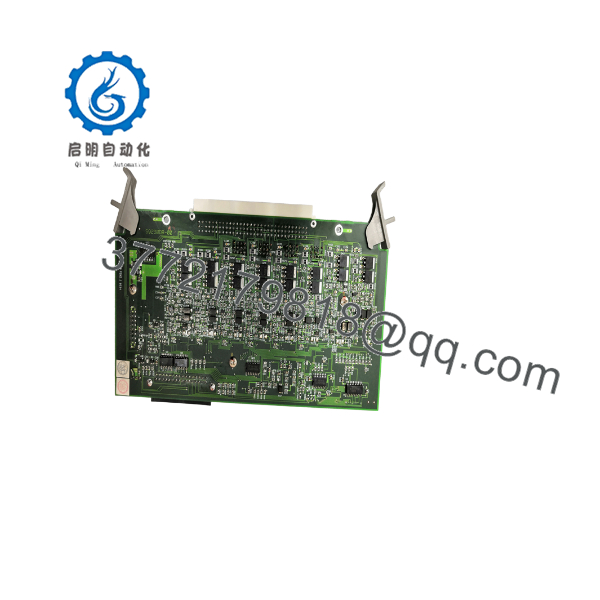
AMM42
5. Installation & Configuration Guide
Stage 1: Pre-Installation Preparation (10–15 min)
⚠️ Safety First: Notify operations of the planned downtime. Place the process in a safe state. Perform lock-out/tag-out on the rack power. Wait at least 5 minutes for capacitors to discharge.
Tools Required: ESD wrist strap, PH1 or equivalent screwdriver, multimeter, wire labels, smartphone for photos.
Data Backup: Photograph every DIP switch, jumper, and terminal layout on the existing module. Record node address, termination settings, and any barrier configuration. Export system configuration if possible.
Stage 2: Removing the Old Module (5–10 min)
- Remove the front cover or bezel if present.
- Label every field wire, then disconnect terminals carefully—do not force connectors.
- Release the nest locking tabs and withdraw the module straight out to protect backplane pins.
- Inspect the nest connectors for bent pins, corrosion, or debris.
⚠️ Keep the old module available until the new unit is fully commissioned and stable.
Stage 3: Installing the New Module (10–15 min)
- Wear the ESD strap. Confirm the model number and revision match the required part.
- Configuration Clone (critical): Set every DIP switch and jumper exactly as photographed on the old module—especially node address and any termination or barrier selection.
- Insert the module fully into the nest until the locking tabs engage.
- Reconnect field wiring using the correct torque on M4 terminals.
Self-Checklist: [ ] Switches match photo [ ] Wiring secured [ ] Tabs locked [ ] No bent pins.
Stage 4: Power-On & Testing (10–20 min)
Pre-Power Check: Measure the 24 V rail for shorts.
- Apply power to the rack only (field devices still isolated if possible).
- Observe module LEDs—steady green RUN indicates normal; solid red ERR requires investigation.
- Confirm communication with the engineering station and verify channel readings.
- Perform a dry-run check of several live 4–20 mA points if safe.
⚠️ Troubleshooting: Solid red ERR often points to address conflict or firmware/revision mismatch. No communication usually traces to incorrect switch settings or nest seating. If the module draws unexpected current, re-check total nest loading.
6. Frequently Asked Questions (FAQ)
Q: Can the AMM42 be hot-swapped under power?
A: No. Power down the nest first. Hot insertion risks backplane damage and channel faults. Always follow lock-out/tag-out.
Q: Is the AMM42 still manufactured, and is your stock genuinely new?
A: Yokogawa has discontinued the AMM42 family. Available units are new original / new surplus stock that has been verified for functionality. Serial numbers and packing are checked on intake.
Q: What is the direct replacement if the AMM42 is unavailable?
A: For RIO system upgrades, Yokogawa lists the AAI143-HM series (16-channel isolated 4–20 mA) as the functional successor. Confirm nest compatibility and system software version before ordering the upgrade path.
Q: Will I lose my configuration or process values when I replace the module?
A: Channel mapping and scaling live in the controller/engineering database, not on the itself. Correct switch settings on the new module restore normal operation. Always photograph the old module before removal.
Q: Why is the price lower than current OEM list prices for equivalent modules?
A: This is discontinued surplus inventory, not current production. Pricing reflects secondary-market availability of tested original units rather than new factory builds.
Q: Does the module support HART?
A: Classic revisions do not. Certain later upgrade modules (e.g., AAI143-HM variants) support HART 5. Confirm the exact revision against the system requirement.
Q: What testing is performed before shipment?
A: Visual inspection, power-on self-test, communication handshake in a compatible nest, and channel-level signal verification under load. Test reports and photos are available on request.