WhatsApp: +86 16626708626
 Email:
 Phone: +86 16626708626
Description
Key Technical Specifications
- Part Number: KS1-10-B (alternate notation: KS1-10*B)
- Product Type: Multi-conductor shielded signal cable for Yokogawa DCS and field instruments
- Number of Conductors: 10
- Conductor Type: Stranded tinned copper
- Conductor Size: 0.5 mm² (approx. 20 AWG equivalent)
- Insulation Material: Heat-resistant PVC
- Jacket Material: Flame-retardant PVC
- Shielding: Aluminum foil shield with drain wire for EMI/RFI protection
- Rated Voltage: 300 V AC/DC
- Operating Temperature Range: −15 °C to +70 °C
- Cable Diameter: ~7.8 mm
- Minimum Bending Radius: 5 × outer diameter (~39 mm)
- Maximum Cable Length: Up to 10 meters (standard; longer lengths may be available on request)
- Color Coding: Standard industrial color code (verify against Yokogawa wiring diagram)
- Flame Rating: IEC 60332-1 flame-retardant
- Compliance: RoHS, CE, REACH
- Packaging Weight: ~2 kg per cable assembly
- Typical Applications: Analog and digital control signal transmission in DCS, field instruments, and process control environments
Product Introduction
The Yokogawa KS1-10-B is a 10-conductor shielded signal cable designed for integration with Yokogawa process automation systems, including distributed control systems (DCS) and field instrumentation. It provides reliable signal integrity and electromagnetic interference (EMI) protection for analog and digital control signals in industrial plants where instruments are distributed over distance and noise-free transmission is critical.
This cable is chosen for its 0.5 mm² stranded tinned-copper conductors, aluminum foil shielding with drain wire, and flame-retardant PVC jacket, making it suitable for control panels, junction boxes, and field wiring in process industries. In the field, it shows up in Yokogawa CENTUM, ProSafe, and field-instrument installations where stable, low-noise signal transmission is required over distances up to 10 meters.
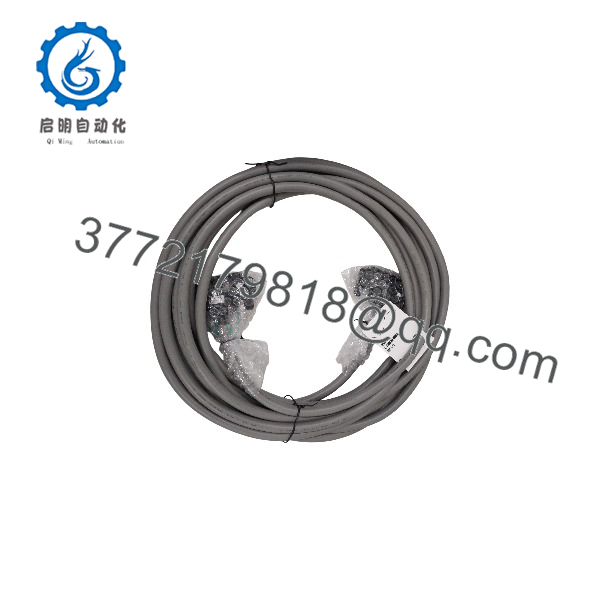
KS1-10-B
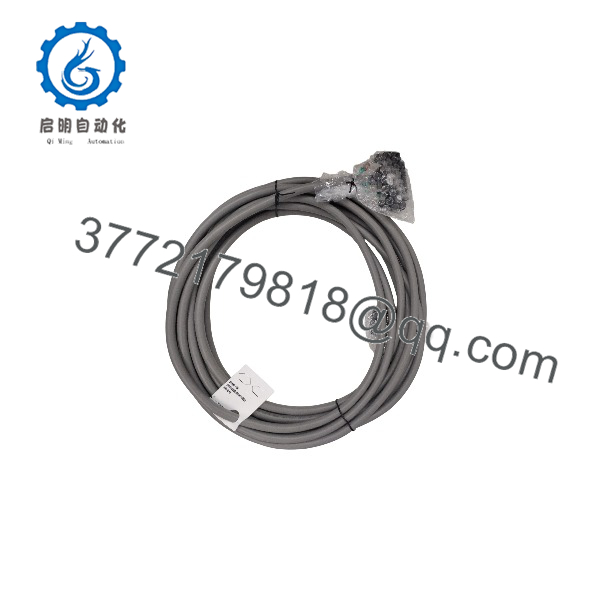
KS1-10-B
Troubleshooting Quick Reference
The following checks are diagnostic recommendations, not claims that a particular cable has passed testing. Use the approved Yokogawa wiring diagram and site cable schedule. Observe electrical-safety and area-classification rules when working in live cabinets or hazardous areas.
| Symptom | Possible Cause | Relevance to this Part | Quick Check Method | Recommendation |
|---|---|---|---|---|
| One or more channels read erratic or noisy | Poor termination, broken conductor, compromised shield, or external EMI | Directly relevant to cable and terminations | With the circuit isolated, check continuity on each core; inspect shield continuity and drain connection; compare with the approved wiring diagram | Re-terminate affected cores; repair or replace the cable if a broken conductor or shield fault is confirmed |
| Intermittent signal when the cable moves | Broken strand, loose terminal screw, or inadequate strain relief | Directly relevant | After isolation, inspect conductor seating, connector engagement, and cable support; gently flex the cable while monitoring the signal | Correct the connection and add strain relief; replace the cable if damage is confirmed |
| Multiple channels fail together | Shared supply/common failure, marshalling or I/O card fault, or cable harness problem | Possible, but not sufficient evidence of cable failure | Review DCS diagnostics; check the shared supply and common connections shown in the assembly drawing | Establish whether the fault belongs to the supply, card, cable, or marshalling before ordering |
| Suspected failure without visible damage | Configuration, grounding, or card issue | Unconfirmed | Preserve diagnostics and compare results using an approved known-good cable | Request engineering review before replacing parts by trial and error |
| Ground-loop symptoms (drift, hum, offset) | Improper shield grounding or multiple ground points | Directly relevant | Verify shield termination practice at both ends; measure potential differences between cabinet and field grounds | Adopt single-point shield grounding per site standard; add isolation if required |
If diagnosis remains unclear, contact technical support with label photos, wiring photos, the associated I/O/marshalling model, cabinet location, and diagnostic logs.
Frequently Asked Questions (FAQ)
Q1: Can I run this cable live in a Yokogawa DCS cabinet?
Treat this as process wiring. Follow your site’s isolation and permit-to-work rules. The cable itself is passive, but working in live cabinets risks short circuits and nuisance trips. Coordinate with operations and isolate circuits where required by procedure.
Q2: Is KS1-10-B the same as KS1-10*B, and will it fit any Yokogawa system?
The “B” and “*” notations refer to the same KS1-series 10-conductor signal cable family used with Yokogawa DCS and field instruments. Compatibility depends on the specific marshalling/terminal arrangement and the site’s cable schedule. Verify the exact cabinet, terminal block, and wiring diagram before purchase. A similar appearance or matching conductor count does not establish compatibility.
Q3: What should I verify before ordering a direct replacement?
Specify KS1-10-B and provide a readable photo of the original cable tag or reel label. Compare conductor count (10), conductor size (0.5 mm²), shielding type (foil with drain), voltage rating (300 V), and temperature range (−15 to +70 °C). Also confirm the required length (up to 10 m standard) and color-coding against the approved drawing.
Q4: Will replacing this cable erase my DCS configuration?
No. This is a signal cable, not a controller or memory device. It does not store configuration. Back up the DCS configuration before maintenance and preserve wiring and terminal records; replacement can still interrupt connected signals and may require loop checks.
Q5: Is it obsolete, in stock, or covered by a one-year warranty?
Those claims have not been verified for the seller’s inventory. The reviewed product description does not establish current lifecycle status, stock quantity, dispatch time, or a seller warranty.
The quotation should state available quantity, actual condition, shipment date, included accessories, warranty duration, return eligibility, and coverage exclusions. Do not publish “limited stock,” “factory sealed,” or “one-year warranty” without supporting records.
Q6: Is New Surplus the same as refurbished, and why might the price differ from an OEM quote?
Keep the condition categories separate. Describe a cable as New Original / New Surplus only when sourcing and inspection records support that description. Identify used, repaired, or refurbished cable explicitly. Packaging alone does not establish authenticity or unused condition.
No supplied cable, seller price, or provenance record has been reviewed here. A price difference therefore cannot be attributed to surplus sourcing as a verified fact.
Q7: What inspection and test evidence should I request?
Request a lot-specific or assembly-specific report using this sequence. This is a proposed acceptance checklist—not a claim that a seller has completed it.
- Inbound inspection and traceability: Match cable tags and reel labels to available packing and sourcing records. Inspect the jacket for cuts, crushing, kinks, and sheath damage. Audit included certificates (RoHS, CE, REACH) where applicable; do not assume test certificates are present.
- Electrical checks: Perform isolated continuity on all 10 cores end-to-end against the approved diagram. Check shield continuity and drain-wire termination. Do not apply a generic hipot test: the reviewed description provides no such acceptance procedure or limits.
- Insulation and construction verification: Confirm conductor size (0.5 mm²), insulation (heat-resistant PVC), jacket (flame-retardant PVC), and shielding (aluminum foil with drain wire).
- Configuration verification: Photograph cable tags, color coding, and termination layout. Confirm the test setup matches the intended installation (DCS cabinet, marshalling, or field instrument).
- Final QC and packaging: Require inspector sign-off, dated identification, protected connectors/ends, appropriate coiling, cushioning, and a suitable shipping carton. Request test photos and videos; advertise their availability only if they exist.
Do not install from memory, ignore shield/ground practices, or bypass isolation. Verify the associated I/O/marshalling power budget if changing the assembly, and use approved ESD precautions when handling connected electronics. These checks provide documented acceptance evidence without inventing field anecdotes or unsupported reliability percentages.