WhatsApp: +86 16626708626
 Email:
 Phone: +86 16626708626
Description
Core Product Summary
The YOKOGAWA UT2800 is a multi-point digital indicating controller belonging to Yokogawa’s UT2000 family of temperature controllers. Where a single-loop controller regulates one measured value, the UT2800 series is built to handle several control zones in one panel instrument, and Yokogawa positions it as optimum for 3- to 4-zone heating/cooling control.
Each zone can carry its own heating and cooling output: the documented application architecture shows voltage pulse outputs driving SSR elements on the heating side, relay outputs on the cooling side, and heater burnout alarm supervision via current transformers. A graphic display presents zone status, and a serial communication function connects the controller to a PLC or HMI. This combination makes the UT2800 a compact alternative to installing several separate single-loop controllers when one furnace, oven, or process unit must be controlled in multiple temperature zones.
Key Technical Specifications
| Parameter | Value / Scope |
|---|---|
| Product type | Multi-point digital indicating controller |
| Manufacturer | Yokogawa Electric Corporation |
| Series | UT2000 family of multiple-point temperature controllers |
| Intended control structure | 3- to 4-zone heating/cooling control |
| Display | Graphic display for process visualization |
| Heating side output (documented configuration) | Voltage pulse output driving SSR power control |
| Cooling side output (documented configuration) | Relay output |
| Heater supervision | Heater burnout alarm with CT (current transformer) input |
| Communication | Serial communication function; connectable to PLC systems |
| HMI connectivity | Connectable to operator displays via the terminal block on the controller |
Engineering Selection Highlights
- Multi-zone scope: Yokogawa defines the UT2800 series as optimum for 3- to 4-zone heating/cooling control, so zone count is the first selection criterion; installations with more zones need a different controller family or multiple units.
- Combined heat/cool outputs: The documented application uses separate heating (voltage pulse to SSR) and cooling (relay) outputs per zone, which matches processes that alternate between heating and cooling rather than heating only.
- Heater supervision: Heater burnout alarm detection via current transformer is part of the documented configuration, adding load-side fault monitoring to the temperature control function.
- Supervisory integration: The controller’s communication function allows a PLC to exchange data with it, and HMI products connect through the controller’s terminal block — relevant wherever zone temperatures must appear on a central panel.
- Display and operation: The graphic display supports zone-level monitoring on the instrument itself, reducing dependence on external displays for routine supervision.
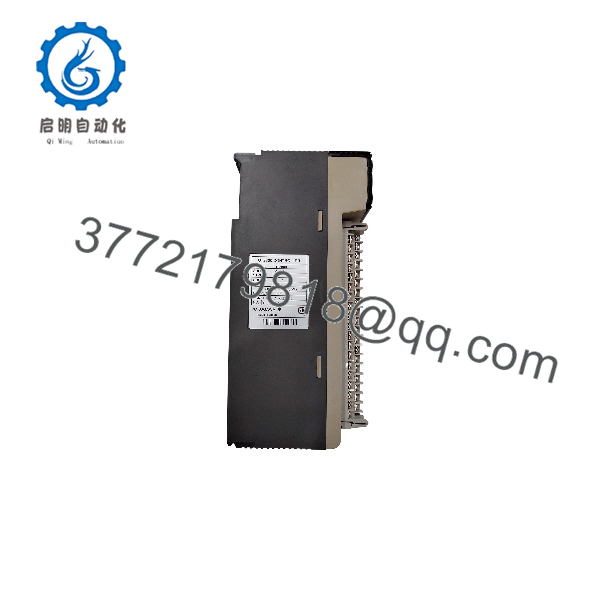
UT2800
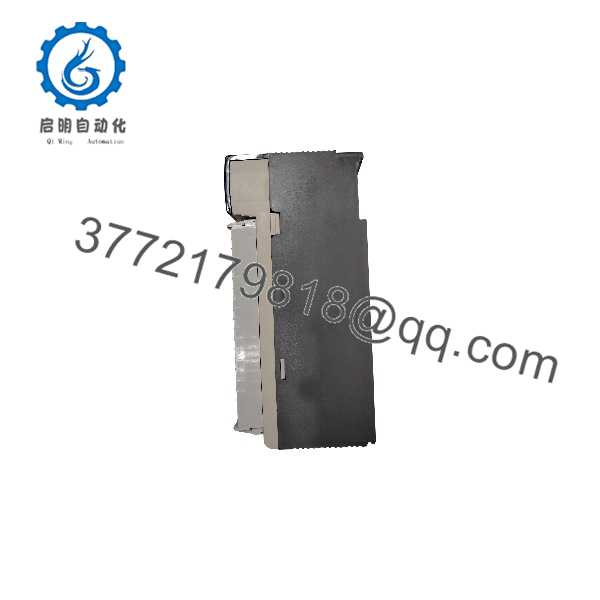
UT2800
System Compatibility & Integration Requirements
| Item / Dependency | Verified Compatibility or Requirement | Practical Note |
|---|---|---|
| Control structure | 3- to 4-zone heating/cooling loops per controller | Verify the required number of heating/cooling zones before selection |
| Heating actuator | SSR power control driven by voltage pulse output | Thyristor/SSR units and CTs are part of the output chain |
| Cooling actuator | Relay output on the cooling side | Cooling device switching must suit relay contact ratings |
| Supervisory system | PLC communication via the controller’s communication function | Communication wiring and protocol settings must match the PLC side |
| Operator display | HMI connection through the terminal block on the controller | Supported controller-to-HMI connections are documented for the UT2000 family |
| Related controllers | Operates within Yokogawa’s UT/UP controller range, where UT controllers can act as slave controllers in coordinated operation | Multi-controller schemes should follow the coordinated-operation configuration |
Detailed Product Overview
The defining characteristic of the UT2800 is that it treats a multi-zone thermal process as a single control problem. A conventional approach would mount one indicating controller per zone, each with its own display, setpoint keys, and wiring. Yokogawa’s UT2000 series, to which the UT2800 belongs, consolidates that function: the instrument manages several measurement and control loops, and the UT2800 variant is specified by Yokogawa as optimum for 3- to 4-zone heating/cooling applications.
The engineering value of this consolidation shows up in three places. First, in the panel: one instrument with one graphic display replaces a row of single-loop controllers, which simplifies panel layout and gives the operator a combined view of all zones. Second, in the output architecture: each zone combines a heating side — voltage pulse output driving SSR power control — with a cooling side handled by relay output, so processes that must both heat and cool a zone (for example, a process that overshoots and must be pulled back down with cooling water) can be regulated in both directions. Third, in supervision: the heater burnout alarm function, using current transformer input, detects heater load failures that a temperature reading alone would reveal only after the zone has drifted, giving earlier warning of an element failure.
The controller also participates in larger systems. Its communication function allows a PLC to exchange zone data with the controller, and Yokogawa’s controller-to-HMI connectivity is implemented through the terminal block on the controller, so zone temperatures can be surfaced on a central operator display. Within Yokogawa’s UT/UP controller range, UT controllers can also operate as slave controllers in coordinated master/slave schemes, which allows the UT2800 to be embedded in a larger temperature-control hierarchy rather than operating only as a stand-alone panel instrument.
For selection, the decisive questions are structural rather than parametric: how many zones the process actually has, whether each zone needs both heating and cooling action, what actuator types will be switched (SSR-driven heaters, relay-switched cooling devices), and how the controller will communicate upward to a PLC or display. Answering those questions against the original system documentation — including the exact model and suffix code of the unit being replaced — is what confirms whether a UT2800 is the correct part for the application.
Applications & System Role
In an automation architecture, the UT2800 sits at the loop-control level: it receives temperature measurements from thermocouples or similar sensors, runs the PID control for each zone, and drives the heating and cooling actuators that hold each zone at its setpoint. Above it, a PLC or operator display collects zone data through the communication function.
Yokogawa’s own application material places controllers of this type in furnace control — burners, furnace temperature, and zone-by-zone temperature regulation — and specifically presents the UT2800 in a multi-zone heating/cooling scheme with heaters, cooling water, SSR power control, and heater burnout alarms. Beyond documented furnace use, any process unit that divides a workpiece or chamber into three or four independently heated and cooled zones — ovens, packaging sealing equipment, plastics processing — is a logical fit scenario for this control structure. These are fit scenarios derived from the controller’s documented multi-zone heating/cooling function, not claims about specific installed deployments.
FAQ
What is the YOKOGAWA UT2800?
It is a multi-point digital indicating controller from Yokogawa’s UT2000 series, built to control several temperature zones in a single panel instrument.
How many zones can the UT2800 control?
Yokogawa positions the UT2800 series as optimum for 3- to 4-zone heating/cooling control.
What outputs does the UT2800 use for heating and cooling?
In the documented application configuration, the heating side uses voltage pulse output driving SSR power control, and the cooling side uses relay output.
Does the UT2800 support heater burnout detection?
Yes — the documented configuration includes a heater burnout alarm function based on current transformer input on the heater circuit.
Can the UT2800 communicate with a PLC or HMI?
Yes — the controller provides a communication function for exchanging data with a PLC, and HMI products connect through the terminal block on the controller.
What type of display does the UT2800 have?
It is equipped with a graphic display for presenting zone process status.
Which applications suit the UT2800?
Any process requiring independent heating and cooling control across three to four temperature zones, such as multi-zone furnaces, ovens, and sealing equipment, matches its documented control structure; Yokogawa’s application material presents it in furnace zone-control contexts.