
 WhatsApp: +86 16626708626
 Email:
  Phone: +86 16626708626
Description
3. Key Technical Specifications
| Parameter | Value |
|---|---|
| Manufacturer | ABB (Bailey) |
| Model | 6644424A1 |
| Product Type | Voltage Bus Monitor Assembly |
| Technical Description | MPSIII DC Bus Monitoring Assembly |
| Product Family | Harmony Rack HW |
| Compatible Systems | ABB Bailey Infi 90, Net 90, Harmony Rack Power System (MPS3) |
| Monitored Voltages | +5 VDC, +15 VDC, −15 VDC, MCOM |
| Fault Output | PF1 (Low True) |
| Input Current | Less than 50 mA |
| Mounting | Harmony Rack / MPS3 Assembly |
| Country of Origin | India (ABB catalog listing) |
| Net Weight | Approximately 0.2 kg |
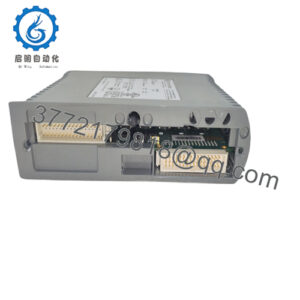
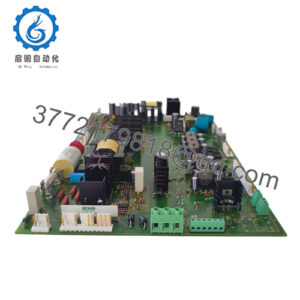
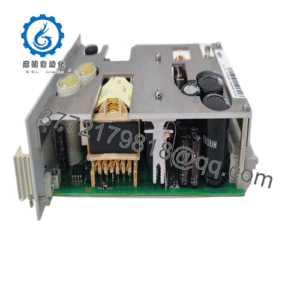
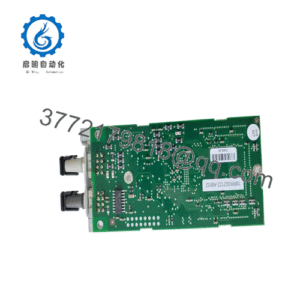
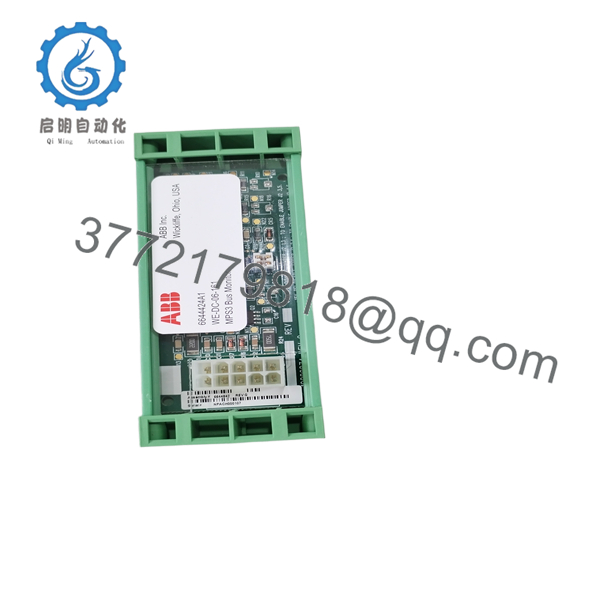
The ABB 6644424A1 is officially described as a Voltage Bus Monitor Assembly (technical designation: MPSIII DC Bus Monitoring Assembly) for the Harmony Rack Power System (MPS3). It continuously monitors the +5 VDC, +15 VDC, −15 VDC, and MCOM bus voltages and asserts a PF1 low-true fault signal whenever one of these voltages moves outside its specified tolerance.
4. Product Introduction
The ABB 6644424A1 is a power-monitoring module used in ABB Bailey Infi 90, Net 90, and Harmony Rack control systems. Rather than controlling process I/O, its responsibility is to supervise the internal DC power rails that supply the control rack and to provide early warning of power supply abnormalities.
From a maintenance standpoint, this module is one of the first components to investigate when multiple rack modules simultaneously report communication faults or unexpected resets. In many cases, the monitor correctly identifies unstable power rather than being the source of the fault itself.
5. Installation & Configuration Guide
Stage 1 – Pre-Installation Preparation (10 minutes)
⚠️ Safety First
- Notify operations of the planned shutdown.
- Apply Lock-Out/Tag-Out procedures.
- Remove AC input power to the MPSIII power system.
- Verify that all DC bus voltages have discharged before servicing.
Required Tools
- ESD wrist strap
- Phillips screwdriver
- Digital multimeter
- DC voltage meter
- Camera for wiring documentation
Before Removal
- Record existing power supply status LEDs.
- Measure +5 VDC, +15 VDC and −15 VDC.
- Photograph the module location.
- Document any active PF1 alarms.
Stage 2 – Removing the Existing Module
- Open the Harmony rack.
- Locate the 6644424A1 assembly.
- Disconnect the monitoring connector if applicable.
- Release the retaining hardware.
- Remove the assembly carefully.
⚠️ Do not assume the monitor is defective simply because PF1 is active. Verify the power supply outputs first.
Inspect:
- Backplane connector
- Power bus contacts
- Connector oxidation
- Rack grounding
- Evidence of overheating
Stage 3 – Installing the Replacement Module
- Verify the replacement part number is 6644424A1.
- Inspect connector pins.
- Insert the module fully into its connector.
- Secure all retaining hardware.
- Reconnect all cables.
Installation Checklist
- ☑ Correct part number
- ☑ Connectors fully seated
- ☑ Rack grounding verified
- ☑ No bent pins
- ☑ Wiring inspected
Stage 4 – Power-Up & Functional Testing
- Restore power to the MPSIII system.
- Measure all monitored DC rails.
- Confirm that PF1 remains inactive during normal operation.
- Verify communication with rack modules.
- Monitor the system for stable operation over several minutes.
⚠️ Troubleshooting
PF1 Alarm Remains Active
Check:
- +5 VDC output
- +15 VDC output
- −15 VDC output
- MCOM reference
- Power supply regulation
- Busbar connections
Intermittent Rack Faults
Inspect:
- Loose power connectors
- Aging power supplies
- Backplane contamination
- Ground integrity

- 6644424A1
- 6644424A1
6. Frequently Asked Questions (FAQ)
Q1. What is the function of the ABB 6644424A1?
The 6644424A1 monitors the primary DC bus voltages within the Harmony Rack Power System (MPS3). It supervises the +5 VDC, +15 VDC, −15 VDC, and MCOM rails and generates a PF1 low-true fault signal whenever any monitored voltage falls outside its specified tolerance.
Q2. Which ABB systems use this module?
It is designed for the ABB Bailey Infi 90, Net 90, and Harmony Rack Power System (MPS3) platforms. These systems are widely deployed in process industries such as power generation, oil and gas, and chemical processing.
Q3. Does a PF1 alarm always indicate that the monitor is faulty?
No.
In field service, a PF1 alarm more often indicates that one of the monitored DC supplies is outside its acceptable range. Before replacing the monitor, verify the outputs of the MPSIII power supply and inspect the rack bus connections. The monitor is reporting the condition—it is not necessarily the cause of it.
Q4. Can this module be hot-swapped?
No.
Because it supervises the rack’s internal power distribution, replacement should be carried out only after the MPSIII power system has been de-energized and all DC voltages have been confirmed safe.
Q5. Is the 6644424A1 still manufactured?
The 6644424A1 is considered a legacy spare part. It is generally available through surplus inventory, refurbished stock, or specialized industrial automation suppliers rather than current production.
Q6. What should I verify before ordering?
Confirm the following:
- Part Number: 6644424A1
- System Platform: Harmony Rack / Bailey Infi 90 / Net 90
- Power System: MPSIII
- Backplane compatibility
- Power supply condition
- Rack hardware revision
- Connector configuration
Performing these checks helps ensure the replacement module is compatible with the existing rack and avoids unnecessary replacement when the underlying issue is a power supply fault rather than the monitor assembly itself.