 WhatsApp: +86 16626708626
 Email:
  Phone: +86 16626708626
Description
Key Technical Specifications
| Parameter | Value |
|---|---|
| Manufacturer | ABB |
| Model Number | CI930F (3BDH001010R0002) |
| Product Type | PROFIBUS DP Master Module |
| System Compatibility | ABB AC 900F (Freelance DCS) |
| Communication Protocol | PROFIBUS DP-V0 / DP-V1 |
| Transmission Speed | 9.6 kbit/s to 12 Mbit/s |
| Max Devices | Up to 126 PROFIBUS slaves |
| Interfaces | 2 × D-Sub 9-pin (Line A/B) |
| Redundancy | PROFIBUS line redundancy supported |
| Supply Voltage | 24 V DC (via backplane) |
| Current Consumption | ~80 mA |
| Power Dissipation | ~1.8 W |
| Operating Temperature | −20°C to +70°C |
| Protection Class | IP20 |
4. Product Introduction & Supply Chain Strategy
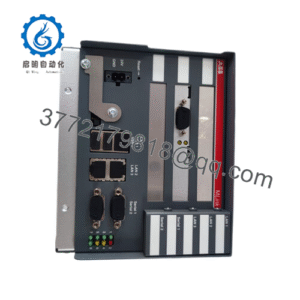
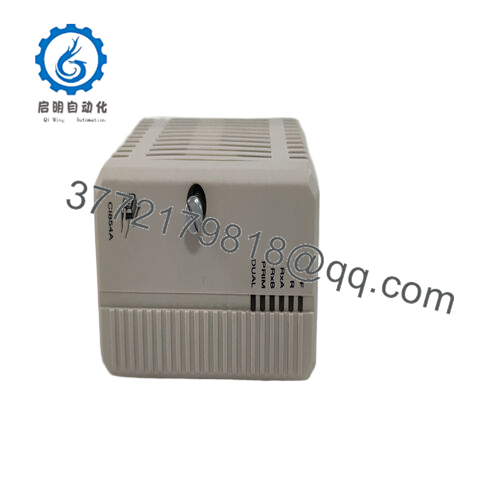
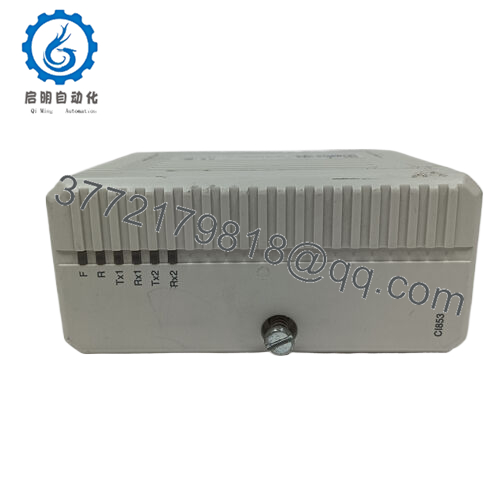
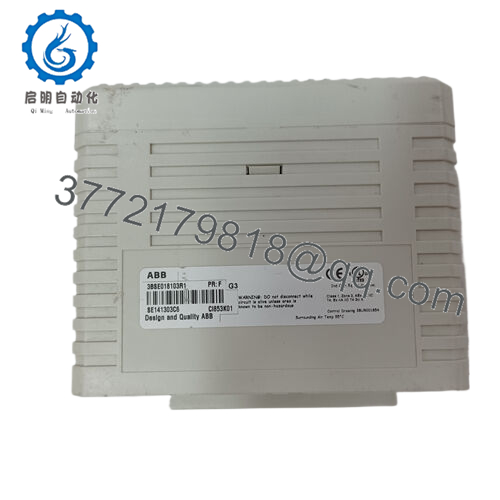
The ABB CI930F 3BDH001010R0002 is a PROFIBUS DP master communication module designed for AC 900F controllers in Freelance DCS systems. It enables deterministic communication between the controller and field devices such as drives, remote I/O, and instrumentation, supporting both DP-V0 and DP-V1 protocols with redundancy capability.
From a supply-chain perspective, this module sits in a controlled lifecycle phase—still active but increasingly constrained in global channels. Securing New Surplus inventory reduces exposure to lead time variability and avoids emergency sourcing. From a Total Cost of Ownership (TCO) standpoint, avoiding refurbished modules eliminates hidden failure risks that can cascade into DCS communication loss and plant-wide downtime.

- CI930F 3BDH001010R0002
5. Installation & Configuration Guide
Stage 1: Pre-Installation (Prep & Safety)
- Execute lock-out/tag-out (LOTO) on the DCS cabinet
- Use ESD wrist strap and grounded workspace
- Capture photos of PROFIBUS wiring (A/B lines) and addressing
- Verify controller firmware and power capacity (24 V DC with 20% buffer)
Stage 2: Removal
- Release module locking mechanism from AC 900F rack
- Pull evenly to prevent backplane connector stress
- Inspect PROFIBUS connectors and shielding integrity
Stage 3: Installation (Clone & Seat)
- Reconnect PROFIBUS lines exactly (Line A/B must not be swapped)
- Insert module into designated communication slot
- Ensure full seating into backplane interface
Stage 4: Power-On & Testing
- Reapply power and monitor module LEDs
- Confirm PROFIBUS master initialization
- Validate slave device communication (address scan)
- Check redundancy switchover if configured
6. Firmware/Software Versions & Upgrade Notes
- Minimum required software: Freelance 2013 or higher
- Firmware must match controller revision to avoid DP communication faults
- DP-V1 features may not function correctly on legacy system configurations
- Avoid firmware upgrades during replacement unless system-wide validation is completed
- Always export PROFIBUS configuration before module swap
7. Frequently Asked Questions (FAQ)
Q1: Is this unit truly new or previously installed?
This product is a Brand New Surplus unit. It is not used, not pulled from a decommissioned plant, and not refurbished. It has zero wear on connectors and passes full QC validation.
Q2: Why not use a cheaper refurbished PROFIBUS module?
Refurbished communication modules often fail under load due to degraded components. A PROFIBUS master failure can disconnect up to 100+ field devices, causing immediate process interruption.
Q3: Is this module still in production?
It is technically active, but supply is tightening. Many sites treat it as a strategic spare due to long lead times (4–8+ weeks typical).
Q4: What stocking strategy do you recommend?
- Critical node: Keep 1–2 units on-site (insurance policy)
- Reorder point: Based on lead time variability + project demand
- Strategy: Combine buffer stock with cross-site sharing across plants
Q5: Can this module be hot-swapped?
It supports hot plug at the hardware level, but in practice, avoid live replacement unless the system is engineered for it. Risk includes bus interruption and slave communication loss.
Q6: What happens if firmware versions mismatch?
You may encounter communication timeouts, slave dropout, or configuration rejection. Always align firmware with the existing system baseline.
Q7: What warranty and QC process are included?
Each unit includes 12 month warranty, serial traceability, and QC reports covering functional testing, communication handshake validation, and electrical verification.