 WhatsApp: +86 16626708626
 Email:
  Phone: +86 16626708626
Description
3. Key Technical Specifications
| Parameter | Value |
|---|---|
| Manufacturer | ABB |
| Model Number | HESG314031 216EA61B |
| Product Type | I/O Control Module / Interface Board |
| System Compatibility | ABB Procontrol P13/P14, Advant OCS, REG216 |
| I/O Channels | Up to ~40 channels (varies by configuration) |
| Input Types | Voltage, current, RTD, thermocouple (multi-signal support) |
| Supply Voltage | 24 V DC |
| Communication | Backplane bus / RS-485 / CAN (system dependent) |
| Isolation | Signal-to-logic isolation (~1500 V typical) |
| Operating Temperature | −25°C to +70°C |
| Update Rate | ≤100 ms typical scan cycle |
| Mounting | Rack-mounted plug-in module |
| Lifecycle Status | Legacy / discontinued risk |
4. Product Introduction & Supply Chain Strategy
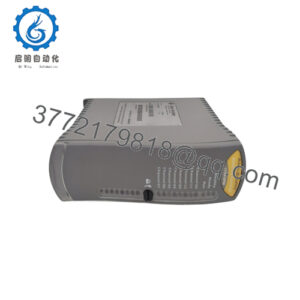
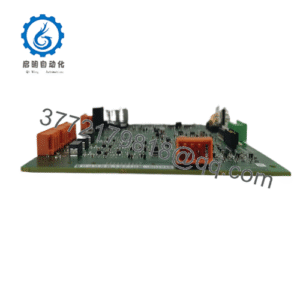
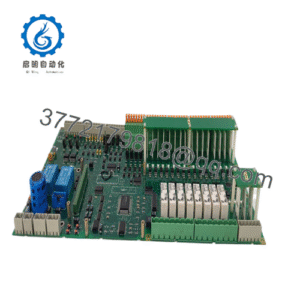
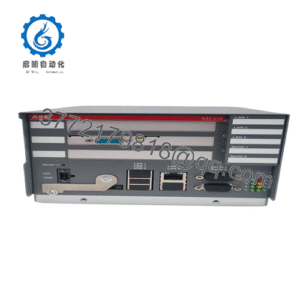
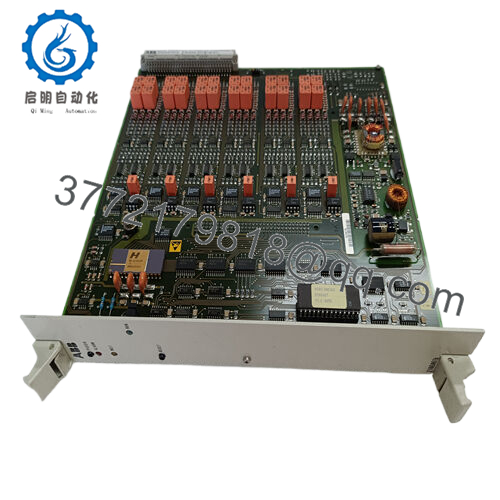
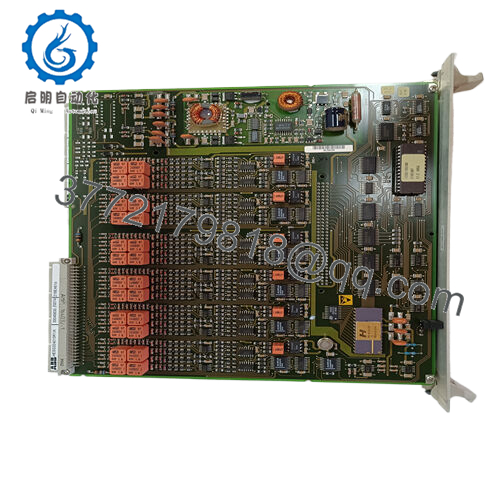
The ABB HESG314031 216EA61B is an industrial I/O control module used in legacy ABB DCS and protection platforms. It handles signal acquisition, processing, and communication between field instrumentation and the control system, supporting mixed analog and digital inputs in power generation and process automation environments.
From a supply-chain standpoint, this is a high-risk legacy spare. OEM production is limited or discontinued, and lead time variability is extreme. Securing New Surplus inventory avoids emergency sourcing and protects uptime. From a Total Cost of Ownership (TCO) perspective, avoiding refurbished units eliminates hidden component degradation that can trigger costly plant trips.

- HESG314031 216EA61B
5. Installation & Configuration Guide
Stage 1: Pre-Installation (Prep & Safety)
- Apply lock-out/tag-out (LOTO) to the control cabinet
- Use ESD protection (grounded wrist strap mandatory)
- Photograph wiring, terminal assignments, and module slot position
- Confirm 24 V DC supply stability with ≥20% buffer capacity
Stage 2: Removal
- Release retaining clips or rack fasteners
- Extract module evenly to avoid backplane pin bending
- Inspect connectors for oxidation or mechanical wear
Stage 3: Installation (Clone & Seat)
- Replicate jumper/DIP settings exactly from original module
- Align with rack guide rails and insert evenly
- Ensure full engagement with backplane connector
Stage 4: Power-On & Testing
- Reapply power and monitor system startup
- Check LED indicators (RUN normal, ERR off)
- Validate signal acquisition and I/O mapping
- Perform loop checks for critical signals
6. Firmware/Software Versions & Upgrade Notes
- Match firmware and system configuration exactly with existing controller
- Legacy ABB systems are sensitive to firmware mismatches
- Newer firmware may introduce incompatibility with older I/O mapping
- Do NOT upgrade firmware during emergency replacement
- Always document firmware version and parameter set before removal
- Test any firmware change offline before deployment
7. Frequently Asked Questions (FAQ)
Q1: Is this module truly new or surplus stock?
This product is a Brand New Surplus unit. It is not used, not pulled from a decommissioned plant, and not refurbished. It retains original OEM manufacturing integrity with zero wear.
Q2: Why is New Surplus preferred over refurbished?
Refurbished modules often contain aged capacitors and relays. A failure in an I/O module can propagate incorrect signals, leading to process instability or trips.
Q3: Is this part obsolete?
Yes. This belongs to a legacy ABB platform. Availability is declining globally, making it a strong candidate for a last-time-buy strategy.
Q4: What stocking strategy do you recommend?
- ABC Classification: A-class critical spare
- Min/Max: Min 1 / Max 2 per critical system
- Buffer stock: Mandatory due to long lead times
- Strategy: Combine buffer stock with cross-site sharing
Q5: Can the module be hot-swapped?
No. Always power down before replacement to avoid backplane damage and signal faults.
Q6: Does the module store configuration data?
No. Configuration is typically stored in the main controller. Always back up system parameters before replacement.
Q7: What warranty and QC process are included?
Each unit includes 12 month warranty, full traceability, and QC reports covering functional testing, electrical verification, and inspection sign-off.