WhatsApp: +86 16626708626
 Email:
  Phone: +86 16626708626
Description
3. Key Technical Specifications
| Parameter | Value |
|---|---|
| Number of Inputs | 16 diagnostic (4 points/group) |
| Voltage Category | 12/24 V DC sink |
| Operating Voltage Range | 10…30 V DC |
| Input Voltage, Nominal | 24 V DC |
| On-State Current, Min | 2 mA @ 10 V DC |
| On-State Current, Max | 13 mA @ 30 V DC |
| Off-State Current, Max | 1.5 mA per point |
| Input Delay (Off → On) | 340 µs nom / 1 ms max + filter (0/1/2 ms) |
| Input Delay (On → Off) | 740 µs nom / 4 ms max + filter (0/1/2/9/18 ms) |
| Backplane Current @ 5.1 V | 150 mA |
| Backplane Current @ 24 V | 3 mA |
| Power Dissipation, Max | 5.8 W @ 60 °C |
| Isolation Voltage | 250 V continuous |
| Reverse Polarity Protection | Yes |
| Removable Terminal Block | 1756-TBCH or 1756-TBS6H |
| Operating Temperature | 0 °C to +60 °C |
4. Product Introduction
The Allen-Bradley 1756-IB16D is a 16-point diagnostic DC input module for ControlLogix systems. It accepts 10–30 V DC sinking signals arranged in four groups of four points and provides per-point open-wire detection.
Diagnostic features include open-wire detection, timestamp of diagnostics, and configurable change-of-state reporting. The module draws 150 mA at 5.1 V from the backplane and supports user-selectable input filter times. It is commonly used where field-wire integrity monitoring is required for sensors, limit switches, and pushbuttons.
5. Troubleshooting Quick Reference
| Symptom | Possible Cause | Relevance to this Part | Quick Check Method | Recommendation |
|---|---|---|---|---|
| Input point shows open-wire fault | Broken wire, loose terminal, or high-impedance sensor | ✅ High | Check field wiring continuity and sensor current | Repair wiring; ensure sensor supplies ≥ 2 mA |
| Input never turns on | Voltage below threshold or reverse polarity | ✅ High | Measure voltage at input terminal relative to group common | Correct polarity; verify field power supply |
| Input stuck on | Short to +24 V or leakage | ✅ Medium | Measure off-state voltage and current | Isolate field device; check for wiring shorts |
| Module OK LED off / faulted | Backplane power or communication issue | ❌ Medium | Verify chassis power and module seating | Reseat module; check power supply capacity |
| Intermittent diagnostics | Noise or marginal filter settings | ✅ Medium | Increase On→Off filter time; check cable shielding | Adjust filter times; improve grounding |
| Group of inputs fail together | Common wire open or group power loss | ✅ High | Measure voltage at group common terminals | Repair common wiring |
If diagnostics remain unclear, capture diagnostic tags, LED status, and field voltage readings before contacting support.
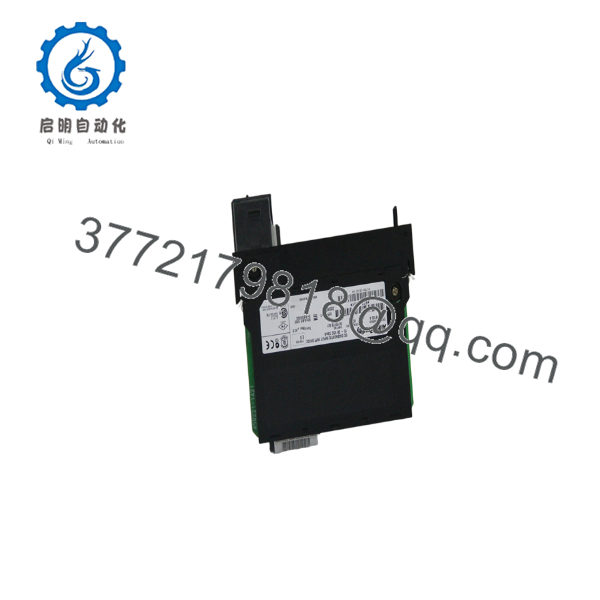
1756-IB16D
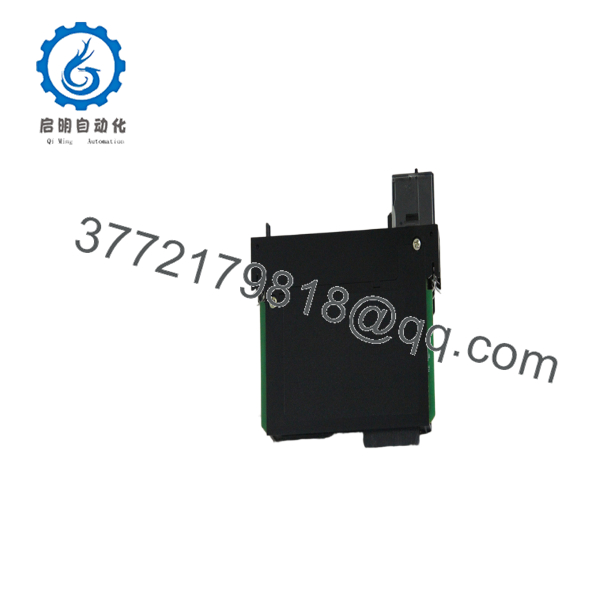
1756-IB16D
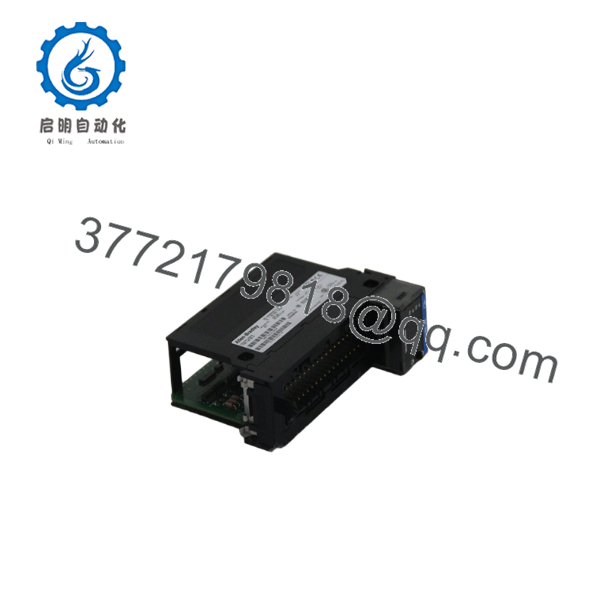
1756-IB16D
6. Frequently Asked Questions (FAQ)
Q: Is the 1756-IB16D still in production? Yes. Diagnostic digital input modules remain active in the ControlLogix portfolio.
Q: What diagnostics does the 1756-IB16D provide? Primary diagnostic is open-wire (wire-off) detection per point. It also supports timestamp of diagnostics and configurable change-of-state reporting. It does not provide true short-circuit detection to the positive rail.
Q: What is the difference between 1756-IB16 and 1756-IB16D? The IB16 is a standard non-diagnostic input module. The IB16D adds per-point open-wire detection and enhanced diagnostic data.
Q: What terminal blocks are required? Use a 36-position Removable Terminal Block: 1756-TBCH (screw-clamp) or 1756-TBS6H (spring-clamp).
Q: Does open-wire detection require a minimum current? Yes. The field device must draw at least approximately 2 mA in the on-state for reliable detection. Very low-power sensors may need a parallel resistor.
Q: Can the module be hot-swapped? Yes. ControlLogix supports Removal and Insertion Under Power (RIUP) when the system is properly configured. Follow Rockwell safety guidelines.
Q: Why is New Surplus sometimes priced lower? These are genuine Allen-Bradley modules from excess inventory or cancelled projects. They are unused and typically supplied with anti-static protection. They are not refurbished unless specifically stated.