WhatsApp: +86 16626708626
 Email:
  Phone: +86 16626708626
Description
Key Technical Specifications
| Parameter | Value / Specification |
| Catalog Number | 1771-ASB |
| Module Type | Remote I/O Adapter Module |
| Communication Protocol | Allen-Bradley Universal Remote I/O (RIO) |
| Baud Rates | 57.6 kbps (10,000 ft max), 115.2 kbps (5,000 ft max), 230.4 kbps (2,500 ft max) |
| Cable Type | Shielded Twinaxial Cable (Belden 9463) |
| Slot Allocation | Mounts in the leftmost slot (Slot 0) of any 1771 Universal I/O Chassis |
| Addressing Modes | 2-slot, 1-slot, and 1/2-slot addressing |
| Backplane Current Draw | 1.0 A @ 5V DC (supplied by 1771 power supply module) |
| Isolation Voltage | 500V AC continuous (communication port to backplane) |
| DIP Switch Functions | Rack address, starting group, baud rate, primary/secondary chassis, I/O rack size |
| Operating Temperature | 0 to 60°C (32 to 140°F) |
Product Introduction & Supply Chain Strategy
This product is a Brand New Surplus unit. It is not used, not pulled from a decommissioned plant, and not refurbished. All modules undergo rigorous quality verification to ensure OEM-level reliability. The Allen-Bradley 1771-ASB is the cornerstone communication interface for PLC-5 Remote I/O architecture. It acts as the local rack slave, passing discrete and block-transfer analog data between 1771 I/O modules and remote master controllers over Belden 9463 twinax cabling.
Because Rockwell Automation declared the PLC-5 / 1771 platform End-of-Life (EOL), securing genuine New Surplus 1771-ASB modules is the most effective safeguard against emergency production stoppages. Installing refurbished or second-hand 1771-ASB modules carries significant operational risks: age-degraded twinax transceiver ICs, oxidized backplane edge connectors, and loose DIP switches frequently cause intermittent RIO rack drops, CRC communication errors, or unrecoverable block-transfer failures. Procuring verified New Surplus hardware ensures intact signal transmission, full backplane bus stability, and maximum Total Cost of Ownership value by extending the operational lifespan of legacy production assets.
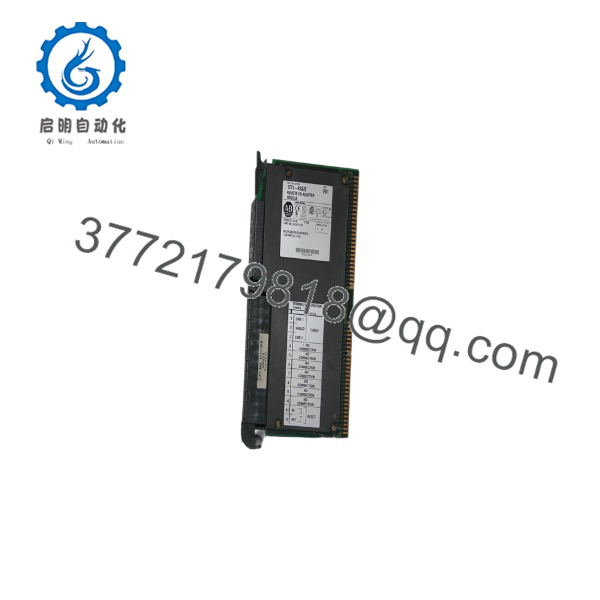
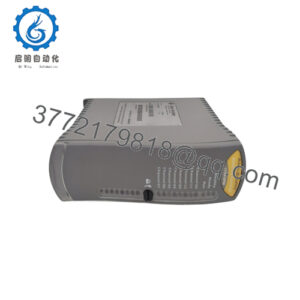
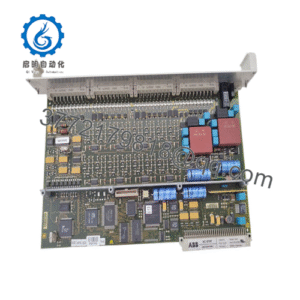
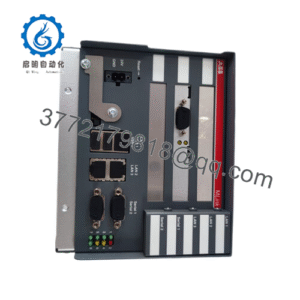
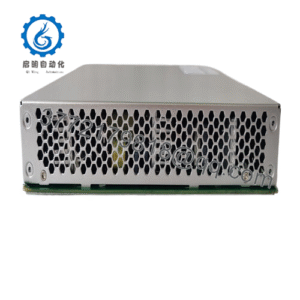
1771-ASB
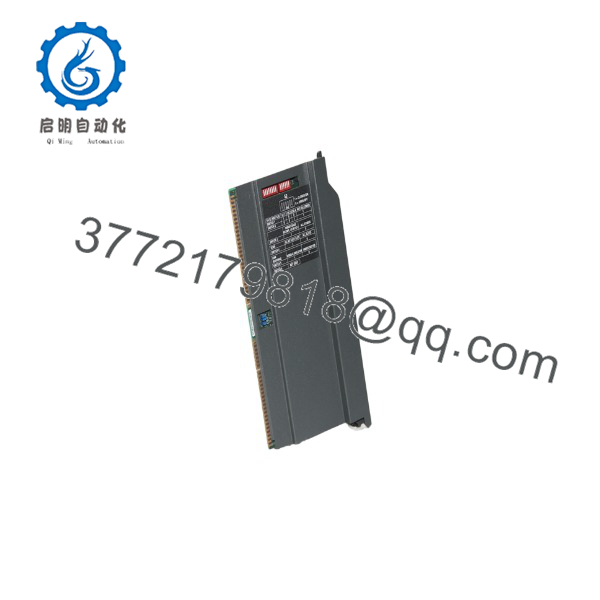
1771-ASB
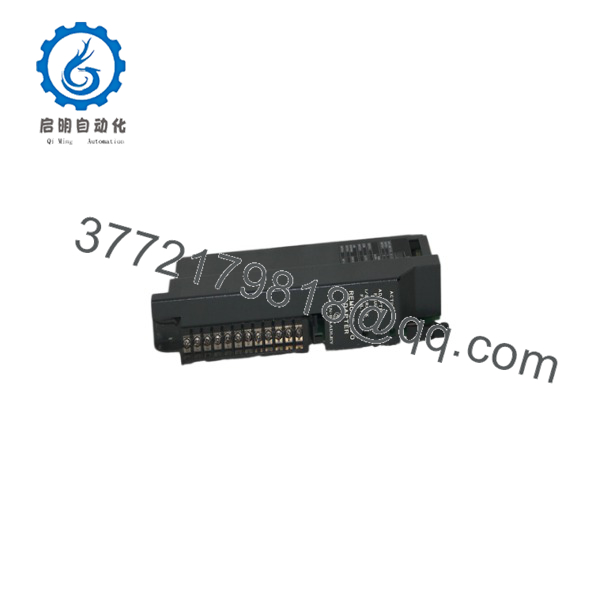
1771-ASB
Installation & Configuration Guide
1.Pre-Installation (Prep & Safety):Safety warning: De-energize 1771 power supply before inserting or removing modules.
Isolate main AC power feeding the 1771 chassis power supply (e.g., 1771-P4S, 1771-P7) and implement Lock-Out/Tag-Out (LOTO) procedures. Put on a grounded anti-static wrist strap. Record the positions of all DIP switches (SW1 and SW2) on the failed 1771-ASB board to ensure correct rack address, baud rate, and addressing mode replication.
2.Removal:
Disconnect the 3-pin phoenix twinax cable connector (Line 1, Shield, Line 2) from the front panel. Disengage the top and bottom chassis module latching levers. Carefully slide the 1771-ASB module straight forward out of Slot 0 of the 1771 rack chassis.
3.Installation (Clone & Seat):
Unpack the New Surplus 1771-ASB module in an ESD-protected workstation. Set the DIP switches on SW1 and SW2 to match the original module’s rack address, baud rate, and addressing settings. Align the card edge with the plastic card guides in Slot 0, push the module firmly into the backplane connector until fully seated, and snap the latching levers closed. Reconnect the 3-pin twinax plug.
4.Power-On & Testing:
Restore power to the 1771 power supply. Observe the front panel LED indicators: confirm the ACTIVE LED illuminates solid green and the ADAPTER FAULT LED turns off. On the master controller (PLC-5 or ControlLogix 1756-RIO module), verify the remote rack status tag indicates an active, error-free scanning state.
Firmware/Software Versions & Upgrade Notes
- Series Revision Differences: The 1771-ASB Series E (and Series D/C) supports enhanced features over earlier Series A/B models, including support for 1/2-slot addressing, block transfer configuration for advanced analog modules, and extended cable distances.
- Termination Resistor Requirement: The physical end nodes on a RIO twinax cable network must have a termination resistor installed across the Line 1 and Line 2 terminals (150 Ohm for 57.6k/115.2k baud; 82 Ohm for 230.4k baud).
- ControlLogix Migration: When migrating from PLC-5 CPUs to ControlLogix controllers using 1756-RIO or 1756-DHRIO modules, existing 1771-ASB adapters can remain in place, allowing for phased control system upgrades without rewiring field I/O.
Frequently Asked Questions (FAQ)
What is the difference between the 1771-ASB and the 1771-AS module?
The 1771-ASB is an enhanced Universal Remote I/O adapter supporting 1/2-slot, 1-slot, and 2-slot addressing modes along with full block-transfer capability. The older 1771-AS adapter is a legacy unit limited to basic 2-slot addressing and restricted module configurations. The 1771-ASB is a direct drop-in replacement upgrade for the 1771-AS.
Why choose New Surplus over a refurbished 1771-ASB module?
Refurbished 1771-ASB boards have usually undergone decades of continuous thermal exposure inside industrial control enclosures. This causes microscopic solder cracking on surface-mount components, internal trace degradation, and worn edge-card fingers that lead to random RIO rack faults under vibration or temperature swings. New Surplus guarantees pristine edge-card contacts, zero operating hours, fresh onboard electronics, and total signal integrity.
Are these 1771-ASB modules original Allen-Bradley products?
Yes. We strictly guarantee that every 1771-ASB module supplied is 100% Original OEM New Surplus. Sourced from audited distributor excess, panel builder overstock, and verified project reserves, each board undergoes physical pin checks, switch configuration checks, and live RIO bench testing before shipment.
How do I configure the baud rate on the 1771-ASB?
Baud rate selection is set via DIP switches on the side or rear of the module assembly. The baud rate configured on the 1771-ASB DIP switches must match the master PLC scanner’s RIO channel baud rate setting (57.6 kbps, 115.2 kbps, or 230.4 kbps).
What warranty coverage is included with this New Surplus adapter?
All New Surplus 1771-ASB modules are backed by our full 1-year replacement warranty. If any operational defect or communication fault occurs within 12 months under standard working conditions, we will replace the module immediately directly from our stock.