 WhatsApp: +86 16626708626
 Email:
  Phone: +86 16626708626
Description
3. Key Technical Specifications
- Module Type: Industrial control / DCS insert PCB
- System Architecture: Alstom / Converteam turbine & plant control racks
- Function: Control logic execution + signal routing within rack backplane
- Backplane Interface: Proprietary edge connector (non-standard bus)
- Power Supply: Internal rack DC rails (system-dependent, typically 5–24 V DC distribution)
- Cooling: Passive convection inside sealed industrial cabinet
- Mounting: Dedicated Alstom control rack slot (keyed insertion)
- Operating Environment: Power generation, turbine halls, heavy industry control rooms
- Signal Role: Intermediate control layer between CPU/controller and I/O modules
- EMI Immunity: Designed for high electrical noise environments
- Revision Dependency: High (hardware revision + rack firmware pairing required)
- Failure Modes: Connector oxidation, capacitor aging, backplane contact wear, thermal fatigue
- Maintainability: Requires system-level diagnostics (not standalone module testing)
4. Product Introduction
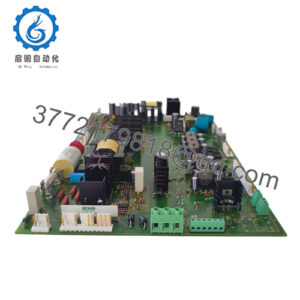
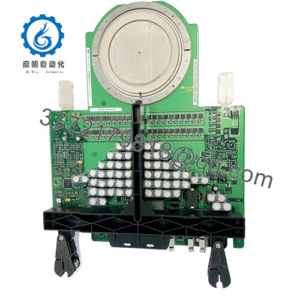
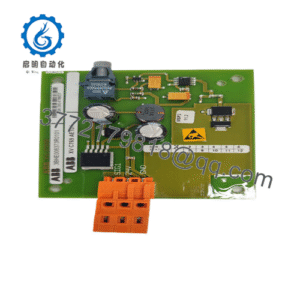
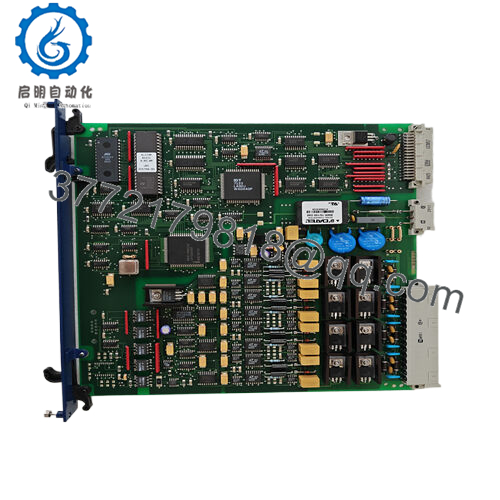
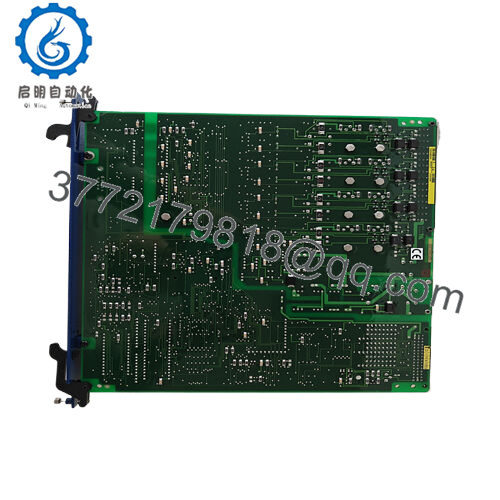
The ALSTOM 029.1069 650 is a legacy plug-in control PCB used in Alstom industrial automation and turbine control systems. It operates inside proprietary rack-based DCS architectures where it performs internal control signal handling and logic interfacing functions.
This module is typically found in power plants and heavy industrial facilities where Alstom/Converteam control systems remain in service. It is not a standalone controller and depends entirely on rack backplane architecture and system firmware compatibility.
5. Installation & Configuration Guide
Stage 1: Pre-Installation Preparation (10–15 min)
- ⚠️ Confirm full system shutdown (critical for turbine/process environments)
- Apply Lockout/Tagout (LOTO) to control cabinet power feeds
- Verify zero voltage on rack backplane using calibrated multimeter
- Required tools:
- ESD wrist strap
- Precision screwdriver set
- Multimeter
- Labeling kit
- Camera for documentation
- Record before removal:
- Rack slot position
- Adjacent module layout
- Any jumper or revision markings on PCB
- Backplane connector condition
Stage 2: Removing the Old Module (10–20 min)
- Open control rack and identify module location
- Label surrounding modules to preserve system mapping
- Disconnect any auxiliary harnesses if present
- Release PCB locking ejector tabs
- Pull module straight out—no twisting or side load
- Store removed unit in ESD-safe packaging for reference
⚠️ Do not lever the PCB out. Backplane connector damage is one of the most common irreversible failures in Alstom legacy systems.
Stage 3: Installing the New Module (10–20 min)
- Verify exact model match: 029.1069 650 (revision compatibility critical)
- Inspect rack slot for dust, oxidation, or bent pins
- Align PCB carefully with guide rails
- Insert evenly until full backplane engagement is confirmed
- Lock ejector mechanism fully
- Reconnect any external wiring if applicable
Self-check:
- Fully seated in backplane
- No PCB tilt or resistance during insertion
- Lock tabs engaged
- No visible connector misalignment
Stage 4: Power-On & Testing (10–15 min)
- Energize rack power only (field outputs isolated)
- Observe rack/system diagnostics LEDs (system-dependent behavior)
- Connect engineering workstation if available
- Verify module recognition in control software
- Check signal continuity across dependent control loops
- Gradually reintroduce process load
⚠️ If the system faults immediately:
- Check revision mismatch
- Inspect backplane seating integrity
- Verify rack firmware compatibility with module generation

- 029.1069 650
6. Frequently Asked Questions (FAQ)
1. What is the ALSTOM 029.1069 650 used for?
It is a plug-in control module used inside Alstom/Converteam DCS racks for internal signal processing and control logic handling.
2. Is this module still manufactured?
No. It is a discontinued legacy component. Market availability is limited to surplus, refurbished, or recovered stock.
3. Can it operate outside an Alstom system?
No. It depends on a proprietary backplane and system firmware environment. It has no standalone operation capability.
4. What typically fails in this module?
Most failures come from connector oxidation, aging capacitors, or thermal stress from long-term continuous operation.
5. Can I hot-swap this module?
No. Removing it under power risks destabilizing the control system and interrupting critical industrial processes.
6. Are all 029.1069 650 units interchangeable?
Not always. Revision level and rack generation compatibility must be verified before replacement.
7. Why is availability inconsistent?
Supply depends on decommissioned industrial systems; there is no active production line for this part.