WhatsApp: +86 16626708626
 Email:
  Phone: +86 16626708626
Description
Key Technical Specifications
| Parameter | Value |
|---|---|
| Product type | Short-circuit protector |
| Manufacturer | Autronica |
| Model | AK-6 |
| Application | Marine electrical and alarm/control systems |
| Adjustable current range | 4–16 A |
| Adjustable time delay | 0.1–1 second |
| Reported type number | AK-6 |
| Reported unit number | 1066 or 1067, depending on listing |
| Revision reference | Rev. 2 units reported with No. 1535 |
| Approximate weight | 2.35–2.37 kg |
| Product number reference | 5037 reported by one marine supplier |
| Installation environment | Marine equipment cabinet or system assembly |
| Input/output terminal details | Verify from the unit nameplate and wiring documentation |
| Supply voltage | Not verified in the public sources reviewed |
| Trip characteristic | Verify against the actual unit adjustment scale and manual |
| Reset method | Verify from the installed unit and system procedure |
| Certification | Confirm vessel, class, and application approval before installation |
| Service status | Legacy/limited-stock marine component |
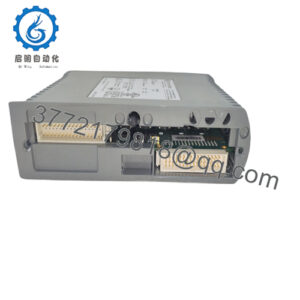
Supplier records consistently identify the Autronica AK-6 as a short-circuit protector and report a 4–16 A current range with a 0.1–1 second delay adjustment. The public listings show different reference numbers and revisions, so the exact nameplate and revision must be matched before purchase.
Product Introduction
The Autronica AK-6 is a marine short-circuit protector used to limit and disconnect overcurrent in compatible electrical or alarm-system circuits. Available listings report an adjustable protection range of 4–16 A and a delay adjustment from 0.1 to 1 second.
This is a system-specific protection device, not a generic replacement breaker. Verify the vessel system, trip settings, supply voltage, terminal arrangement, reset method, reference number, and classification requirements before installation.
Troubleshooting Quick Reference
| Symptom | Possible Cause | Relevance to This Part | Quick Check Method | Recommendation |
|---|---|---|---|---|
| Protected circuit will not energize | AK-6 tripped, upstream supply failure, or downstream short circuit | ✅ High | Isolate the load, check the protector indication or reset position, and measure continuity with power removed | Find and clear the downstream fault before resetting |
| AK-6 trips immediately after reset | Hard short, incorrect wiring, or excessive load | ✅ High | Disconnect the downstream load and perform an insulation and continuity check with an approved meter | Do not repeatedly reset; repair the short before re-energizing |
| AK-6 trips after a delay | Overload, motor inrush, or delay setting too short | ✅ High | Measure operating current with a calibrated clamp meter and compare it with the 4–16 A setting | Correct the load or adjust the setting only within the approved system limits |
| Circuit remains energized during a suspected short | Protector failure, bypass wiring, incorrect terminals, or setting issue | ✅ High | De-energize the circuit, verify terminal wiring against the drawing, and check the trip mechanism | Remove the unit from service if it does not interrupt a controlled test fault |
| Nuisance trips during motor starting | Inrush current, insufficient delay, or deteriorated load | ✅ Medium | Record startup current and trip time, then compare with the approved coordination study | Correct motor-start protection coordination; do not simply increase the setting |
| Trip point is inconsistent | Worn mechanism, thermal stress, loose adjustment, or unstable supply | ✅ High | Apply a controlled test current and record the trip current and time at multiple settings | Replace or professionally test the protector if repeatability is poor |
| Unit becomes hot in normal operation | Excessive current, loose terminal, contact resistance, or internal damage | ✅ High | Measure current and inspect terminal temperature with an approved thermal instrument | De-energize and correct the cause before further operation |
| Circuit drops out during vibration | Loose terminal, damaged mounting, or intermittent internal contact | ✅ Medium | Inspect mounting and terminals, then perform a controlled continuity test while stationary and under approved vibration checks | Secure the wiring or replace the unit if the internal contact is intermittent |
| Reset will not latch | Continuing fault, mechanical damage, or incorrect reset procedure | ✅ High | Isolate the downstream circuit and attempt reset only under the maintenance procedure | Do not force the mechanism; investigate the load and replace a damaged protector |
| Replacement trips at a different current | Wrong revision, incorrect adjustment range, or mismatched reference number | ✅ High | Compare the old and replacement nameplates, range markings, and reference numbers | Match the exact revision and verify settings before commissioning |
| Alarm system reports a protection fault | AK-6 auxiliary contact, wiring, or monitoring circuit issue | ✅ Medium | Check the auxiliary contact state and continuity against the system schematic | Diagnose the monitoring circuit separately from the main protection path |
Critical warning: The public sources do not establish the AK-6 supply voltage, terminal pinout, interrupting capacity, or certified trip curve. Do not select a replacement based only on “AK-6” and the 4–16 A marking. If the fault remains unclear, contact technical support with the complete nameplate, revision, reference number, wiring diagram, trip setting, measured current, and test results.
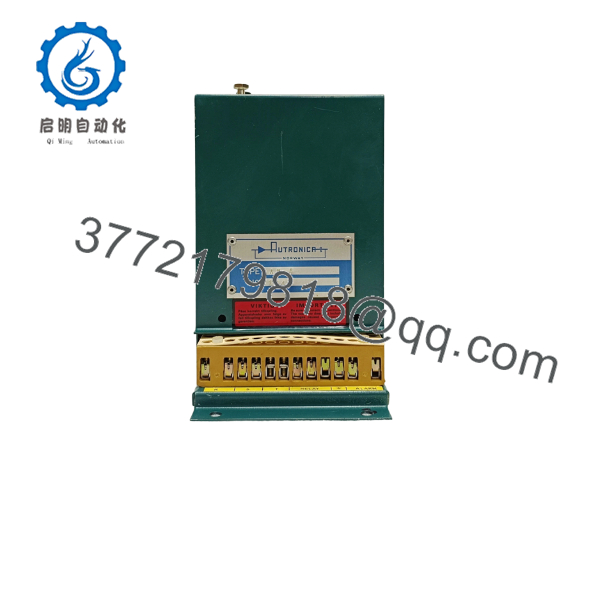
AK-6
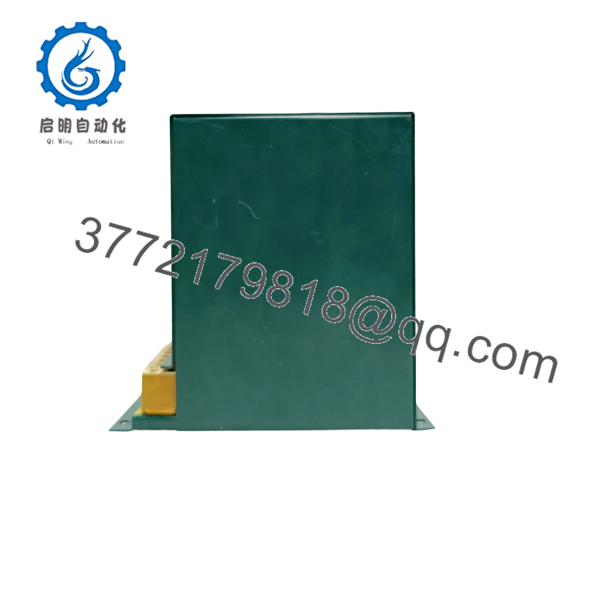
AK-6
Frequently Asked Questions (FAQ)
What does the Autronica AK-6 do?
The AK-6 is a short-circuit protector for compatible marine electrical or alarm/control circuits. Its reported adjustment range is 4–16 A, with a delay adjustment from 0.1 to 1 second.
Is the AK-6 the same as a standard circuit breaker?
Do not assume so. It may include system-specific trip behavior, reset mechanics, auxiliary contacts, and mounting or wiring requirements. Replace it only with an approved equivalent that matches the original protection function and coordination requirements.
What do the 4–16 A and 0.1–1 second settings mean?
The 4–16 A value is the reported adjustable current range. The 0.1–1 second value is the reported adjustable delay range. Actual trip behavior depends on the model revision, test conditions, load characteristics, and installation. Confirm the curve and settings from the unit’s documentation before adjustment.
Are all AK-6 units interchangeable?
No. Supplier listings reference different unit numbers, including 1066, 1067, and Rev. 2 No. 1535. Match the exact revision, adjustment range, terminal layout, mounting arrangement, auxiliary contacts, and system reference before ordering.
Can I reset the AK-6 while the equipment is energized?
Only if the approved Autronica or vessel maintenance procedure explicitly allows it and the load is in a safe state. Repeated resets can re-energize a faulted circuit and create additional damage or fire risk. Isolate the downstream load and follow lockout procedures first.
Is the Autronica AK-6 obsolete?
It appears to be a legacy marine component with limited, supplier-dependent availability. Listings show used and Rev. 2 units, but the public sources reviewed do not confirm current production status. Request the exact condition, revision, serial or reference number, and test report for the offered unit.
Why is a used AK-6 cheaper than a factory replacement?
Marine surplus suppliers may offer removed, used, or refurbished units rather than current factory stock. The listing should state New Original, New Surplus, Used, or Refurbished (tested). Request a trip-test record, adjustment-setting confirmation, terminal photos, warranty terms, and evidence that the unit matches the vessel’s approved protection scheme.