WhatsApp: +86 16626708626
 Email:
  Phone: +86 16626708626
Description
Key Technical Specifications
| Parameter | Value |
|---|---|
| Model Number | 330180-X1-05 |
| Manufacturer | Bently Nevada |
| Product Family | 3300 XL 8 mm Proximity Transducer System |
| Product Type | Proximitor Sensor / eddy-current signal conditioner |
| Primary Function | Converts probe displacement into proportional voltage output |
| Measurement Principle | Non-contact eddy-current proximity measurement |
| Total System Length | 5.0 m / 16.4 ft; verify against the unit label and complete matched sensor chain |
| Nominal Sensitivity | 200 mV/mil / 7.87 V/mm |
| Typical System Supply | −24 V DC |
| Typical Supply Range | −17.5 to −26 V DC |
| Typical Current Consumption | Approximately 120 mA at −24 V DC |
| Frequency Response | DC to 10 kHz for the matched 3300 XL system |
| Compatible Probe Family | 3300 XL 8 mm proximity probe; verify exact probe, extension cable, and sensor configuration |
| Typical Measurements | Radial shaft vibration, static shaft position/gap, Keyphasor reference, and speed-related measurements |
| Standard Target Calibration | AISI 4140 steel or equivalent specified target material |
| Mounting | Verify physical mounting option from the installed nameplate or MOD identification |
| Certification / Approval | Verify from the exact unit label; X1-05 is not sufficient evidence of a particular hazardous-area approval |
| Service Role | Signal conditioning only; it is not a monitor, PLC input module, or 4–20 mA transmitter |
The 330180-X1-05 is consistently identified as a Bently Nevada 3300 XL Proximitor Sensor used in the 3300 XL 8 mm proximity measurement chain. However, public listings associate the same base number with different MOD suffixes and varying claims about mounting, cable, approvals, and exact configuration. Treat the full nameplate—including any MOD number—as the controlling purchase and replacement identifier.
Product Introduction
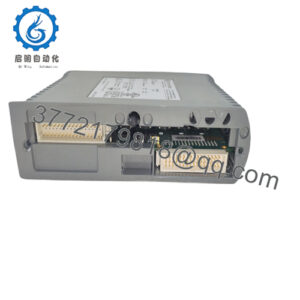
The Bently Nevada 330180-X1-05 is a 3300 XL Proximitor Sensor for conditioning the signal from a matched 8 mm eddy-current proximity probe and extension cable. It supplies the probe circuit and produces a linear voltage signal used for shaft vibration, shaft gap, position, speed, or Keyphasor measurements on critical rotating machinery.
The X1-05 identifier alone is not enough to guarantee a direct replacement. These sensors can carry factory MOD numbers that define the actual assembly configuration. Match the full label, including MOD suffix, total probe-plus-cable system length, mounting arrangement, terminal wiring, target-material calibration, and required approvals before installing the unit.
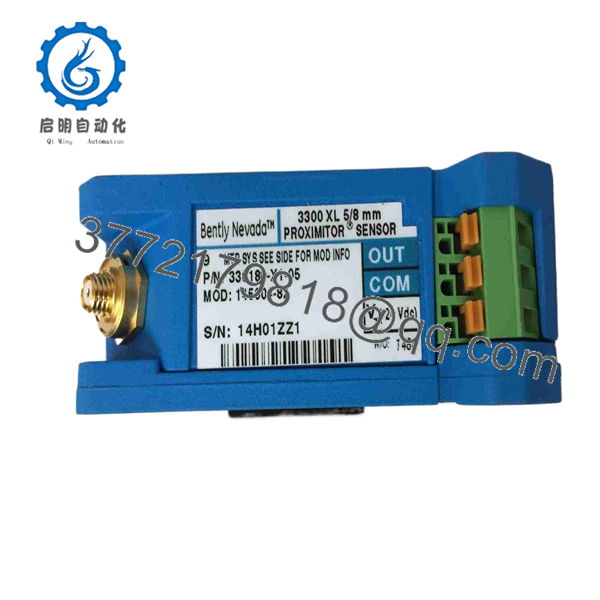
330180-X1-05
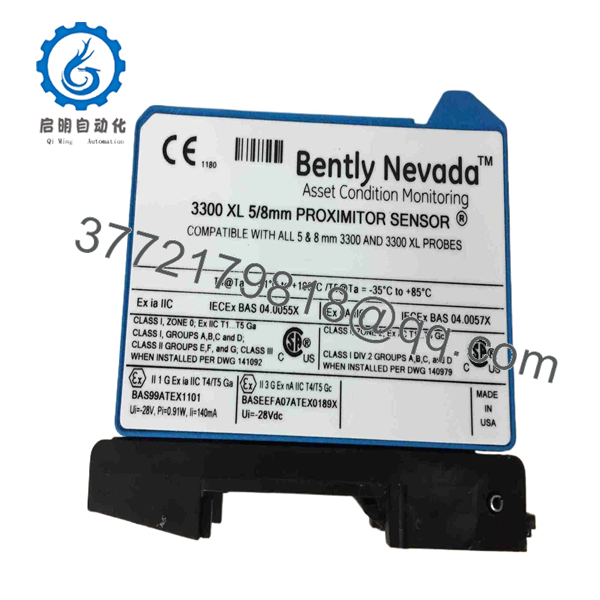
330180-X1-05
Troubleshooting Quick Reference
| Symptom | Possible Cause | Relevance to This Part | Quick Check Method | Recommendation |
|---|---|---|---|---|
| No Proximitor output | Missing −24 V DC supply, blown fuse, loose power terminal, open output conductor, failed sensor | ✅ High | Measure the supply voltage directly at the sensor terminals with a calibrated meter. Check the return connection, fuse, and output path to the monitor. | Confirm correct supply and terminal torque before replacing the 330180-X1-05. |
| Gap voltage is outside normal baseline | Incorrect probe gap, mismatched cable length, wrong probe system, loose connector, probe-bracket movement, changed target material | ✅ High | Measure DC output at the sensor and compare it with the machine baseline. Confirm probe label, extension-cable label, and total system length. | Verify the complete matched system before changing gaps or alarm limits. A gap shift can be a real machinery condition. |
| Vibration reading is noisy or intermittent | Connector not fully seated, damaged cable shield, cable abrasion, EMI, moisture, sensor electronics issue | ✅ Medium | Inspect the probe connector, extension cable, cable route, and shield path. Compare the affected channel output with a known-good channel. | Correct cable and routing issues first. Replace the sensor only after verifying the probe and cable assembly. |
| Output remains fixed at a high or low voltage | Open probe, shorted cable, failed extension cable, incompatible sensor chain, internal sensor failure | ✅ Medium | Isolate under the approved machinery-protection procedure. Check probe and extension-cable continuity, connector condition, and supply/output voltage. | Diagnose the probe and cable before replacing the Proximitor Sensor. |
| Channel shows NOT OK after sensor replacement | Wrong MOD variant, wrong system length, reversed wiring, connector mismatch, monitor configuration problem | ✅ High | Compare the complete old and replacement labels, including MOD number. Verify all terminal points, sensor-chain labels, and monitor channel setup. | Do not commission until the full sensor system is confirmed compatible and the channel has passed functional checks. |
| Output drifts when panel temperature changes | Excessive ambient temperature, poor enclosure ventilation, supply drift, sensor degradation, cable routed near heat source | ✅ Medium | Trend output voltage and cabinet temperature. Measure supply stability and inspect installation proximity to hot piping, bearing housings, or exhaust paths. | Correct the environment first. Replace the sensor if drift continues with stable supply and verified ambient conditions. |
| Machine trips after replacement | Sensor mismatch, changed gap voltage, alarm configuration issue, wiring error, real machine condition | ✅ High | Compare pre- and post-maintenance gap voltage, vibration scale, and alarm states. Review the saved monitor configuration and machine baseline. | Treat the trip as valid until proven otherwise. Follow the plant’s approved protection and return-to-service procedure. |
| DCS value is incorrect but monitor reading is correct | DCS scaling, analog-input type, polarity, grounding, or signal-isolator issue | ❌ Low | Measure sensor/monitor output, then compare it with the DCS input engineering value. | Correct the integration issue. Do not replace a sensor that produces the correct local signal. |
| Sensor or terminal block shows corrosion | Moisture ingress, chemical vapor, poor enclosure sealing, loose gland, contaminated cabinet | ✅ Medium | De-energize and inspect the terminal block, case, connectors, and cable entry for corrosion, residue, or discoloration. | Replace damaged sensor hardware and eliminate the ingress source before installation. |
| Supply fuse opens or sensor heats up | Reversed polarity, cable short, damaged sensor, incorrect wiring, faulty power supply | ✅ High | Isolate the circuit. Compare power wiring against the approved drawing, inspect cable insulation, and measure resistance before re-energizing. | Do not increase fuse size. Correct the short or wiring defect first. |
❗ The MOD number matters. A label such as 330180-X1-05 MOD:145004-09 or another MOD variant may identify a factory-specific assembly configuration. Do not treat two sensors as interchangeable based only on the base 330180-X1-05 number. Get photos of the complete nameplate before ordering.
❗ This is not the probe. The Proximitor Sensor sits in the panel or sensor housing and conditions the signal. The complete measurement chain includes the machine-mounted 3300 XL probe, extension cable, and Proximitor Sensor. A failed channel can originate at any of the three components.
❗ Verify total system length before replacement. The sensor chain must match the specified 5.0 m configuration. Do not splice, shorten, or substitute a cable simply because the connectors fit; cable capacitance and electrical length affect gap voltage and vibration scaling.
❗ Do not assume hazardous-area approval. Public listings do not consistently identify the approval configuration for the X1-05 base number. Check the exact product label, installation drawing, area classification, and applicable certificate before using the device in a classified location.
If the diagnosis remains unclear, send technical support photos of the full sensor label and MOD suffix, probe and extension-cable labels, terminal wiring, supply-voltage measurement, DC gap voltage, monitor diagnostic status, vibration trend, and panel installation location. Keep these checks in mind and you will save yourself 90% of typical rework time.
Frequently Asked Questions (FAQ)
What is the Bently Nevada 330180-X1-05?
The 330180-X1-05 is a Bently Nevada 3300 XL Proximitor Sensor. It conditions the eddy-current signal from a compatible 3300 XL proximity probe and extension cable and provides a linear voltage output for machinery vibration and shaft-position measurement.
Is 330180-X1-05 the same as 330180-50-00?
Do not assume so. Both are part of the 3300 XL Proximitor Sensor family and may relate to 5.0 m system configurations, but the X1-05 device can carry a factory MOD suffix that affects the actual configuration. Match the full installed label, including MOD number, before treating either number as a direct replacement.
What does the X1 suffix mean?
Available public listings do not provide a complete OEM order-code decode for X1 that can be relied on across all variants. Some sources associate it with a modified or specific factory configuration. Verify the complete part number and MOD code directly from the sensor nameplate and Bently Nevada documentation rather than guessing the configuration from the suffix.
Does the 330180-X1-05 measure vibration directly?
It forms part of the measurement system. The machine-mounted probe senses changes in the electromagnetic field caused by shaft movement, while the Proximitor Sensor conditions that signal into a proportional voltage output. The connected monitor interprets the output for vibration, gap, position, speed, or Keyphasor use.
Is it a 4–20 mA transmitter?
No. The standard 3300 XL system uses a voltage output proportional to gap, with a nominal matched-system sensitivity of 200 mV/mil or 7.87 V/mm. A standard PLC current-loop input is not a direct substitute for the appropriate machinery-monitor input or approved signal-conditioning arrangement.
Can I hot-swap the Proximitor Sensor?
Do not assume hot swapping is permitted. Disconnecting it can generate NOT OK conditions, false alarms, loss of vibration/position monitoring, and possible machinery-protection action. Follow the approved bypass, alarm-management, work-permit, and functional-test process before servicing the sensor.
Why is the new sensor reading a different gap voltage?
Verify the full sensor chain first: exact probe type, extension cable, total electrical length, Proximitor part number and MOD suffix, connector engagement, power supply, mechanical probe gap, shaft target material, and monitor configuration. A changed gap voltage can also indicate a real probe-mounting or machine-position change, so do not adjust alarm limits without validating the physical installation.
Is the 330180-X1-05 obsolete, and should I keep a spare?
The 3300 XL platform remains widely installed, but this specific base number should be treated as configuration-sensitive legacy inventory because of the MOD variations found in the market. Keep a verified spare only after confirming full nameplate equivalence, total system length, mounting, approvals, and sensor-chain compatibility. Store it in ESD-safe packaging with photos of the installed system, baseline gap voltage, and current machinery-monitor configuration.