 WhatsApp: +86 16626708626
 Email:
  Phone: +86 16626708626
Description
3. Key Technical Specifications
| Parameter | Value |
| System Length | 4.0 meters (Standard configuration) |
| Probe Diameter Compatibility | 11 mm |
| Linear Range | 4.0 mm (160 mils) starting at approx. 0.5 mm (20 mils) |
| Nominal Scale Factor (ASF) | 3.94 V/mm (100 mV/mil) |
| Input Voltage Range | −17.5 VDC to −26 VDC |
| Output Impedance | 50 Ω nominal |
| Operating Temperature Range | −51 °C to +100 °C (−60 °F to +212 °F) |
| Mounting Options | 35 mm DIN rail or panel mount |
| Material | A300 glass-reinforced polymer case |
4. Product Introduction & Supply Chain Strategy
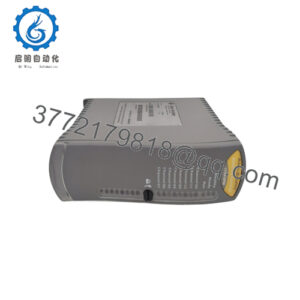
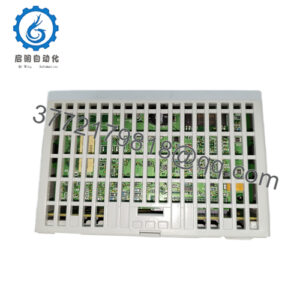
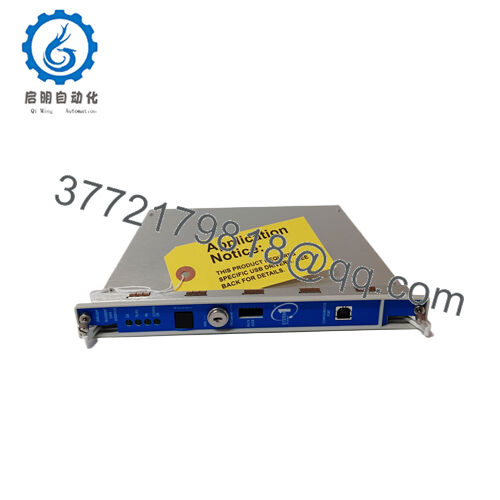
The Bently Nevada 330750-40 is a 3300 XL 11mm Proximitor Sensor designed for critical machinery protection systems, specifically tracking fluid-film bearing clearance, shaft vibration, and axial position in large industrial turbines, compressors, and pumps. This specialized module conditions the radio frequency (RF) signal from an 11 mm proximity probe, converting it into a linear voltage signal proportional to the gap distance between the probe tip and the observed target area.
From a strategic asset management perspective, securing this component as New Surplus is a highly cost-effective insurance policy against unexpected plant shutdowns. Because these modules monitor mission-critical rotating machinery, a single sensor failure can trigger a false trip or leave capital equipment unprotected. Procuring verified New Surplus units avoids the high price and long lead times often associated with factory orders while bypassing the severe operational risks that come with unverified or poorly repaired secondhand hardware.

- 330750-40
5. Installation & Configuration Guide
Stage 1: Pre-Installation (Prep & Safety)
- Implement standard lock-out/tag-out (LOTO) protocols on the machinery monitoring rack. Ensure the specific channel configuration within the 3500 rack or machinery protection system is bypassed to prevent accidental trip signals during replacement.
- Put on a grounded anti-static wrist strap and connect it to the cabinet ground. Static discharge can damage the sensitive internal RF conditioning circuits of the sensor.
- Document the precise physical placement of the existing module. Take high-resolution photos of the terminal connections, cable routing, and any specific mounting orientation.
Stage 2: Removal
- Carefully disconnect the coaxial cables (Probe and Extension cable) from the Proximitor using a calibrated BNC torque wrench if applicable, or by hand. Do not pull on the raw cable body.
- Loosen the terminal screws for the Power, Signal, and Common wires, then slide the wires out.
- Using a small flat-head screwdriver, gently release the DIN rail retention clip at the bottom of the module housing and lift the unit clear of the rail, taking care not to impact adjacent instruments.
Stage 3: Installation (Clone & Seat)
- Verify that the new 330750-40 matches the system length requirement (4.0 meters) specified by your physical cable and probe assembly.
- Snap the module securely onto the 35 mm DIN rail or fasten it to the backpanel plate using the integrated mounting hardware.
- Reconnect the coaxial cables. Ensure the connections are clean, dry, and tight. Hand-tighten plus a quarter turn; overtightening will deform the coaxial core.
- Land the power and signal wires into the terminal block according to the standard terminal layout: Terminal 1 (VT), Terminal 2 (OUT), Terminal 3 (COM). Tighten screws to 0.5 N·m (4.5 in-lb).
Stage 4: Power-On & Testing
- Apply power to the system rail and verify the input voltage falls within the −17.5 VDC to −26 VDC specification using a calibrated digital multimeter.
- Measure the raw DC voltage output at the terminal block. With the machine at rest, verify the gap voltage falls within the linear section of the calibration curve (typically between −2 VDC and −18 VDC).
- Verify that the corresponding monitor module on the main rack shows a stable, green “OK” status light and that no system faults are present.
6. Firmware/Software Versions & Upgrade Notes
The Bently Nevada 330750-40 is a hardwired, analog RF-conditioning component and does not contain programmable microchip firmware or flash memory. It relies purely on analog circuitry calibrated for 11 mm transducer configurations.
However, you must verify system-level hardware compatibility before installation:
- The 330750-40 is calibrated specifically for 11 mm probe systems and 4.0-meter total system lengths (probe plus extension cable). Mixing this unit with 5 mm, 8 mm, or 25 mm probes, or using a 9.0-meter cable system, will result in severe scale factor errors and incorrect vibration or position readings.
- Ensure that the monitoring rack configuration software (such as Bently Nevada Rack Configuration Software for the 3500 series) has the appropriate channel options selected for an 11 mm Proximitor sensor system to maintain accurate data scaling.
7. Frequently Asked Questions (FAQ)
What is the exact physical condition of this Bently Nevada 330750-40 module?
This unit is guaranteed to be Brand New Surplus inventory. It has never been installed on a machine, never pulled from a decommissioned facility, and is not refurbished. It is original OEM hardware stored in controlled, clean warehouse conditions, and it is opened only for final inbound quality control inspection before shipment.
Why is the price lower than ordering direct from the OEM but higher than a used unit?
Our pricing reflects the marketplace reality of sourcing authentic, unused components from global supply channels. It is priced lower than the factory list because it comes from excess corporate or project inventory, but it carries a modest premium over used or refurbished parts. This premium covers rigorous verification and guarantees you receive a component with zero operational wear, avoiding the high risk of failure associated with secondhand items.
Can I use this 330750-40 module with a standard 8 mm Bently Nevada probe?
No. The internal tuning and analog amplification circuits of the 330750-40 are optimized exclusively for the electrical characteristics of an 11 mm probe tip. Connecting this module to an 8 mm probe will alter the Nominal Scale Factor, resulting in inaccurate measurements and invalid machinery protection configurations.
What are the main failure risks if I try to use a refurbished or secondhand Proximitor?
Secondhand Proximitor modules frequently suffer from internal component degradation caused by years of exposure to heat and high-frequency vibration within field enclosures. This degradation can lead to signal drift, intermittent calibration loss, or immediate component failure upon installation. In a critical turbine system, an unstable sensor signal can cause a false emergency shutdown, resulting in significant revenue losses from unplanned downtime.
Does this module require specialized software calibration during commission?
The hardware itself is factory-calibrated and cannot be adjusted via software. However, during installation, maintenance technicians must perform a physical gap calibration check to confirm that the static DC voltage matches the expected position within the linear range of the system curve before returning the machinery to service.