WhatsApp: +86 16626708626
 Email:
  Phone: +86 16626708626
Description
Key Technical Specifications
- Manufacturer: B&R Automation
- Part Number: 8MSA5X.RO-X400-1
- Product Family: 8MSA synchronous servo motor series
- Motor Type: Permanent-magnet, three-phase synchronous servo motor
- Primary Application: Controlled position, speed, and torque axes
- Motion Duty: High-dynamic industrial servo applications
- Feedback: Integrated motor feedback/encoder system; verify exact encoder variant from the motor nameplate before ordering
- Drive Compatibility: Requires a correctly matched B&R servo drive, motor cable, feedback cable, and parameter set
- Mounting: Flange-mounted servo motor; confirm flange dimensions, shaft geometry, and keyway/brake details against the installed motor
- Electrical Connection: Dedicated power and feedback connections; do not substitute pinouts from another 8MSA revision
- Replacement Status: Legacy/discontinued motor family; confirm stock condition and exact suffix match before purchase
- Installation Environment: Industrial control cabinet or machine-mounted servo axis; verify ambient temperature, sealing requirements, and cooling clearance from the OEM documentation
The available public listings consistently identify this unit as a B&R 8MSA-series high-dynamic three-phase synchronous servo motor. Those listings are not a substitute for the original B&R nameplate or datasheet, so confirm rated voltage, current, torque, speed, brake option, shaft type, and feedback configuration before releasing a purchase order.
Product Introduction
The B&R 8MSA5X.RO-X400-1 is a three-phase synchronous servo motor from the B&R 8MSA motion-control family. It provides controlled rotary motion for machine axes that require repeatable positioning, regulated speed, and torque control, including packaging machinery, converting equipment, material handling, and general automated production equipment.
Buyers typically need this exact model to keep an installed B&R motion axis operational without redesigning mechanics, cabling, drive parameters, or PLC motion logic. The full suffix matters. Match the motor nameplate, encoder/feedback variant, shaft and flange dimensions, brake requirement, and existing servo-drive configuration before installing a replacement.
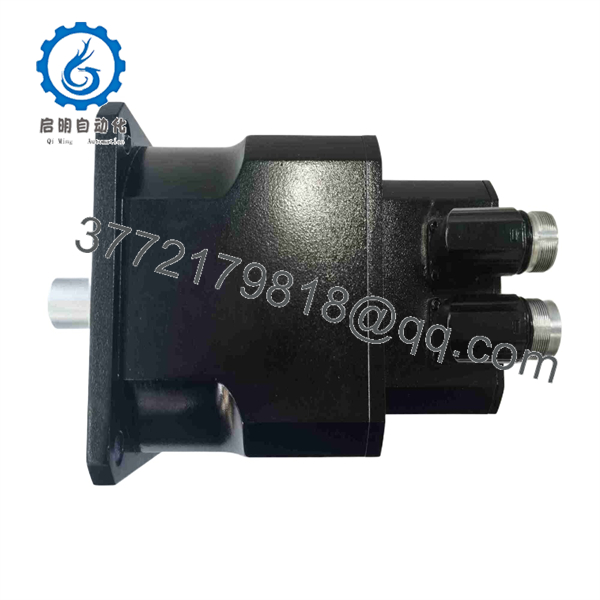
8MSA5X.RO-X400-1
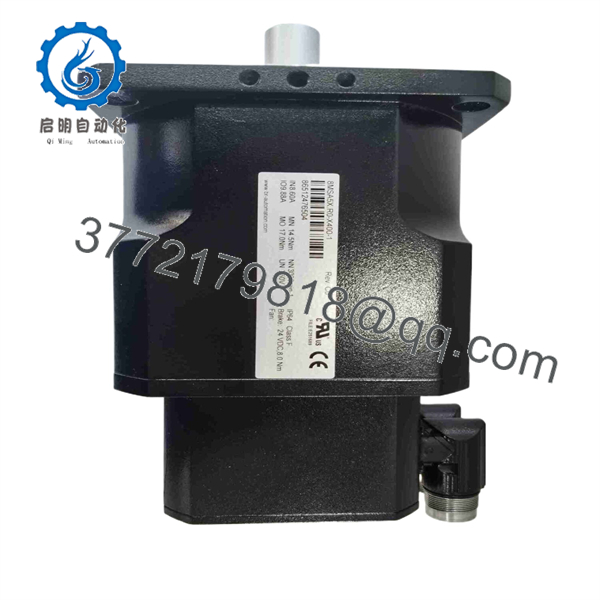
8MSA5X.RO-X400-1
Troubleshooting Quick Reference
| Symptom | Possible Cause | Relevance to This Part | Quick Check Method | Recommendation |
|---|---|---|---|---|
| Servo drive shows no ready status after power-up | Missing control voltage, safety circuit open, drive fault, or motor feedback issue | ⚠️ Medium | Check the servo drive diagnostic code first; measure the drive control supply at its specified terminals and verify STO/safety inputs are satisfied | Do not condemn the motor before reading the drive fault history and verifying the safety chain |
| Motor does not rotate but drive enables | Mechanical jam, brake not releasing, torque limit, incorrect drive parameters | ✅ High | Command low-speed jog with the machine uncoupled where safe; check whether the shaft remains locked after the brake-release command | Verify brake supply and mechanics before replacing the motor |
| Drive reports encoder or feedback fault | Damaged feedback cable, connector contamination, encoder mismatch, internal feedback failure | ✅ High | Power down, inspect feedback connector pins for bent contacts or oil ingress; substitute a known-good feedback cable if available | Check cable continuity and shielding first; replace the motor only after external cable faults are excluded |
| Axis hunts, oscillates, or cannot settle | Incorrect tuning, load inertia change, loose coupling, encoder noise | ⚠️ Medium | Compare current servo tuning and motor parameters with the backup; inspect coupling, gearbox, and belt tension | Restore the known machine parameter set before assuming a motor defect |
| Motor overheats during normal production | Overload, poor cooling, excessive duty cycle, phase imbalance, bearing wear | ✅ High | Trend motor temperature and actual torque in the drive software; compare current draw across phases using a suitable clamp meter | Check load and tuning first. Persistent heat with normal load may indicate bearing or winding damage |
| Loud bearing noise or rough shaft rotation with power removed | Bearing wear, contamination, crash damage | ✅ High | Isolate machine power, decouple the load if possible, and rotate the shaft manually for roughness, binding, or noise | Replace or send the motor for qualified servo-motor evaluation; do not run a noisy bearing until it fails |
| Motor brake remains engaged | Brake supply failure, wrong brake voltage, failed brake coil, wiring fault | ✅ High, if brake-equipped variant | Measure brake voltage at the motor connector during enable command; compare it with the motor nameplate and drive documentation | Verify the exact brake option. A failed brake circuit can look exactly like a seized motor |
| Drive trips on overcurrent immediately | Shorted motor cable, phase-to-ground fault, failed drive output stage, damaged motor winding | ✅ Medium | Disconnect motor cable at the drive and retest the drive per OEM procedure; with motor isolated, perform insulation testing only to OEM-approved limits | Do not apply a generic hipot test to encoder-equipped servo motors. Determine whether the trip follows the drive, cable, or motor |
| Position shifts after replacement | Incorrect feedback type, wrong commutation data, coupling slip, parameters not transferred | ✅ High | Compare motor ID, feedback settings, electronic gearing, homing values, and coupling alignment with the old axis | Load the backed-up drive parameters only after confirming they match the exact replacement motor variant |
Before pulling the B&R 8MSA5X.RO-X400-1, photograph every connector, cable label, coupling position, brake wire, and motor nameplate. I have seen technicians replace a healthy motor because a damaged feedback cable produced an encoder fault. If the fault remains unclear, provide photos of the nameplate and connectors, the servo-drive diagnostic log, and the exact fault code to technical support.
Frequently Asked Questions
Is the B&R 8MSA5X.RO-X400-1 a servo motor or a servo drive?
It is a B&R 8MSA-series three-phase synchronous servo motor, not a drive or PLC module. It needs a compatible servo drive to supply controlled three-phase power and interpret the motor-feedback signal. Do not order it as a replacement for a B&R ACOPOS drive without checking the failed component first.
Can I replace this motor with another B&R 8MSA motor?
Not automatically. Similar-looking 8MSA motors may differ in flange size, shaft dimensions, rated speed, torque, feedback type, brake configuration, connector orientation, and winding/drive matching. Match the complete part number, including RO-X400-1, and compare the old motor nameplate against the proposed replacement. A partial model match is not enough for a no-rework replacement.
Can I hot-swap the 8MSA5X.RO-X400-1 while the machine is powered?
No. Isolate the machine, remove servo power, discharge the drive DC bus according to the servo-drive manual, and apply your site lockout/tagout procedure before disconnecting motor or feedback cables. Disconnecting a servo motor under power can damage the drive output stage, create an arc risk, or cause unexpected motion if the axis still has stored mechanical energy.
Will my machine program remain intact when I replace the motor?
Usually, the PLC application remains intact because it is stored in the controller, not in the motor. The catch is servo-drive configuration: motor parameters, commutation information, limits, electronic gearing, homing settings, tuning values, and brake settings may reside in the drive project. Back up the drive configuration before removal. After replacement, verify motion direction, actual position feedback, torque limits, and homing at low speed before returning the machine to production.
Why does the exact suffix matter on this B&R motor?
The suffix identifies the specific motor configuration. It can affect mechanical interfaces and electrical/feedback characteristics that determine whether the existing cable set, drive setup, and machine mechanics will work. A motor that bolts in but has an incompatible encoder or brake option can produce immediate feedback faults, uncontrolled direction errors, or an axis that will not enable.
Is this an obsolete B&R model, and is stock limited?
The 8MSA5X.RO- is commonly offered through surplus and legacy-automation channels, which indicates it should be treated as a limited-availability replacement part rather than a routine current-production item. Verify actual stock, physical photographs, date code, nameplate details, included accessories, and lead time before issuing a purchase order.
Is the item New Surplus or Refurbished, and why can it cost less than factory supply?
Confirm the condition on the individual quotation. New Original / New Surplus normally means unused OEM stock that entered the secondary market through excess inventory, plant closures, or discontinued-project spares; it may not have current factory distribution support. Refurbished means a previously used unit that has been inspected and tested. Ask for clear nameplate photos, packaging photos, serial-number traceability where available, and the supplier’s written warranty terms.
What testing should a supplier perform before shipping?
For a new-surplus motor, ask for inbound visual inspection, verification of the exact part number and nameplate, connector inspection, shaft-rotation check, and packing in an ESD-safe, impact-protected carton. For a refurbished motor, request a documented test on a compatible B&R servo-drive setup, including feedback recognition, controlled rotation, direction verification, current monitoring, brake operation if equipped, and a loaded run where practical. Test photos and video should be available upon request.