WhatsApp: +86 16626708626
 Email:
 Phone: +86 16626708626
Description
Core Product Summary
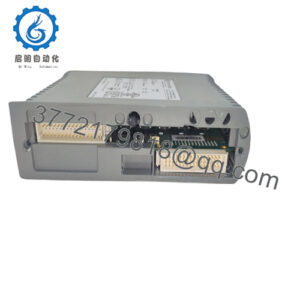
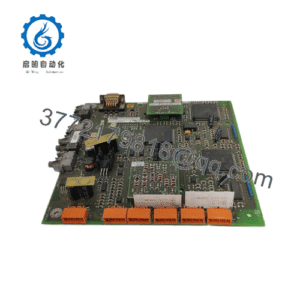
The Delta Tau (now Omron Delta Tau) Turbo PMAC2 CPU 160MHz is a high-performance central processing unit board designed for multi-axis, high-precision motion control applications. Powered by a 160 MHz Motorola/Freescale 24-bit DSP56311 digital signal processor, this CPU engine delivers rapid trajectory generation, complex inverse kinematics, high-speed digital servo loop updates, and multi-tasking PLC program execution across up to 32 axes of motion.
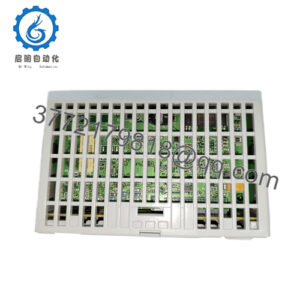
Available in various form factors including 3U CompactPCI/UMAC backplane modules, VMEbus boards, and standalone motherboard configurations, the Turbo PMAC2 CPU 160MHz serves as the primary processing engine within high-speed industrial machinery. The board incorporates high-speed static RAM (SRAM), flash memory for firmware and user programs, dual-ported RAM (DPRAM) for fast host communication, and support for high-speed fieldbus interfaces like MACRO (Motion and Control Ring Optical).
Key Technical Specifications
| Parameter | Specification |
|---|---|
| Manufacturer | Delta Tau Data Systems / Omron Delta Tau |
| Product Model | Turbo PMAC2 CPU (160 MHz Option) |
| Processor Type | 24-bit Fixed-Point DSP (Motorola DSP56311) |
| Clock Frequency | 160 MHz |
| Control Capacity | Up to 32 axes of simultaneous trajectory generation and control |
| Standard User Memory | 128k × 24 or 512k × 24 SRAM compiled/assembled program memory |
| User Data Memory | 128k × 24 SRAM |
| Flash Memory | 1M × 8 / 4M × 8 Flash memory for user backup and firmware |
| Dual-Ported RAM (DPRAM) | 32k × 16 DPRAM (Option 2B / standard on select configurations) |
| Form Factor / Bus | UMAC (3U CompactPCI style), VMEbus, PCI, or Standalone |
| Host Communications | Ethernet (10/100 Mbps), USB 2.0, RS-232 / RS-422 |
| Servo Loop Frequency | Configurable up to several tens of kHz (typical 10 kHz–20 kHz loop closure) |
Detailed Product Overview
The Turbo PMAC2 CPU operating at 160 MHz represents an advanced processing tier in the Delta Tau Turbo PMAC motion controller family. Designed for applications requiring high axis counts, sub-micron positioning accuracy, continuous multi-axis path interpolation, or rapid execution of complex background tasks, the 160 MHz CPU provides twice the processing speed of standard 80 MHz variants.
Processing Engine & Motion Architecture
The core Motorola DSP56311 architecture allows the CPU to calculate linear, circular, parabolic, and cubic spline interpolations in real time. It performs trajectory calculations while simultaneously executing digital PID filtering, velocity and acceleration feedforward, notch filter algorithm processing, and phase commutation for AC brushless servo motors or direct-drive linear motors.
System Integration & Bus Options
As a modular CPU, the Turbo PMAC2 160MHz board interfaces directly with Delta Tau axis interface cards (such as ACC-24E2 or ACC-24E3) via the local system backplane (e.g., UMAC 3U UBUS). For host-level data exchange, the CPU utilizes dual-ported RAM over USB, Ethernet, or PCI/VME bus configurations to transmit position, velocity, and status registers to host HMI or SCADA systems without interrupting real-time motion control execution.
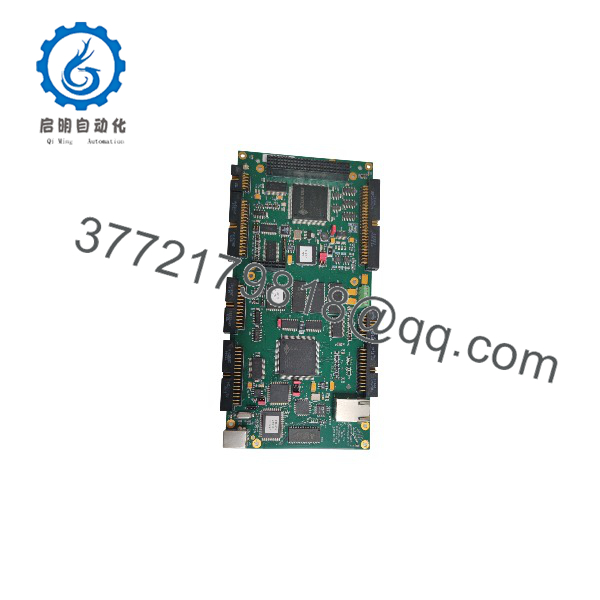
PMAC2 CPU 160MHz
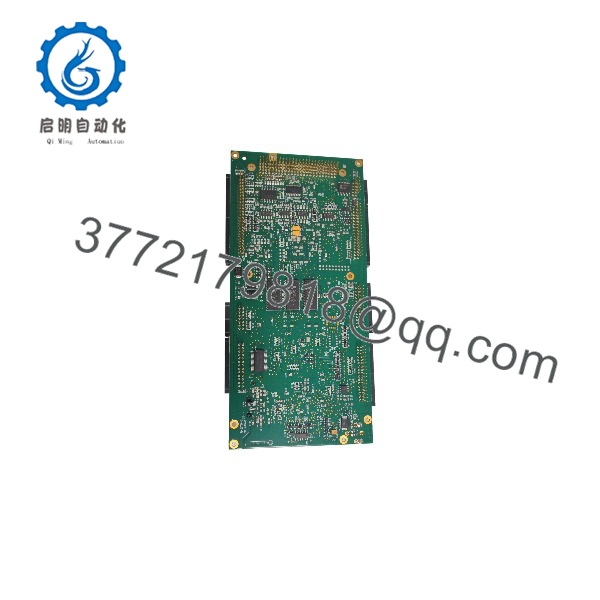
PMAC2 CPU 160MHz
Engineering Selection Highlights
- High-Speed 160 MHz Processing: Provides double the computation capacity of 80 MHz DSP models, handling higher servo frequencies and complex custom kinematic algorithms.
- Up to 32-Axis Motion Control: Coordinates trajectories, electronic gearing, and synchronized multi-axis motion across up to 32 axes within a single controller environment.
- Dual-Ported RAM Architecture: Enables zero-latency data transfers between the DSP motion engine and host communications or fieldbus networks.
- Flexible Hardware Platforms: Compatible with 3U UMAC racks, VME backplanes, standalone boards, and MACRO ring fiber-optic/copper interfaces.
- Integrated Hardware Position Capture: Features sub-microsecond hardware position capture and comparison output capabilities for high-speed triggering and measurement applications.
System Compatibility & Integration Requirements
| Item / Dependency | Verified Compatibility or Requirement | Practical Note |
|---|---|---|
| System Rack / Chassis | Delta Tau UMAC 3U Rack, VMEbus Chassis, or Standalone Baseboard | Ensure correct backplane slot alignment and system power distribution. |
| Axis Interface Expansion | ACC-24E2 series (PMAC2 4-axis interface cards), ACC-5E, ACC-8E | Axis interface cards attach via local UBUS backplane or stack connectors. |
| Host Software Environment | Delta Tau Executive (PEWin32 PRO / PMAC Executive), PMAC Assist | Firmware version compatibility must be verified when swapping CPU cards. |
| Communication Cabling | Standard Category 5e Ethernet, USB 2.0 Type-B, or RS-232 serial cable | Shielded twisted-pair cabling recommended for industrial noise immunity. |
Dimensions, Mounting & Connection Notes
- Form Factor: 3U Eurocard form factor for UMAC system configurations; standard VME card height for VMEbus platforms.
- Installation Precautions: Sensitive to electrostatic discharge (ESD). Handle the board using grounded wrist straps and insert gently into card rail guides to avoid damaging backplane pins.
- Cooling Requirements: Ensure adequate forced-air ventilation within the rack enclosure to maintain ambient operating temperatures within specification, especially when running high-frequency servo routines.
- Grounding: Secure front-panel captive retention screws to the rack frame to establish mechanical locking and effective chassis shield grounding.
FAQ
What is the Turbo PMAC2 CPU 160MHz?
It is a 160 MHz DSP-based central processor module manufactured by Delta Tau (Omron Delta Tau) used to control multi-axis motion, servo loops, and automation tasks in industrial machinery.
How does the 160 MHz model differ from the 80 MHz model?
The 160 MHz version features a higher clock speed DSP (DSP56311), allowing for faster loop updates, higher axis counts, faster background PLC execution, and more complex real-time mathematical calculations.
What host interfaces are supported on the Turbo PMAC2 CPU?
Depending on configuration and installed daughterboards, the CPU supports 10/100 Mbps Ethernet, USB 2.0, RS-232/RS-422 serial, standard PCI, and VMEbus interfaces.
Which programming tools are used with this CPU?
The board is configured and programmed using Delta Tau software tools, such as PEWin32 PRO, PMAC Executive, or PMAC Setup routines, supporting PMAC Script language and compiled C routines.
Verification & Troubleshooting Notes
- Power / Watchdog LED Red or Unlit: Inspect input supply voltages on the backplane (typically +5V DC, ±12V DC). Check for loose seating in the rack chassis or corrupted firmware.
- Communication Link Timeout: Verify correct IP address configuration or COM port settings in PEWin32. Ensure dual-ported RAM (DPRAM) addresses match host software configurations.
- Axis Servo Instability or Following Error: Verify encoder feedback wiring and digital current/servo loop gain parameters. Ensure CPU trajectory cycle time match the selected servo update rates.
- Firmware Mismatch Error: When replacing a CPU card, confirm that firmware version compatibility matches existing program code and axis card revisions.