WhatsApp: +86 16626708626
 Email:
 Phone: +86 16626708626
Description
Key Technical Specifications
- Model: ME110 (DIEL ME100 series, type designation per nameplate)
- Function: Continuous supervision of winding temperatures in dry-type/cast-resin transformers and electric motors via embedded temperature probes
- Sensor Inputs: PTC thermistor probes per DIN 44081/44082 (fixed-threshold sensors); the ME100-series architecture supports two distinguished PTC input channels with up to six series-connected sensors per branch (max. 1.5 kΩ per branch)
- Outputs: Relay outputs for pre-alarm, alarm/trip, probe-fault indication, and fan control with hysteresis (relay ratings in the series: 250 V AC, 10 A resistive — confirm the relay set of your exact ME110 variant)
- Display/Programming: Front-panel display of channel values, automatic visualization of the hottest channel and its probe number, stored historical maximums per channel, relay test menu, programmed-value retention
- Dielectric Strength: 2.5 kV AC for 60 s (per ME100-series documentation)
- Panel Mounting: 91 × 91 mm square panel cutout, fastened with supplied mounting clips
- Memory: Stores programmed values and maximum temperature reached per channel
- Compatibility: DIEL PTCK-series PTC probes and the DIEL ME100-family accessories (fan cooling kits, ventilation panels, MT200-series units)
Verify precise compatibility with your existing installation and the DIEL datasheet before installation — the ME100 family includes several versions (ME100, ME100 V2, ME100 V3) with different relay counts and options, and the ME110 type designation should be matched against your unit’s nameplate.
Product Introduction
The DIEL ME110 is a microprocessor temperature monitor from Diel Srl’s ME100 series, built to watch the windings of dry-type transformers and electric motors and act before the insulation cooks. It reads PTC probes embedded in the windings, tracks the hottest channel automatically, remembers historical maximums, and drives the relay chain — pre-alarm, trip, probe fault, and fan control — that keeps a transformer in its thermal envelope.
Diel has built this hardware since 1996, with SMT-assembled boards and 100% optical inspection — these are simple, honest protection devices with a well-earned reputation for longevity. Panel replacement is a 91 × 91 mm cutout swap: land the probe wires, wire the relays, enter the settings, and the transformer is protected again. The reason plants buy this exact unit: transformer protection panels are type-tested as installed, and a like-for-like control avoids any re-qualification argument with the panel builder or the inspector.
Troubleshooting Quick Reference
| Symptom | Possible Cause | Relevance to this Part | Quick Check Method | Recommendation |
|---|---|---|---|---|
| Probe-fault alarm on startup | Open or shorted PTC branch — broken probe wire or loose terminal | ⚠️ Medium | Measure branch resistance at the unit’s terminals (each branch should read under 1.5 kΩ); check probe junction boxes | Fix the field loop — the unit is correctly reporting what it sees |
| Unit shows temperature but relays don’t change state | Relay settings wrong or relay test menu left in manual state | ❌ Low | Enter programming mode; verify pre-alarm/alarm thresholds and check the relay test menu is exited | Correct settings; the relay test feature is exactly the kind of thing left on by mistake after commissioning |
| Alarm trips immediately on power-up | Programmed values corrupted or a probe branch over threshold due to residual heat | ⚠️ Medium | Read the displayed channel values against expected winding temps; re-enter the programmed values | Genuine high temperature = investigate the transformer; corrupted settings = reprogram |
| No display, unit dead | Panel supply wiring or upstream fuse | ❌ Low | Measure supply voltage at the unit’s power terminals with a multimeter | Fix the supply path before condemning the unit |
| Fan never starts despite rising temperature | Fan relay failed or fan circuit breaker tripped | ✅ High | Force fan relay via the test menu and measure at the fan output terminals | Relay doesn’t pull in = unit fault; pulls in but fan dead = fan circuit fault |
| Intermittent probe-fault alarms in humid season | Moisture in probe junction boxes lowering branch insulation | ⚠️ Medium | Inspect junction boxes; measure branch resistance on a dry day vs. humid day | Seal the junction boxes — the probes and unit are fine |
❗ One safety note straight from the DIEL documentation, and it matters: do not perform dielectric strength (hipot) or partial discharge tests on the machine with the unit connected, and avoid wiring the unit directly to the secondary of the transformer without protection — closing a downstream breaker can produce transient overvoltages that damage the electronics. Disconnect the unit before any HV test on the machine.
Honest note: these units are simple and reliable; most “failures” we see are field wiring and settings. Ten minutes with a multimeter across the probe branches and a look through the programming menu resolves most calls. If you’re stuck, contact our technical support with the displayed values, the nameplate photo, and the probe branch resistance measurements.
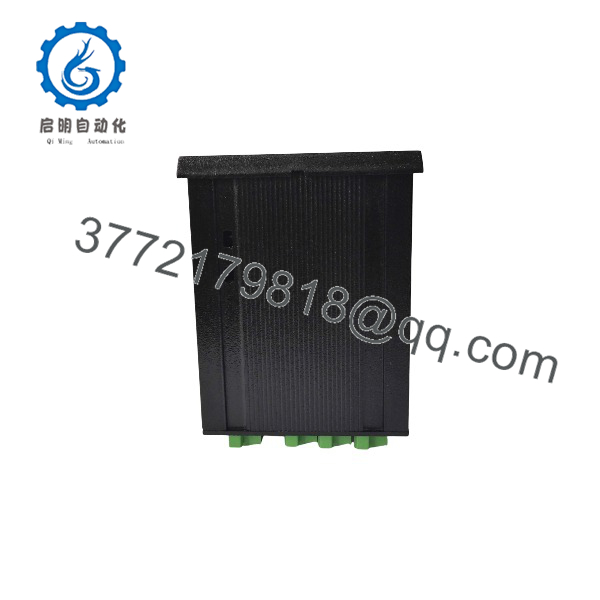
ME110
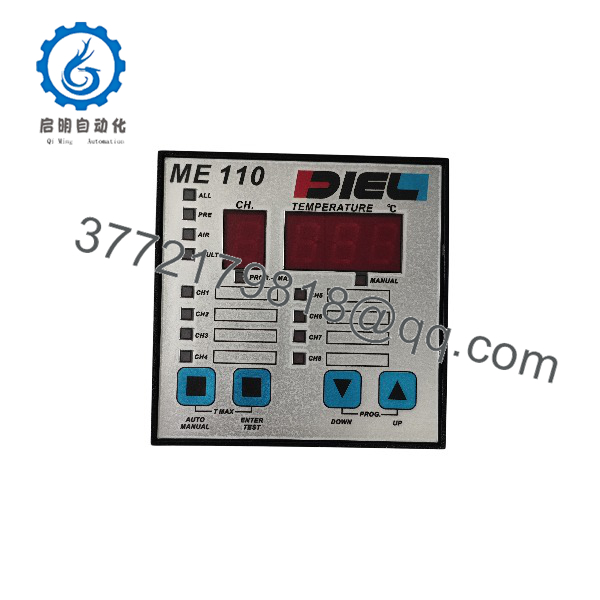
ME110
Frequently Asked Questions (FAQ)
Q1: What exactly does the ME110 monitor? I see it listed under the ME100 series.
It monitors winding temperature in transformers and motors, reading PTC thermistor probes embedded in the windings. The ME100 series is DIEL’s microprocessor temperature-control family, and the ME110 is a type within that family — the nameplate reads “DIEL ME-100 Serie TYP ME110.” The distinction matters when ordering: the ME100 series spans several versions (ME100, V2, V3) with different relay counts and communication options, and you should match your nameplate exactly. Send us the full nameplate text when requesting a quote and we’ll confirm the right unit — a protection device with the wrong relay set is a re-engineering project, not a swap.
Q2: How do PTC probes work with this unit? Why not PT100?
PTC probes per DIN 44081/44082 are fixed-threshold sensors: their resistance jumps sharply at a defined temperature (e.g., 130 °C, 155 °C). They’re dumb, rugged, and fail-safe — a broken wire reads as high resistance, which the unit interprets as a fault or trip condition rather than a false “all cool” reading. The tradeoff is you don’t get an analog temperature value the way a PT100 gives. The ME100 series supports up to six series PTC sensors per input branch (max 1.5 kΩ per branch), which is why transformer builders love them: one branch covers multiple winding hot-spots with simple wiring. If you need analog temperature values and 4–20 mA output, that’s the ME100 V2 territory — tell us what your panel requires.
Q3: Can I swap the unit live, or does the transformer need to come offline?
The relay outputs are what trip your breaker or start your fans, so treat the swap like any protection device change: the transformer can usually stay energized because the probes and trip circuit are separate, but your protection is absent while the unit is out of the panel. If your protection scheme requires continuous supervision (most dry-type transformer specs do), that’s a planned outage or an accepted risk window — your call as the responsible engineer, but make it consciously, not accidentally. The physical swap is quick: 91 × 91 mm cutout, land the probe branches and relay wires per the terminal diagram, enter the programmed values, test the relays via the test menu, done in under an hour.
Q4: My unit keeps showing a probe fault. Is the monitor bad?
Usually not — it’s doing its job. A probe-fault alarm means a branch reads open, shorted, or outside the expected resistance window. Measure the branch at the unit terminals: over 1.5 kΩ means an open wire or a dead probe somewhere in the series string; near zero means a short. PTC probes fail more often than the monitor by a wide margin, especially at the junction-box terminations where vibration and moisture attack the wiring. Find the fault with an ohmmeter before ordering a monitor — replacing the monitor won’t fix a broken probe wire, and you’ll have the same alarm the next day.
Q5: What are the programming settings I need to record before a swap?
Before pulling the old unit, walk the programming menu and write down: the pre-alarm and alarm thresholds, the fan start/stop (hysteresis) settings, the relay assignment for each function, and any alarm delay values. The unit stores these internally and a replacement arrives blank. Also note the historical maximum temperatures if your maintenance program tracks them — that data dies with the old unit. Ten minutes of menu documentation before the swap saves a call to the transformer manufacturer’s commissioning record afterward. To be honest, this is the step everyone skips and everyone regrets.
Q6: Is this unit still manufactured? What condition do you sell?
Diel Srl remains an active Italian manufacturer (founded 1996) and produces the ME100-series family and its accessories. We offer both New Original units sourced through the surplus channel — factory-sealed stock from panel-builder overstock and cancelled projects — and Refurbished (tested) units that have run in service and passed our bench verification: power-up, display and menu function, probe-input simulation across the resistance window, and relay pull-in tests with contact continuity measured. Each unit ships with the test report, and we state plainly which condition you’re getting. For protection devices, we recommend new units where the budget allows and tested refurbished where it doesn’t.
Q7: What’s the lead time and warranty?
In-stock units ship within 24–48 hours, packed to survive courier handling — the front panel and mounting clips are the fragile bits. Every unit carries a 1-year warranty covering functional failure, with our test report included. Because the ME100 family spans several versions and the relay/option configuration varies, contact us before ordering with your nameplate details and, ideally, a photo of the terminal labeling — we’ll confirm exactly which variant we hold in stock rather than ship a “close” match. For a transformer protection component, an exact match beats a fast guess every time.