WhatsApp: +86 16626708626
 Email:
  Phone: +86 16626708626
Description
Key Technical Specifications
| Parameter | Value |
|---|---|
| Manufacturer | ELAU by Schneider Electric |
| Full Model Number | SM-070-60-010-P1-45-S1-B0 |
| Known Associated Part Number | 19202602-503 / 19202602V501001; verify against the motor nameplate before release |
| Product Family | PacDrive SM Series |
| Product Type | Brushless AC servo motor |
| Nominal Supply Voltage | 400 V RMS |
| Rated Torque | 1.1 N·m |
| Maximum Speed | 6,000 rpm |
| Flange Size | 70 mm |
| Shaft Type | Feather-groove / keyed shaft |
| Encoder Type | SinCos single-turn encoder |
| Holding Brake | No holding brake |
| Motion System | ELAU PacDrive / Schneider Electric PacDrive motion platform |
| Mechanical Interface | Confirm flange pilot, mounting-hole pattern, shaft dimensions, key dimensions, and cable-exit orientation from the nameplate and mechanical drawing |
| Required Companion Equipment | Compatible PacDrive servo drive, matched feedback cable, motor power cable, controller configuration, and axis parameter file |
| Lifecycle Status | Legacy / elevated EOL exposure |
| Stocking Recommendation | Min: 1 on-site unit per critical exact configuration; Max: 2 only when multiple machines use the identical full code and downtime exposure exceeds holding-cost targets |
Available product information identifies this model as a PacDrive SM Series servo motor with a 70 mm flange, 400 V RMS supply, 1.1 N·m rated torque, 6,000 rpm speed rating, feather-groove shaft, SinCos single-turn encoder, and no holding brake.
Product Introduction & Supply Chain Strategy
The ELAU SM-070-60-010-P1-45-S1-B0 is a 400 V AC servo motor for ELAU PacDrive motion systems. It provides controlled rotary motion for synchronized packaging machinery, cartoning equipment, filling machines, labeling systems, conveyor axes, and other machine-builder applications that depend on accurate speed and position feedback. Its SinCos encoder and 70 mm frame must match the installed PacDrive axis configuration.
This product is a Brand New Surplus unit. It is not used, not pulled from a decommissioned plant, and not refurbished. All modules undergo rigorous quality verification to ensure OEM-level reliability. Legacy PacDrive systems need deliberate buffer stock because a motor-only failure can stop an entire production line. Use a controlled last-time-buy review, vendor consolidation, and cross-site sharing to limit stock-outs without tying up capital in excess inventory. Schneider Electric lists a related SM-070/60/010 variant as discontinued with no replacement.
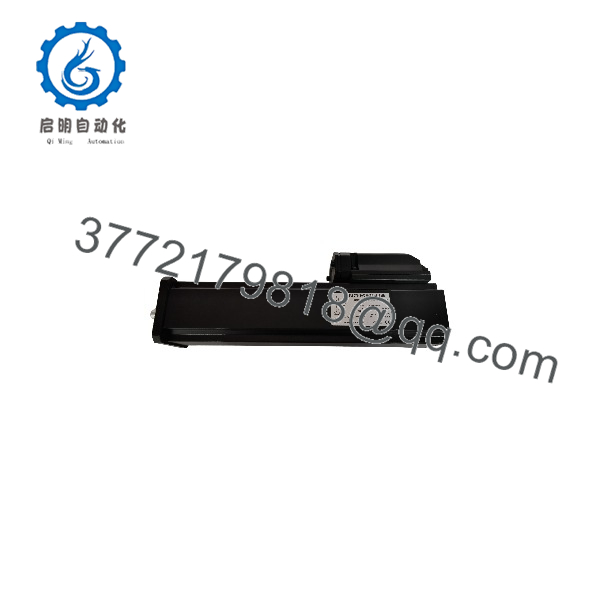
SM-070-60-010-P1-45-S1-B0
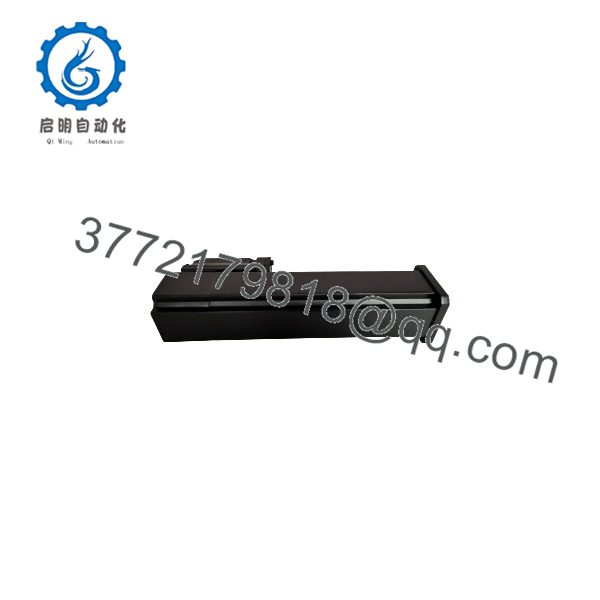
SM-070-60-010-P1-45-S1-B0
Installation & Configuration Guide
Stage 1: Pre-Installation
- Stop the machine through the approved production shutdown process and record all active PacDrive, servo-drive, controller, encoder, and axis alarms.
- Apply lock-out/tag-out to incoming AC supply, servo supply, 24 V control circuits, pneumatic and hydraulic energy sources, stored mechanical energy, and any external motion source.
- Verify absence of voltage with properly rated test equipment. Wait for the servo drive DC bus to discharge according to the machine and drive manufacturer’s instructions.
- Secure vertical, suspended, or gravity-loaded axes mechanically. This motor has no holding brake, so do not rely on the motor to hold a load during maintenance.
- Wear a grounded ESD wrist strap before working near SinCos feedback connectors, encoder cables, servo-drive control hardware, or exposed motion-control electronics.
- Photograph the original motor nameplate, motor shaft, key, coupling, flange, connector orientation, cable routing, grounding arrangement, and all field labels.
- Back up the PacDrive controller project, servo-drive parameters, axis tuning data, motion-program revision, encoder settings, electronic gearing, speed limits, acceleration/deceleration values, torque limits, homing settings, and safety configuration.
- Inspect the driven mechanism for coupling wear, shaft misalignment, bearing damage, contamination, binding, excessive inertia, improper belt tension, gearbox issues, or an overloaded axis. Correct root causes before replacing the motor.
Stage 2: Removal
- Confirm that the servo drive DC bus has discharged completely before touching motor power or feedback connections.
- Record the machine’s mechanical timing relationship before removing the coupling, timing belt, pulley, gearbox interface, or direct-drive connection.
- Install mechanical supports, blocks, or restraints before disconnecting a vertical or load-bearing axis.
- Disconnect protective earth, motor power, SinCos encoder feedback, and auxiliary wiring by connector housing or terminal hardware. Never pull on cable conductors.
- Protect the encoder connector from oil, moisture, impact, metallic debris, and electrostatic discharge. A damaged feedback interface can cause intermittent position errors after commissioning.
- Support the motor before loosening the mounting bolts. Avoid striking the shaft, applying pry force to the flange, or loading the encoder end.
- Inspect the keyed shaft, key, coupling hub, flange pilot, mounting bolts, cable connectors, and shield terminations before fitting the New Surplus motor.
Stage 3: Installation
- Compare the complete replacement nameplate with the removed motor. Confirm the exact full model number, 400 V rating, no-brake configuration, 70 mm flange, keyed shaft, SinCos encoder, connector type, and cable-exit arrangement.
- Mount the motor squarely on the machine interface. Tighten mounting bolts using the machine manufacturer’s approved torque specification.
- Install the coupling, pulley, or transmission interface without forcing it onto the shaft. Ensure it does not bottom out and does not impose axial load on the motor bearings.
- Align the coupling accurately. Radial or angular misalignment increases vibration, bearing load, shaft stress, heat, and servo following error.
- Connect protective earth first, then motor power, encoder feedback, and auxiliary circuits.
- Keep feedback wiring separated from motor power wiring and high-noise conductors. Restore the original cable shielding and grounding practice exactly.
- Verify that all connector locking mechanisms are fully engaged and that cable routing includes correct bend radius and strain relief.
- Restore only the approved PacDrive project and axis parameter backup that belongs to the identical motor-drive-controller combination.
Stage 4: Power-On & Testing
- Test the 24 V control rail before full energization and confirm no short circuit exists between control wiring and protective earth.
- Apply control power according to the machine sequence. Check the PacDrive controller and servo drive for encoder, motor, parameter, communication, and safety faults.
- Verify emergency-stop behavior, safety circuits, overtravel protection, axis enable logic, and mechanical restraints before enabling motion.
- Enable the axis at low speed with the guarded work zone clear. Confirm correct direction, encoder feedback, actual position, command position, motor current, following error, and absence of abnormal vibration.
- Perform the approved homing procedure and validate the home position before any automatic machine cycle.
- Test the axis at increasing speed and load while monitoring motor temperature, current, torque demand, position tracking, vibration, alarm history, and machine timing.
- Release the machine to production only after passing the documented functional acceptance procedure. Record motor serial number, parameter revision, test results, installation date, and remaining buffer stock.
Firmware/Software Versions & Upgrade Notes
- Recommended firmware version: Retain the installed PacDrive controller and servo-drive firmware revision that has already been validated with the machine application. The motor itself is not normally field-upgraded; compatibility is governed by the PacDrive controller, servo drive, SinCos feedback interface, motor configuration, and axis parameter set.
- Motor configuration: Configure the servo drive for the exact complete motor code, SM-070-60-010-P1-45-S1-B0. Do not substitute generic 1.1 N·m, 70 mm, or 400 V motor settings.
- Encoder requirement: This model is identified with a SinCos single-turn encoder. Verify that the replacement motor’s feedback connector, encoder designation, cable, and drive interface match the original installation exactly.
- No-brake warning: This model is identified without a holding brake. Do not substitute a no-brake motor into an application that requires a brake for vertical-axis load retention or safety sequencing. Conversely, do not assume an existing no-brake axis has external mechanical protection; verify it before removal.
- Backward compatibility: Older ELAU PacDrive controllers or servo drives may depend on specific SinCos feedback versions, motor databases, controller projects, or parameter-file formats. A replacement motor with a matching frame size but different feedback configuration may generate encoder faults or unstable tuning.
- Forward compatibility: Migrating to a newer Schneider Electric motion platform can require a new controller project, drive replacement, motor cables, encoder conversion, safety validation, and complete axis tuning. Treat it as a formal retrofit, not a routine replacement.
- Upgrade warning: Do not update controller or servo-drive firmware during an emergency motor replacement unless the current version is unavailable and the replacement version has been validated in a test environment. Firmware changes can alter parameter interpretation, network timing, fault behavior, and axis tuning.
- Downgrade warning: Do not downgrade firmware without verified backup files and a recovery plan. A failed downgrade can disable the machine’s controller or make the axis unavailable.
- Spare-control recommendation: Store the motor with complete nameplate photographs, verified cable part numbers, the PacDrive application backup, servo-drive parameter file, axis-tuning report, and commissioning checklist.
Frequently Asked Questions (FAQ)
Are these really new units?
Yes. This inventory strategy applies only to New Original / New Surplus units. A New Surplus motor is original OEM-manufactured stock that has not been installed in production equipment. Incoming QC should confirm original labels, serial-number traceability, packaging condition, clean keyed shaft surfaces, unworn flange pilot, intact connectors, and zero evidence of installation or load exposure.
Why is New Surplus pricing lower than OEM new but higher than low-cost alternatives?
OEM new pricing reflects current factory channels and standard support structures. New Surplus pricing reflects the global cost of locating, validating, preserving, and warranting genuine legacy inventory. Low-cost alternatives can hide encoder degradation, bearing wear, shaft damage, moisture storage, incorrect feedback configurations, or undocumented alterations. Saving a small amount on the motor can create a much larger cost when a packaging line loses a critical motion axis.
Is the SM-070-60-010-P1-45-S1-B0 obsolete or EOL?
Treat this motor as a legacy PacDrive spare with elevated lifecycle risk. Schneider Electric has discontinued a closely related SM-070/60/010 motor configuration, with end of service listed as December 31, 2024 and no replacement announced for that referenced variant. Exact lifecycle status must be confirmed for the full P1/45/S1/B0 configuration through Schneider Electric or an authorized channel.
For an active, production-critical axis, keep one exact unit on-site. Conduct a last-time-buy analysis only after reviewing installed population, vendor lead time variability, cross-site availability, storage conditions, and the financial impact of an unplanned outage.
Can I hot-swap this servo motor?
No. Never disconnect or reconnect the motor while the servo system is energized. Isolate power, verify that the DC bus has discharged, mechanically secure the axis, and follow the original equipment manufacturer’s procedure. Because this configuration has no holding brake, securing suspended loads is especially important.
Will replacing the motor erase the machine program?
The PacDrive controller program normally remains stored in the controller, but the servo-drive configuration can contain critical motor selection, encoder setup, electronic gearing, tuning, torque limits, speed limits, homing settings, and safety-related motion parameters. Back up both the controller project and drive parameter set before replacement. Validate them after installation before running automatic production.
Can I replace it with another 1.1 N·m or 70 mm servo motor?
Not without an engineering-approved cross-reference. Matching torque and flange size is not enough. Confirm the full motor model, 400 V rating, speed range, shaft and key dimensions, flange pilot, encoder type, connector orientation, brake configuration, cable compatibility, drive motor database, load inertia, and PacDrive parameter requirements. A different motor may require retuning and can affect machine safety and timing.
What warranty and quality documentation should accompany the spare?
Specify a written 12month warranty, subject to correct ESD-safe storage, installation, and operating conditions. Require motor nameplate and serial-number photographs, packaging verification, shaft and flange inspection, connector inspection, insulation and protective-earth checks where applicable, feedback verification, and final QC sign-off. File these records with the asset history so maintenance can deploy the motor quickly when a failure occurs.