WhatsApp: +86 16626708626
 Email:
  Phone: +86 16626708626
Description
Key Technical Specifications
| Parameter | Specification |
|---|---|
| Part Number | 1C31224G01 |
| Manufacturer | Emerson / Westinghouse |
| System | Emerson Ovation DCS |
| Module Type | Analog Input Electronics Module (EMOD) |
| Input Type | 4-20 mA current |
| Number of Channels | 8 |
| Resolution | 14-bit |
| Channel Isolation | Individually isolated inputs |
| Input Impedance | 10 MΩ |
| Accuracy at 25 °C | ±0.10% of full-scale value |
| Temperature Coefficient | ±0.24% of full-scale value over 0-60 °C |
| Sampling Rate | ≥20 samples/s at 60 Hz rejection; ≥25 samples/s at 50 Hz rejection |
| Self-Calibration | On demand by Ovation Controller |
| Compatible PMOD | 1C31227G01 |
| Thermocouple Input | Not provided |
| CE Certification | 4-20 mA configuration documented as CE Mark certified |
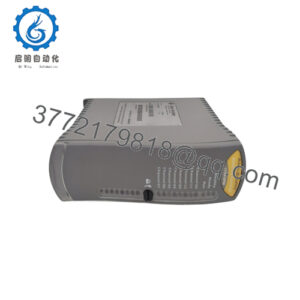
Emerson’s factory documentation identifies 1C31224G01 as an Ovation 8-channel, 14-bit analog input Electronics Module for 4-20 mA current signals. The corresponding Personality Module is 1C31227G01. The combined module provides eight individually isolated input channels, with the PMOD conditioning and surge protection preceding A/D conversion in the EMOD.
The Ovation reference manual specifies 10 MΩ input impedance, ±0.10% full-scale accuracy at 25 °C, ±0.24% full-scale temperature coefficient over 0-60 °C, and minimum sampling rates of 20 samples/s with 60 Hz rejection or 25 samples/s with 50 Hz rejection.
Product Introduction
The Emerson Ovation 1C31224G01 is a 14-bit analog input Electronics Module designed to acquire 4-20 mA process signals across eight individually isolated channels. It interfaces with the Ovation Serial I/O Bus and works as part of a combined EMOD/PMOD analog-input assembly.
For the 4-20 mA configuration, the correct Personality Module is 1C31227G01. The G01 EMOD should not be confused with 1C31224G02, which is the ±1 V version and requires the corresponding 1C31227G02 PMOD.
Installation & Configuration Guide
Stage 1 — Pre-Installation Preparation — 5–10 min
- Apply LOTO and place the affected control loop in the approved maintenance or bypass state.
- Confirm the replacement nameplate reads 1C31224G01.
- Verify that the application is a 4-20 mA analog-input application.
- Confirm the installed PMOD is 1C31227G01.
- Record the module slot, terminal assignments, signal tags, and existing diagnostic status.
- Photograph the installed module and terminal block before disconnecting anything.
- Prepare:
- ESD wrist strap
- PH1 screwdriver
- Calibrated digital multimeter
- 4-20 mA loop calibrator
- Wire labels
- Smartphone/camera
- Back up applicable Ovation configuration and document channel scaling, engineering units, alarm limits, and loop power arrangements.
⚠️ Do not replace 1C31224G01 with 1C31224G02 merely because the physical module appears similar. G01 is the 4-20 mA EMOD; G02 is the ±1 V EMOD. The associated PMOD also changes.
Stage 2 — Removing the Existing Module — ~5 min
- Confirm all affected process signals are safely bypassed or placed in the approved maintenance state.
- Record the live value and alarm state for each channel.
- Label every field wire by channel and polarity.
- Disconnect field wiring according to the site wiring drawing.
- Release the module’s retention mechanism.
- Remove the EMOD straight from its base.
- Inspect the terminal block and backplane connector.
- Check for loose conductors, oxidation, contamination, or damaged contacts.
- Keep the old module until the replacement has passed channel-by-channel testing.
⚠️ Do not assume that a normal-looking 4-20 mA reading proves the entire signal path is healthy. Check the transmitter, loop power, wiring, PMOD, EMOD, and controller scaling separately.
Stage 3 — Installing the 1C31224G01 — 5–10 min
- Verify the replacement part number: 1C31224G01.
- Verify the matching 1C31227G01 PMOD.
- Confirm the terminal/base configuration matches the existing installation.
- Inspect the module connector and PCB for physical damage.
- Use ESD protection before handling the electronics module.
- Align the EMOD with the correct base position.
- Seat the module evenly without forcing the connector.
- Reconnect field wiring using the recorded channel assignments.
- Verify current-loop polarity and shield termination.
- Confirm no wire strands are loose or bridging adjacent terminals.
The Ovation architecture uses the combined Personality and Electronics Modules for the 14-bit analog input function. The PMOD provides signal conditioning and surge protection, while the EMOD performs the analog-to-digital conversion and interfaces to the Ovation Serial I/O Bus.
Installation Self-Check
- 1C31224G01 verified
- 1C31227G01 PMOD verified
- 4-20 mA application confirmed
- Correct slot/base confirmed
- Channel wiring labeled
- Loop polarity checked
- ESD precautions maintained
- Ovation configuration backed up
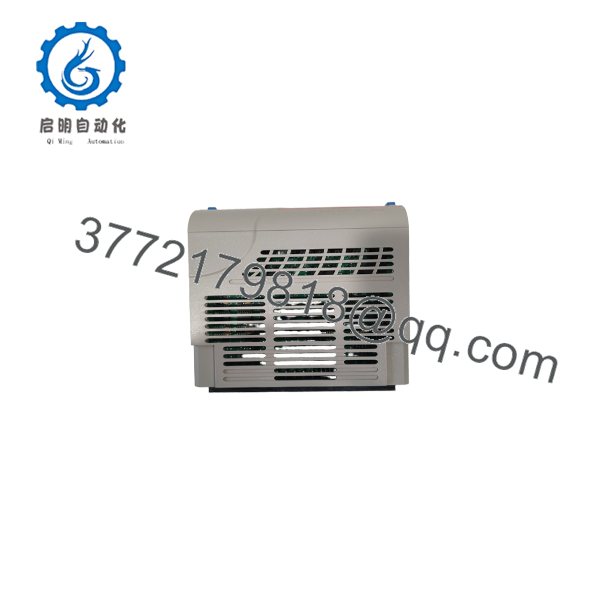
1C31224G01
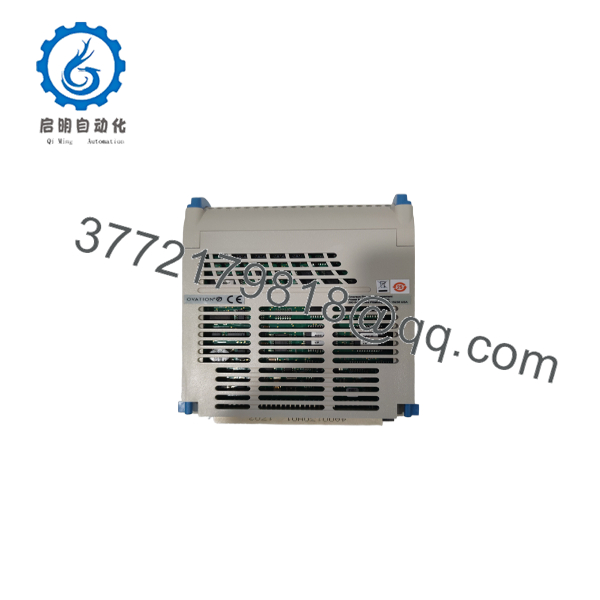
1C31224G01
Stage 4 — Power-On & Testing — 10–15 min
- Perform a final visual inspection before energizing.
- Restore I/O power according to the approved Ovation procedure.
- Check module status indications and controller diagnostics.
- Confirm all eight channels are recognized by the Ovation system.
- Inject a controlled 4 mA signal and verify the corresponding engineering-unit value.
- Repeat at approximately 12 mA and 20 mA for representative span checks.
- Verify channel polarity, scaling, alarm limits, and signal quality.
- Compare the controller reading with the loop calibrator.
- Perform the same verification on critical channels before returning them to automatic control.
- Do not close the maintenance bypass until the channel values and alarm behavior have been confirmed.
The module’s documented self-calibration function is initiated on demand by the Ovation Controller. Its specified accuracy is ±0.10% of full scale at 25 °C, so field acceptance should compare the controller reading against a known current source rather than relying only on LED status.
Supplier Acceptance / QC Checklist
For a shutdown-critical spare, the acceptance record should include:
- Exact 1C31224G01 part-number verification
- Serial/traceability information where available
- PCB and connector visual inspection
- ESD-controlled handling
- Power-up verification
- 4-20 mA input simulation
- Channel-by-channel acquisition test where suitable test equipment is available
- PMOD compatibility verification
- Configuration/revision documentation where applicable
- Electrical safety checks appropriate to the test procedure
- Final QC inspection and ESD-safe packaging
For an analog-input EMOD, “powers on” is not a sufficient functional test. The useful acceptance test is a known-current injection across representative channels and confirmation that the Ovation controller reports the expected value.
Technical Pitfall & Survival Guide
1. G01 vs. G02 Is a Signal-Type Difference
The Ovation 14-bit analog-input family has two principal configurations:
- 1C31224G01 + 1C31227G01: 4-20 mA
- 1C31224G02 + 1C31227G02: ±1 VDC
These are different electrical configurations. Do not substitute one for the other without a documented system change.
2. Do Not Order the EMOD Without Checking the PMOD
The 1C31224G01 is the Electronics Module, while 1C31227G01 is the corresponding current-input Personality Module. Emerson’s spare-parts documentation lists the two separately.
3. Check Whether the Loop Is Field-Powered or Locally Powered
The documented 4-20 mA configuration supports field- or locally powered arrangements. Verify the actual loop-power architecture before commissioning. Incorrect power assumptions can create a valid-looking current signal while overstressing or starving the transmitter loop.
4. No Thermocouple Function
This module does not provide thermocouple inputs. A temperature transmitter producing 4-20 mA is appropriate, but a direct thermocouple connection is not.
5. Watch the Sampling Specification
The documented minimum sampling rates are 20 samples/s with 60 Hz rejection and 25 samples/s with 50 Hz rejection. This is a conventional process analog-input module, not the appropriate choice when the application requires high-speed analog acquisition.
6. Legacy Spare Risk
The current aftermarket market identifies 1C31224G01 as discontinued by the manufacturer, although used, refurbished, and new-surplus units remain available. Emerson itself still lists the part in its Ovation spare-parts documentation and provides a factory-certified replacement program.
Frequently Asked Questions (FAQ)
1. What is Emerson 1C31224G01?
1C31224G01 is an 8-channel, 14-bit analog input Electronics Module for 4-20 mA signals in an Emerson Ovation DCS. It works with the corresponding 1C31227G01 Personality Module.
2. Which PMOD is compatible with 1C31224G01?
The documented 4-20 mA pairing is 1C31227G01. The voltage-input alternative uses 1C31224G02 with 1C31227G02.
3. How many analog inputs does 1C31224G01 provide?
It provides 8 individually isolated analog input channels, with a 4-20 mA input range and 14-bit resolution.
4. What is the specified accuracy?
The documented guaranteed accuracy at 25 °C is ±0.10% of full-scale value. The temperature coefficient is specified as ±0.24% of full scale over 0-60 °C.
5. Can 1C31224G01 accept a ±1 V signal?
No. The ±1 V configuration uses 1C31224G02 with 1C31227G02. 1C31224G01 is the 4-20 mA current-input version.
6. Is 1C31224G01 obsolete?
It is a legacy/discontinued component in the aftermarket, although it remains a valid maintenance spare for existing Ovation installations. Emerson’s factory documentation identifies the exact part number and describes it as an Ovation 8-channel, 14-bit 4-20 mA EMOD.
7. What should I verify before purchasing?
Verify 1C31224G01, the 1C31227G01 PMOD, 4-20 mA loop type, field/local power arrangement, terminal/base configuration, and actual product condition. For a critical process loop, request photographs of the actual nameplate and a test report showing 4-20 mA input verification before shipment.