WhatsApp: +86 16626708626
 Email:
  Phone: +86 16626708626
Description
Specifications
| Parameter | Specification |
|---|---|
| Model | ATM1613 |
| Manufacturer | ESTERS |
| Product Type | Safety Relay |
| Series | ATM |
| Supply Voltage | 230 VAC |
| Main Function | Safety/control circuit switching |
| Application | Industrial electrical control and protection |
| Mounting | Verify from the installed unit and OEM documentation |
| Contact Configuration | Verify before replacement |
| Switching Capacity | Verify from nameplate/datasheet |
| Terminal Arrangement | Verify against the existing unit |
| Condition | New surplus / Used / Refurbished, depending on supplier |
| Current Availability | Verify with supplier |
The available evidence confirms the ATM1613 / 230 VAC / safety-relay identification, but does not provide enough reliable information to specify contact arrangement, switching current, coil consumption, terminal assignment, dimensions, or safety-category rating. Those parameters should be confirmed from the nameplate or original ESTERS documentation before a replacement is ordered.
Product Introduction
The ESTERS ATM1613 is a 230 VAC safety relay intended for use in industrial electrical control and safety circuits. Its identification appears in industrial repair-component records alongside other ESTERS control components, while secondary-market documentation identifies the ATM1613 specifically as a safety relay.
Because the available public documentation is limited, replacement should be based on the complete electrical specification rather than the model number alone. In particular, verify the relay’s contact arrangement, terminal layout, switching ratings, and the safety function implemented by the original installation.
Installation Guide
Stage 1 — Pre-Installation
- Apply the plant’s approved lockout/tagout (LOTO) procedure.
- Isolate the 230 VAC supply and verify absence of voltage with an appropriate meter.
- Document the existing ATM1613 wiring before disconnecting the unit.
- Photograph terminal markings, jumpers, relay indicators, and mounting orientation.
- Record the complete nameplate information, including voltage, contact configuration, and any revision markings.
- If installing surplus equipment, inspect the housing and terminals for corrosion, cracks, contamination, or mechanical damage.
Stage 2 — Remove the Existing Relay
- Confirm that all connected circuits are de-energized.
- Label each conductor according to its original terminal designation.
- Disconnect the wiring without pulling directly on conductors.
- Release the relay from its mounting arrangement.
- Inspect the socket, terminal block, DIN rail, or mounting hardware for damage.
- Check for heat discoloration around power and switching terminals.
Stage 3 — Install the ATM1613
- Verify that the replacement is and that its electrical markings match the original installation.
- Confirm the 230 VAC supply requirement before applying power.
- Do not assume terminal assignments from another ATM-series relay; verify the actual wiring diagram.
- Install the relay in the same orientation and mounting position as the original.
- Reconnect conductors according to the documented terminal arrangement.
- Check terminal tightness and conductor routing.
- Verify that safety contacts are connected to the correct downstream circuit before energization.
Stage 4 — Power-Up and Functional Test
- Perform a final short-circuit and wiring check before applying 230 VAC.
- Energize the circuit under controlled maintenance conditions.
- Confirm the relay’s normal operating indication, if fitted.
- Test the associated emergency-stop, interlock, permissive, or shutdown circuit according to the plant procedure.
- Verify that the safety circuit changes state correctly when the initiating device operates.
- Check downstream contactor or control outputs for the expected state.
- Record the installed relay’s model, serial/lot information, and test results.
Technical pitfall: Do not substitute another relay solely because it also operates from 230 VAC. The contact configuration, switching rating, terminal arrangement, and safety function must match the original circuit. These parameters are not sufficiently documented in the public sources reviewed for , so they should be verified from the actual unit before procurement.
For surplus or refurbished inventory, a supplier QC procedure should include visual inspection, terminal continuity checks, 230 VAC functional testing where safe and appropriate, contact-operation verification, insulation testing where applicable, and final identification/packaging checks. These are recommended verification steps unless an actual supplier test report is available.
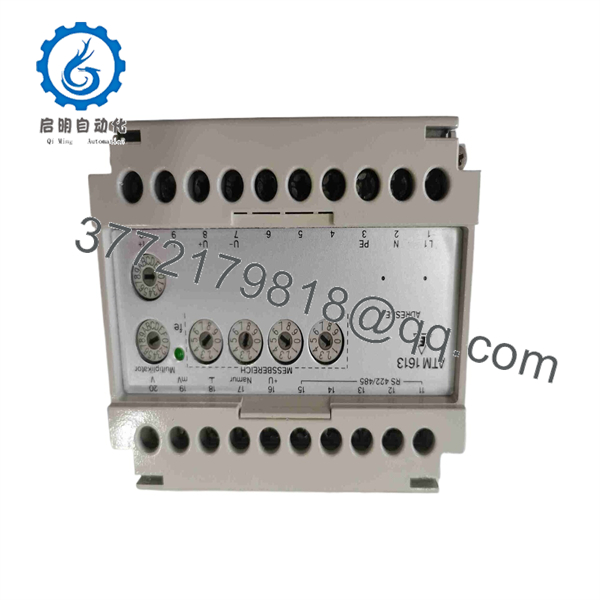
ATM1613
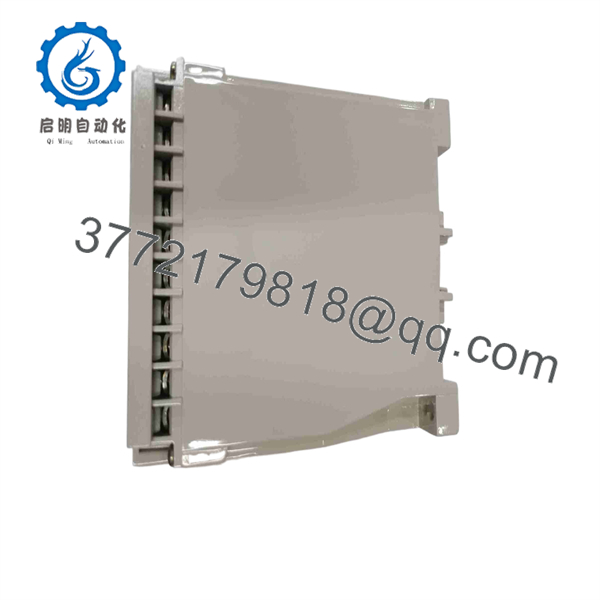
ATM1613
FAQ
1. What is the ESTERS ?
The is identified as an ESTERS safety relay rated for 230 VAC.
2. What voltage does the use?
Available industrial listings identify the as a 230 VAC unit.
3. Can I replace the with another 230 VAC relay?
Not automatically. The replacement must also match the original contact configuration, switching ratings, terminal arrangement, and safety function.
4. Is still manufactured?
The public sources reviewed do not provide sufficient evidence to confirm current OEM production status. Treat it as a legacy/secondary-market component unless current ESTERS documentation confirms otherwise.
5. What should I check before buying an ?
Confirm the complete model number, 230 VAC rating, contact configuration, terminal layout, switching ratings, physical mounting arrangement, and condition of the offered unit.
6. Is a used suitable for safety-critical service?
A used unit should not be installed in a safety circuit solely on the basis of appearance or continuity testing. Its switching behavior and the complete safety function should be verified against the original circuit requirements before commissioning.
7. Can you confirm the exact pinout and contact rating?
The public sources located for do not provide sufficiently reliable pinout and contact-rating data. The nameplate, original wiring diagram, or ESTERS technical documentation should be used to verify those parameters before connection.