WhatsApp: +86 16626708626
 Email:
 Phone: +86 16626708626
Description
3. Key Technical Specifications
| Parameter | Value |
|---|---|
| Manufacturer | Foxboro (Invensys / Schneider Electric) |
| Model Number | P0916XT |
| Product Type | Compression Terminal Assembly (FTA / Comp TA) |
| Compatible Module | FBM207b (Contact Sense Discrete Input) |
| Signal Type | 24 VDC dry-contact / contact sense |
| Channels Supported | Matches FBM207b (typically 16 discrete inputs) |
| Connection Type | Compression-style screw terminals |
| Material | Polyamide (typical for this series) |
| Mounting | DIN rail or I/A Series mounting rails |
| Operating Temperature | 0 °C to +60 °C (typical) |
| Power | Supplied via FBM base / system (24 VDC nominal) |
| Isolation | Supports channel isolation of the FBM207b |
| Approx. Weight | ~0.3 kg |
4. Product Introduction
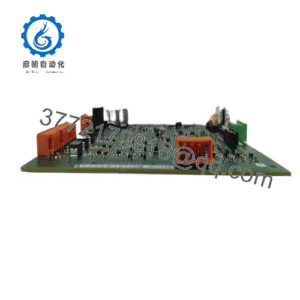
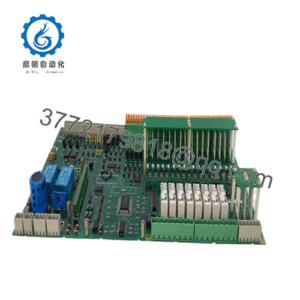
The Foxboro P0916XT is a compression-style Field Terminal Assembly designed for the FBM207b contact-sense discrete input module in Foxboro I/A Series and Foxboro Evo DCS systems. It provides the physical interface between field dry contacts (switches, limit switches, pushbuttons, relay contacts) and the FBM207b electronics.
This assembly is used when reliable, low-resistance terminations are required for 24 VDC contact sensing applications. It is a direct-fit replacement for existing installations using the FBM207b and has been superseded in some catalogs by the RH916XT.
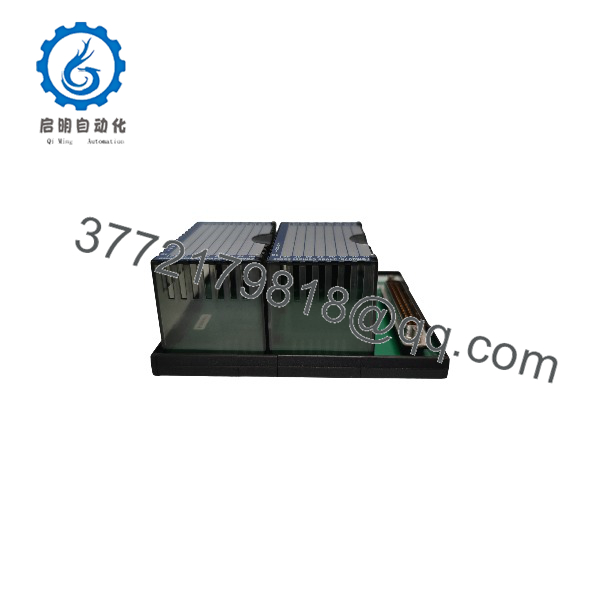
P0916XT
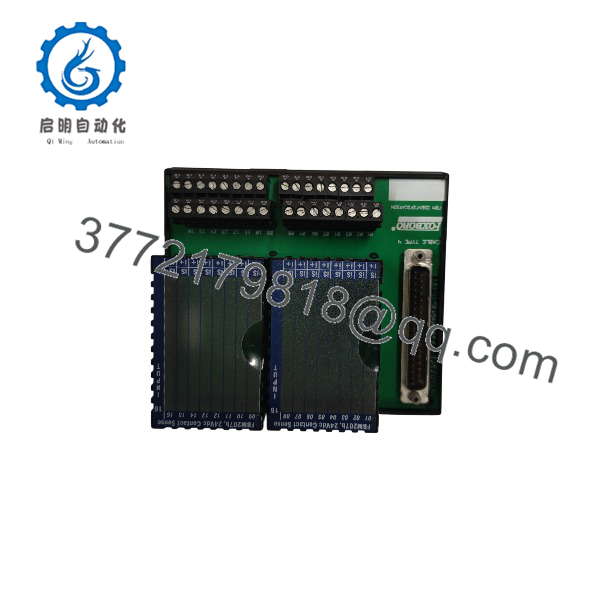
P0916XT
5. Troubleshooting Quick Reference
| Symptom | Possible Cause | Relevance to this Part | Quick Check Method | Recommendation |
|---|---|---|---|---|
| No contact status reported | Loose or corroded terminals | ✅ High | Inspect and retighten all compression screws | Clean contacts and re-torque before replacing FTA |
| Intermittent discrete signals | Poor wire contact or vibration | ✅ High | Wiggle wires while monitoring status in software | Verify proper wire gauge and terminal tightness |
| All channels show open | Cable or FBM207b fault | ❌ Low | Swap FBM207b or test cable continuity | FTA is passive; problem is usually upstream |
| High contact resistance | Oxidation or wrong wire size | ✅ High | Measure resistance across terminals under load | Clean or replace FTA if resistance is elevated |
| Physical damage to terminals | Over-torque or impact | ✅ High | Visual inspection of terminal block | Replace FTA if housing or screws are damaged |
| Ground loop / noise on contacts | Improper shield or common wiring | ✅ Medium | Check shield grounding practice | Correct field wiring practices; FTA itself is not the cause |
If issues remain after verifying field wiring and the FBM207b module, provide photos of the terminal assembly and diagnostic screens to technical support.
6. Frequently Asked Questions (FAQ)
Q: Is the P0916XT the terminal assembly for the FBM207b?
A: Yes. It is the compression terminal assembly specifically matched to the FBM207b 24 VDC contact-sense discrete input module.
Q: Has this part been superseded?
A: Yes. Some current Foxboro / Schneider listings show RH916XT as the replacement. Functionally they are equivalent for FBM207b applications. Confirm with your system documentation.
Q: Does this include the FBM207b module?
A: No. P0916XT is only the Field Terminal Assembly. The FBM207b electronics module is ordered separately.
Q: What type of field contacts does it support?
A: Dry contacts and solid-state switches operating at 24 VDC contact-sense levels. It is not intended for powered 120 VAC or higher voltage discrete inputs.
Q: Why is new-surplus pricing lower than current list price?
A: These units come from excess project stock. They are unused original Foxboro product, tested, and covered by a 1-year warranty. They are not repaired or refurbished units.
Q: Any special installation notes?
A: Photograph the existing wiring before removal. Transfer wires one-to-one. Use the correct wire gauge and torque the compression screws to the manufacturer’s specification to avoid damaging the terminals.