 WhatsApp: +86 16626708626
 Email:
  Phone: +86 16626708626
Description
3. Key Technical Specifications
| Parameter | Specification Value |
| Functional Acronym | NGPA (General Purpose Amplifier Board) |
| Revision Level | 1B1C (Includes factory-engineered trace and component updates) |
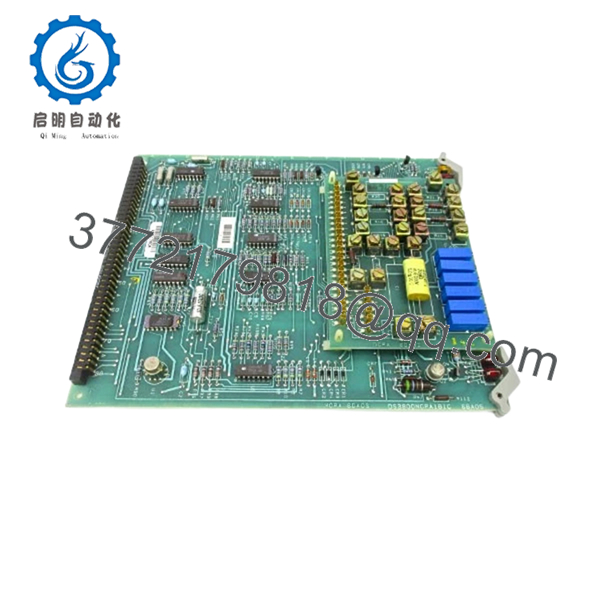
| Circuit Architecture | Multi-channel operational amplifier configuration |
| Signal Tuning | Multi-turn precision trimming potentiometers for gain/offset adjustment |
| Diagnostic Interface | Onboard test points (TP) for real-time oscilloscope/multimeter probing |
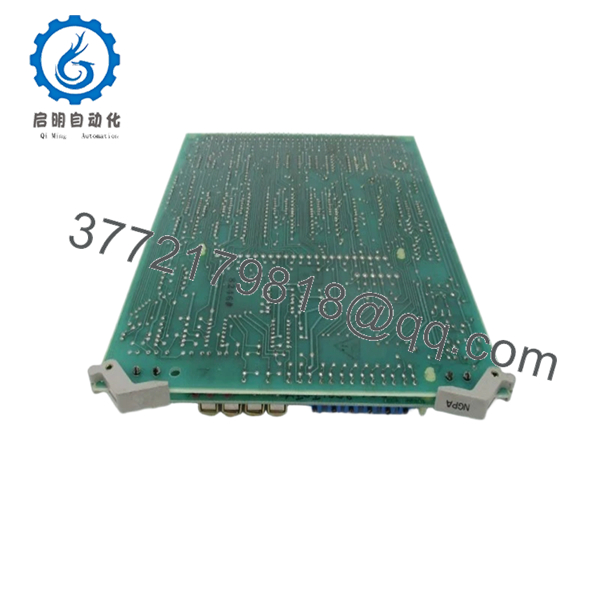
| I/O Connectivity | Rear edge-card connector interface and front-panel pin headers |
| Component Density | High-density analog layout with precision metal-film resistors |
| Power Requirements | \pm15 V DC dual-rail analog operating voltage |
| Isolation Design | Ground plane separation to minimize crosstalk and high-frequency noise |
| Ambient Operating Temperature | 0 to 60°C (32 to 140°F) within closed rack enclosures |
4. Product Introduction & Supply Chain Strategy
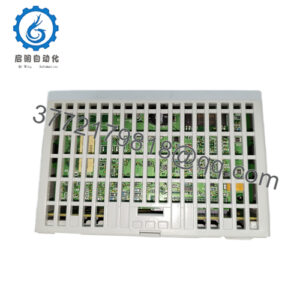
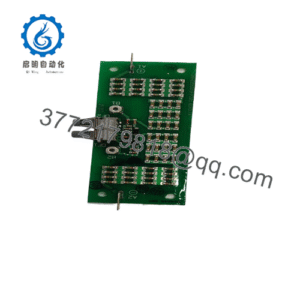
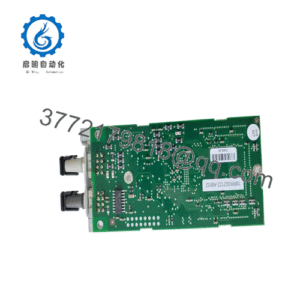
The GE DS3800NGPA1B1C is an analog signal conditioning and scaling hub built for legacy Speedtronic Mark IV turbine control panels. Functioning as a dedicated General Purpose Amplifier (NGPA) board, this module is engineered to accept low-level analog inputs from field sensors—such as pressure transducers, LVDTs, and temperature transmitters—and amplify them into clean, high-level linear signals compatible with the system’s central logic processors. Its highly precise 1B1C revision framework utilizes premium multi-turn trim potentiometers and low-drift operational amplifiers to ensure steady calibration and minimize signal degradation under changing thermal loads.
Sourcing this module as a verified New Surplus asset is an essential supply-chain strategy for plants operating legacy Mark IV control infrastructures. Because the Mark IV system is completely obsolete, choosing unverified or used marketplace components exposes your instrumentation loop to severe drift and calibration errors that can lead to false turbine trips. A New Surplus board avoids the component aging, dried-out capacitors, and faded trace paths inherent to refurbished items. This approach lowers your Total Cost of Ownership (TCO) and guarantees structural reliability for your critical analog control channels.

- DS3800NGPA1B1C
- DS3800NGPA1B1C
5. Installation & Configuration Guide
Stage 1: Pre-Installation (Prep & Safety)
- Power down the target Mark IV rack enclosure completely. Open and lock out all upstream AC/DC lines and external sensor excitation power supplies feeding the slot.
- Put on a high-impedance, grounded ESD wrist strap before unsealing the module’s protective anti-static packaging.
- Document the existing layout. Take clear photos of all onboard jumper links, the position of matching wire harnesses, and note any specific dial settings on the tuning potentiometers.
Stage 2: Removal
- Unplug any front-facing jumper cables or auxiliary terminal plugs attached to the card face.
- Release the top and bottom card ejector latches on the rack frame to unlock the board from its mating channel.
- Slide the board steadily forward out of the card guide slots, ensuring the rear gold edge-connectors do not rub against neighboring rack assemblies.
Stage 3: Installation (Clone & Seat)
- Adjust all physical hardware jumpers on the new DS3800NGPA1B1C to match the pulled module exactly.
- Align the top and bottom edges of the card with the designated rack guide tracks.
- Press the board smoothly into the slot until the rear edge-connector is aligned with the backplane socket. Apply firm, centered pressure until the card seats fully and the faceplate ejector clips lock into place.
- Reattach any front-panel signal harnesses or interface connections removed during the extraction phase.
Stage 4: Power-On & Testing
- Re-energize the primary power breakers supplying the Mark IV control rack.
- Attach a digital multimeter to the onboard diagnostic test points (TP) to check that the internal operational amplifier power rails are balanced at \pm15 V DC.
- Verify field scaling outputs through your operator workstation to ensure that the amplified analog loops are reading properly and that no signal fault warnings are present.
6. Firmware/Software Versions & Upgrade Notes
- Hardware-Driven Logic: The DS3800NGPA1B1C is a pure analog circuit processing card. It does not contain a programmable central processing unit (CPU), microcode, or digital flash firmware.
- Revision Compatibility: The 1B1C code designates a factory assembly update that remains fully backward-compatible with older NGPA variants (such as 1A, 1B, or 1B1). It acts as a direct, drop-in hardware replacement without needing logic re-indexing or panel wiring adjustments.
- Calibration Warning: Do not adjust or turn the onboard precision trimming potentiometers while the turbine is online or actively generating power. Turning these adjustment screws alters the amplifier gain and signal offsets, which will instantly shift your active feedback values and can cause severe over-speed or over-temperature safety trips.
7. Frequently Asked Questions (FAQ)
What defines a “New Surplus” asset over a refurbished alternative?
Our New Surplus cards are original, genuine GE parts that have never been placed into active operation. They are usually sourced from surplus warehouse inventory, canceled facility expansions, or uninstalled spare reserves. Because they are unused and have been kept in climate-controlled environments, they are completely free from the thermal wear, trace corrosion, and operational drift common in used or refurbished items.
Why does this legacy analog card command a premium over used marketplace options?
The NGPA card is responsible for processing sensitive analog feedback loops. Sourcing an unverified used component introduces severe risk; a tiny amount of voltage drift on an amplifier chip can cause unstable valve control or an unexpected turbine shutdown. This New Surplus board provides factory-level calibration stability and structural reliability, protecting your operation from the high financial costs of unscheduled downtime.
Can the DS3800NGPA1B1C board be pulled or inserted while the system is powered on?
No. The Mark IV rack backplane does not support hot-swapping. Attempting to pull or insert an amplifier card while the \pm15 V DC power rails are energized can cause a voltage arc across the gold edge-connectors. This will destroy the delicate operational amplifiers on the board and can corrupt adjacent instrumentation cards in the rack.
What is the specific purpose of the onboard test points (TP)?
The integrated test points allow maintenance technicians to safely connect a digital multimeter or oscilloscope to the card without disconnecting any wiring. This makes it straightforward to monitor internal voltage baselines, measure real-time operational amplifier gains, and perform precise offset calibrations during routine plant maintenance windows.
Do I need to calibrate the trimming potentiometers when installing this new card?
Our New Surplus boards are shipped with standard factory baseline calibrations. However, because analog field loops vary based on individual sensor cable lengths and impedance profiles, you may need to perform minor gain or offset adjustments using the onboard potentiometers to match the specific calibration benchmarks outlined in your turbine’s original operating manual.