 WhatsApp: +86 16626708626
 Email:
  Phone: +86 16626708626
Description
Key Technical Specifications
| Parameter | Value |
| Manufacturer | General Electric (GE) |
| Part Number | DS3815DMCC |
| Microprocessor Type | 16-bit Industrial Micro-Computer |
| Memory Architecture | Integrated RAM and Socketed EPROM/ROM |
| System Bus Interface | Standard Mark IV Multibus Compatibility |
| Logic Voltage | +5 VDC, ±12 VDC (System Supplied) |
| Status Indicators | Diagnostic LED Array for Fault Identification |
| Communication Protocols | Proprietary GE Speedtronic RS-232 / Parallel |
| I/O Capacity | High-density digital signal processing |
| Operating Environment | 0 to 60°C (32 to 140°F) |
Product Introduction & Supply Chain Strategy
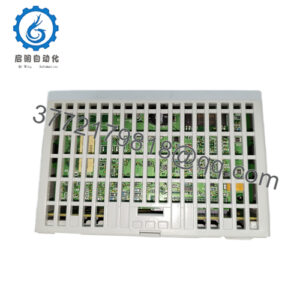
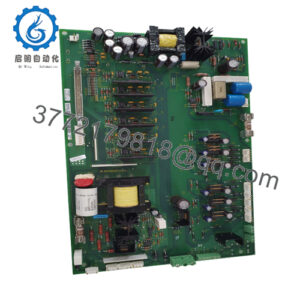
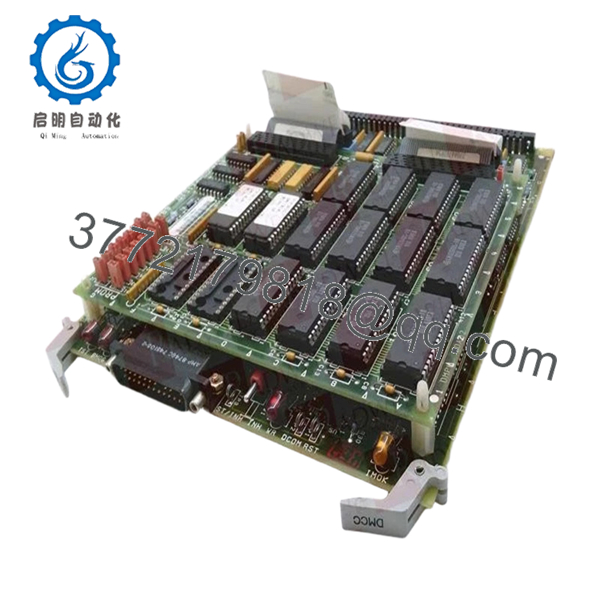
The GE DS3815DMCC is a sophisticated Digital Micro-Computer board that serves as a localized processing node within the Speedtronic Mark IV control system. It is responsible for executing complex algorithmic logic, managing digital data streams, and facilitating communication between peripheral I/O modules and the central controller. Its precise timing and data handling capabilities are essential for the stable governing of large-scale industrial turbines.
Maintaining a DS3815DMCC as New Surplus is a critical pillar of any Mark IV lifecycle management plan. Because these boards house the system’s “intelligence,” a failure on a used or refurbished unit can lead to corrupt data or logic hangups that are notoriously difficult to troubleshoot. By securing a New Surplus unit, you bypass the risks of component fatigue and thermal stress, ensuring that your legacy control system remains as reliable as the day it was commissioned.
Installation & Configuration Guide
Stage 1: Pre-Installation (Prep & Safety)
Power down the control rack and follow standard lock-out/tag-out procedures. Ensure you are wearing a grounded ESD wrist strap before handling the DS3815DMCC. Critically, document the current EPROM chip locations and any configuration jumpers on the old board. You may need to transfer existing site-specific EPROMs to the new board to maintain turbine logic.
Stage 2: Removal
Carefully disengage the locking tabs at the top and bottom of the card cage slot. Slide the board out of the rack guides with steady pressure. Handle the board only by the edges or the front faceplate to avoid touching sensitive integrated circuits (ICs).
Stage 3: Installation (Clone & Seat)
Verify that all jumpers and DIP switches on the new DS3815DMCC match the original unit exactly. If the new board did not ship with PROMs, carefully move the EPROM chips from the old board to the new one, ensuring the orientation notch matches the socket. Slide the board into the slot and press firmly until it seats into the backplane.
Stage 4: Power-On & Testing
Restore power to the rack. Monitor the LED diagnostic display on the front of the DS3815DMCC. A successful boot sequence typically concludes with a specific status code or a steady heartbeat LED. Check the operator interface for “Processor Healthy” status and verify that no communication alarms are present.

- DS3815DMCC
Firmware/Software Versions & Upgrade Notes
- EPROM Transfer: This board often functions as a generic “carrier” for site-specific logic stored in socketed EPROMs. The revision (DMCC) must support the firmware version currently running on your system.
- Compatibility: The DMCC revision is optimized for high-speed data handling; replacing a DMCC with an earlier revision (like DMCA or DMCB) may result in bus timeout errors or protocol mismatches.
- Warning: Ensure that EPROM chips are inserted in the correct orientation. Reversing a chip in the socket will likely result in immediate and permanent damage to both the chip and the board upon power-up.
Frequently Asked Questions (FAQ)
What is the “DMC” in the part number?
DMC stands for Digital Micro-Computer. It indicates that this board is a processing unit capable of running logic, rather than just a passive interface or relay board.
Does this board come with software pre-loaded?
Most New Surplus DS3815DMCC boards come with the base factory firmware, but industrial turbine logic is highly customized. You will likely need to move the EPROM chips from your existing board or download your site-specific logic from a backup.
Can I use a refurbished DS3815DMCC instead?
While possible, it is not recommended for critical processing nodes. Micro-computer boards are susceptible to “invisible” failures like memory bit-flips or subtle timing drifts as ICs age. New Surplus hardware is the only way to guarantee 100% OEM performance.
What causes these boards to fail most often?
The most common failure points are power surges, ESD damage during handling, and the eventual drying out of on-board capacitors over decades of continuous operation.
Is this board hot-swappable?
No. Swapping a processor-level board like the DS3815DMCC while the system is live will cause an immediate system crash and potential damage to the backplane communication bus. Always de-energize the rack before a swap.