 WhatsApp: +86 16626708626
 Email:
  Phone: +86 16626708626
Description
3. Key Technical Specifications
| Parameter | Specification |
| Manufacturer | GE Automation & Controls / Emerson Machine Automation Solutions |
| Part Number | EPSCPE100-ABAC |
| Product Line | PACSystems RSTi-EP |
| Processor Speed | 1.0 GHz Enhanced Performance Execution Core |
| User Memory | 1.0 MB Non-Volatile User Memory Storage |
| Discrete Data Capacity | 2k Bits Discrete I/O Allocation |
| Analog Data Capacity | 32k Words Analog I/O Mapping Capacity |
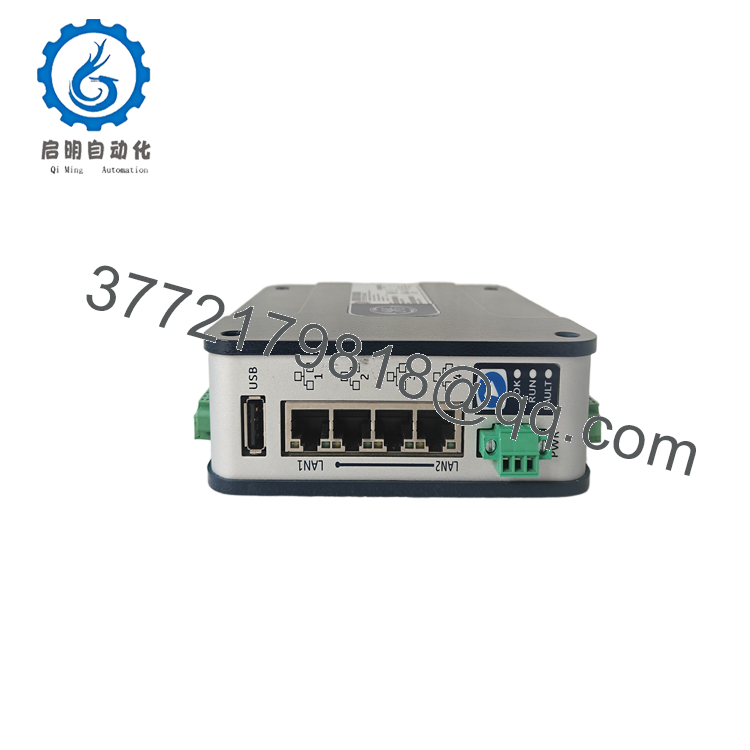
| Network Interfaces | 1x Dedicated High-Speed LAN Port (10/100) | 3-Port Internally Switched LAN (10/100) |
| Supported Protocols | PROFINET Simplex (Max 8 IO devices), Modbus TCP/IP, OPC-UA Server, SRTP Client/Server |
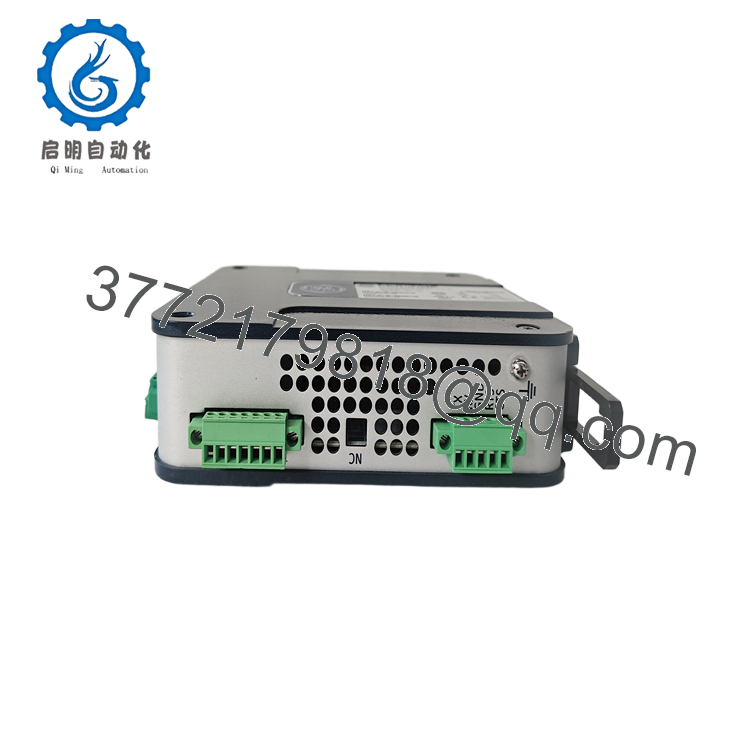
| Serial Communication | 1x Onboard RS-232 Port; RS-485 interface via auxiliary terminals |
| Mounting Architecture | Integrated 35 mm DIN Rail Clip |
| Operating Temperature | -40 to +70 °C |
| Programming Software | Proficy Machine Edition (PME) V9.80 or higher |
4. Product Introduction & Supply Chain Strategy
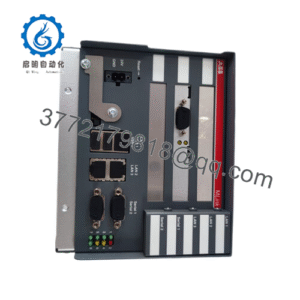
The EPSCPE100-ABAC is an enhanced-performance, standalone 1 GHz edge controller belonging to the PACSystems RSTi-EP family. Housed in a compact, 1.5-inch DIN rail form factor, this CPU operates as a robust decentralized logic manager capable of processing up to 2K discrete I/O points. Equipped with a dedicated high-speed uplink port and a 3-port embedded PROFINET real-time switch, the unit provides critical determinism for remote machine applications, skid-mounted systems, and distributed material handling fields.
From an asset-management viewpoint, the EPSCPE100-ABAC serves as an optimal solution for reducing Total Cost of Ownership (TCO) across modular facilities. Purchasing this card as New Surplus circumvents manufacturer backorders and short-circuits inflation risks. Used or refurbished controllers present massive hidden reliability traps; an internal supercapacitor circuit retains memory backup patterns, and used units frequently feature worn capacitors that drop memory registers during seasonal maintenance power outages. This factory-sealed New Surplus module ensures absolute reliability and complete system security at a fraction of the cost of long-cycle OEM ordering lines.

- EPSCPE100-ABAC
- EPSCPE100-ABAC
5. Installation & Configuration Guide
Stage 1: Pre-Installation (Prep & Safety)
- Power Isolation: De-energize the local DIN rail cabinet panel. Verify that the incoming 24 Vdc supply lines register 0 V using a digital multimeter.
- Environment Check: Ensure the 35 mm DIN rail structure is correctly bonded to the central equipment ground as per GFK-2958 manual guidelines.
- ESD Mitigation: Fasten a grounded ESD wrist strap before unboxing the unit. Avoid contact with the exposed circuit pins located on the right expansion interface.
Stage 2: Removal
- Port Disconnection: Label and pull out the four RJ-45 Ethernet cables, the RS-232 serial connection plug, and the auxiliary power input block.
- Unlatching: Insert a flathead screwdriver into the lower DIN rail release latch. Pull downward to free the locking tab.
- Extraction: Tilt the base of the old controller upward and lift it away from the top lip of the DIN rail structure.
Stage 3: Installation (Clone & Seat)
- Physical Mounting: Hook the upper mounting slots of the new EPSCPE100-ABAC onto the top edge of the DIN rail. Press down on the bottom front edge until the spring clip locks onto the lower rail lip.
- Ground Attachment: Fasten a 16–22 AWG braided ground strap from the module’s dedicated ground terminal directly to the grounded DIN rail chassis.
- Cable Insertion: Re-insert all networking cables into their designated RJ-45 sockets (LAN1 for uplink, LAN2 for field devices). Secure the 24 Vdc supply plug to the input terminals.
Stage 4: Power-On & Testing
- Initial Power Application: Switch on the 24 Vdc breaker line to the unit.
- LED Diagnostic Walk: Verify the startup sequence on the faceplate indicators. The PWR light must remain solid green. Wait for the RUN indicator to transition out of a faulted state.
- Network Verification: Ping the predetermined IP address from Proficy Machine Edition to establish a stable SRTP handshake.
6. Firmware/Software Versions & Upgrade Notes
The EPSCPE100-ABAC controller’s advanced functionalities are highly dependent on its internal firmware version. Core features, such as remote HART diagnostics via the COMMREQ block, dictate a minimum firmware baseline of version 9.35 (E8VE). Furthermore, if your topology requires native OPC UA Server Logging capabilities, the unit must run firmware version 10.10 (EG67) or higher, matched alongside Proficy Machine Edition 9.80 SIM 5.
Be aware of specific two-step migration rules when processing firmware changes on New Surplus hardware. Modules currently configured with a version lower than v9.35 cannot be directly flashed to v10.10; doing so risk bricking the internal bootloader. You must first apply the intermediate v9.35 upgrade patch package before running any higher updates. Additionally, note that the internal supercapacitor configuration prevents the execution of Service Requests 56 and 57 (Logic-Driven Flash reads/writes)—any attempts to compile logic utilizing these calls will fail without power flow.
7. Frequently Asked Questions (FAQ)
- Why is this unit branded under both GE and Emerson labels? This is due to a structural corporate acquisition. GE Intelligent Platforms was acquired by Emerson Automation Solutions. The underlying design, underlying architecture, and parts processing protocols for the PACSystems RSTi-EP series remain completely identical, ensuring full interchangeability between GE-branded and Emerson-branded panels.
- Can I use the onboard USB port or micro SD card slot on this card? By default design in standard deployment, the onboard USB-A port and micro SD card interface slots are physically inactive. The controller does not support direct Removable Data Storage Device (RDSD) capabilities; all program distribution and configuration logic updates must run over an active Ethernet link via Proficy Machine Edition.
- Does this standalone controller support high-speed line redundancy? The EPSCPE100-ABAC supports Media Redundancy Protocol (MRP) and PROFINET frameworks, but it runs exclusively in a simplex configuration. It does not support dual-unit bumpless hardware CPU redundancy layouts. For massive multi-node setups requiring dual-hot backup processors, the PACSystems RX3i controller series is required.
- What should I do if my network traffic environment is highly congested? If the controller operates in environments where incoming Ethernet traffic thresholds exceed 4,000 packets per second, there is a possibility of software watchdog trip actions. To mitigate this behavior, open your hardware configuration settings within Proficy Machine Edition and increase the Watchdog Timer (WDT) limit value to 500 ms.
- Is this card safe to hot-swap while the local I/O rack is live? No. While remote I/O drops along the PROFINET line can be serviced independently, the standalone master CPU cannot be extracted while power is active. Removing the main processor while energized will disrupt the internal communications network and cause an unmanaged shutdown across all downstream connected field devices.