 WhatsApp: +86 16626708626
 Email:
  Phone: +86 16626708626
Description
3. Key Technical Specifications
| Parameter | Specification |
| Manufacturer | Horner APG (Co-developed / Distributed by GE Fanuc) |
| Part Number | HE693THM166 |
| PLC Series Compatibility | GE Fanuc Series 90-30 Control Systems |
| Slot Allocation | Consumes 1 standard I/O slot on local or expansion baseplates |
| Number of Channels | 16 independent differential input channels |
| Supported Sensor Types | Thermocouple Types: J, K, T, E, R, S, B, N | Linear millivolt range: ±25 mV to ±100 mV |
| Digital Resolution | 16-bit analog-to-digital converter architecture |
| Cold Junction Compensation | Automatic onboard CJC via dual precision thermistors on the terminal strip |
| Backplane Power Consumption | 200 mA at 5 Vdc drawn directly from the baseplate logic rail |
| Isolation Barrier | 1,500 V RMS field-to-logic optical isolation |
| Update Rate | 240 ms for all 16 channels active |
| Input Impedance | Greater than 10 megohms |
4. Product Introduction & Supply Chain Strategy
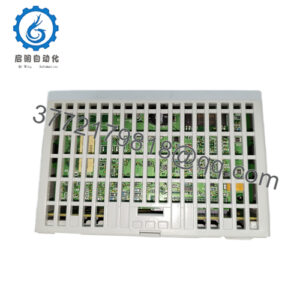
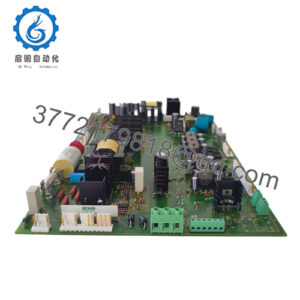
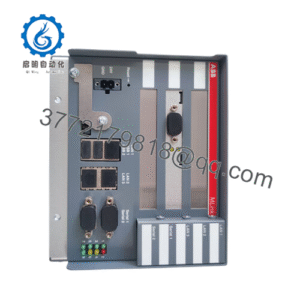
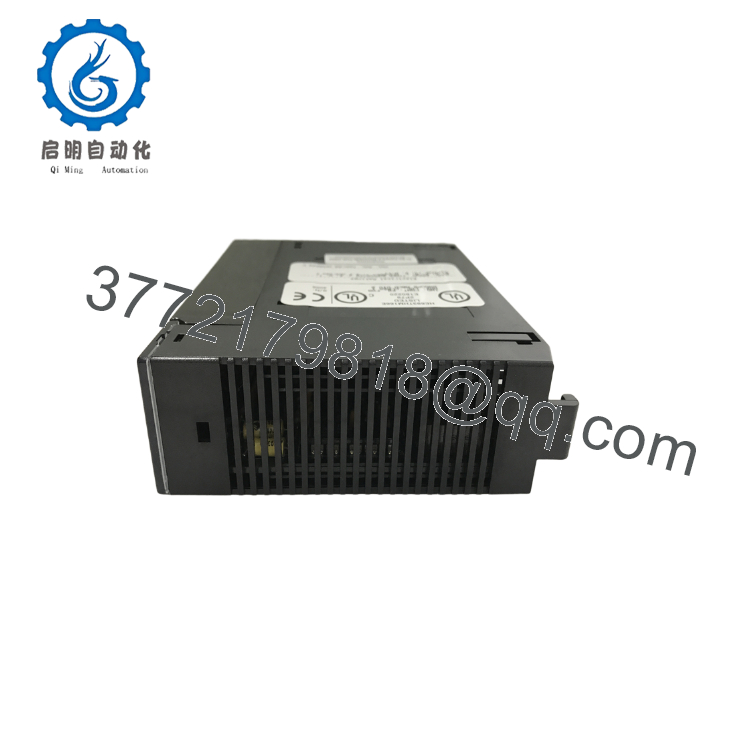
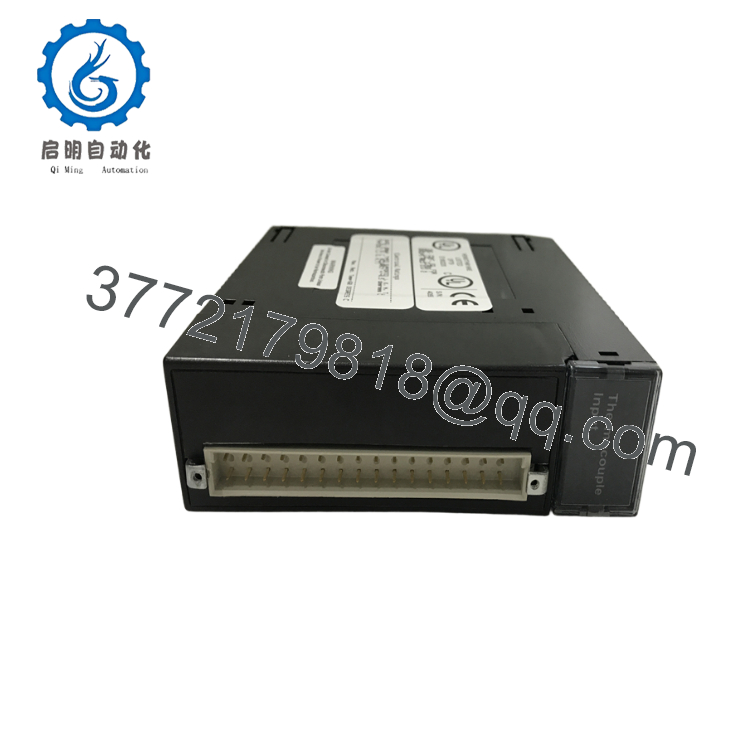
The HE693THM166 is a high-density, 16-channel thermocouple input card designed for the GE Fanuc Series 90-30 PLC platform. Manufactured by Horner APG to integrate smoothly into standard 90-30 baseplates, this module provides 16-bit resolution tracking across an extensive range of temperature sensors (including J, K, T, and N types) as well as raw millivolt signals. Featuring highly accurate onboard Cold Junction Compensation (CJC) and sophisticated digital filtering, this card acts as the processing foundation for thermal applications such as multi-zone ovens, chemical reactors, plastic extrusion profiles, and turbine exhaust monitoring.
Because the Series 90-30 lifecycle has reached maturity, the HE693THM166 represents a critical single point of failure for process thermal management. Relying on refurbished temperature cards creates an unacceptable risk of hidden Total Cost of Ownership (TCO) creep. Used cards often suffer from aged analog-to-digital converters, degraded optocouplers, and inaccurate CJC thermistors on their terminal blocks. This sensor-drift or components breakdown can lead to false over-temperature trips or unchecked thermal runaways. This factory-sealed New Surplus module eliminates tracking errors, ensuring zero-hour calibration precision and absolute signal stability.

- HE693THM166
- HE693THM166
5. Installation & Configuration Guide
Stage 1: Pre-Installation (Prep & Safety)
- Power Isolation: Shut down the Series 90-30 PLC power supply rack entirely. Tag and lock out the primary panel breaker. Verify that all field loops are de-energized using a digital multimeter.
- Logic Allocation: Open your configuration profile within Proficy Machine Edition or Logicmaster 90. Ensure that
%AIinput registers are properly allocated to the designated target slot to accept the 16 channels of temperature data. - ESD Prevention: Put on a grounded ESD wrist strap before extracting the card from its original anti-static shield to safeguard the delicate 16-bit instrumentation amplifiers.
Stage 2: Removal
- Terminal Disconnection: Unscrew and detach the front terminal block connector assembly from the card faceplate. Keep the thermocouple wiring harness intact to avoid mixing up channel lines.
- Card Unlatching: Squeeze the top and bottom plastic release tabs located on the outer edges of the module housing.
- Extraction: Pull the card firmly and straight out along the baseplate track grooves to avoid bending the backplane pins.
Stage 3: Installation (Clone & Seat)
- Configuration Verification: Check the hardware manual to determine if specific software filter variables or diagnostic bits must be allocated based on your specific thermocouple wire type selection.
- Slot Seating: Slide the new New Surplus HE693THM166 evenly into the designated baseplate slot until the card’s rear connector fits perfectly into the backplane bus socket and the plastic locks snap into place.
- Terminal Matching: Securely mount the original pre-wired terminal block back onto the faceplate of the new module. Ensure a tight fit to allow the onboard CJC thermistor block to properly read the terminal header ambient temperature.
Stage 4: Power-On & Testing
- Cold Resistance Verification: Check the shield ground lines to confirm that no unexpected ground paths or physical short loops are crossing into the microvolt signal pairs.
- System Power-Up: Turn on the rack power supply and put the CPU into RUN mode.
- Signal Audit: Monitor the front faceplate LEDs; the “OK” indicator must stay solid green. Open your PLC programming software to read the live
%AIraw digital registers and verify they correspond correctly to actual local room or process temperatures.
6. Firmware/Software Versions & Upgrade Notes
The HE693THM166 module uses a dedicated internal hardware array and fixed microcontroller microcode rather than an upgradeable flash memory stack. Compatibility is maintained by aligning the hardware revision level of the PCB with your parent Series 90-30 CPU architecture and configuration software package.
When introducing this high-density module into early legacy systems running legacy software like Logicmaster 90, verify that your development configuration file can properly register a 16-channel input block within a single slot footprint. If replacing a standard 8-channel module (such as the HE693THM884), the existing %AI address space map must be rewritten to prevent register overlapping with adjacent I/O modules on the backplane bus.
7. Frequently Asked Questions (FAQ)
- Why is this thermocouple module marked as both a GE Fanuc and a Horner APG card? Horner APG co-developed and built specialized analog and temperature specialty modules for direct integration into the GE Fanuc Series 90-30 platform. This module slides into standard 90-30 baseplate racks and reports data via standard
%AIvariables, providing full drop-in compatibility with original GE control networks. - Does this card require an external power supply to run the thermocouple loops? No. The HE693THM166 draws its operating power directly from the 5 Vdc logic rail of the Series 90-30 rack backplane (consuming 200 mA). Because thermocouples generate their own microvolt signals through the Seebeck effect, no external current-loop power supply is required to drive the field loops.
- What is the purpose of Cold Junction Compensation (CJC) on this card? Thermocouple readings are based on the temperature difference between the sensor tip and the cold junction terminal strip where the wires connect to the copper tracks of the module. The HE693THM166 features dual built-in thermistors that accurately measure the ambient temperature of the terminal strip, enabling the card to automatically compensate for local thermal fluctuations and calculate true process temperature values.
- What happens to the PLC registers if a thermocouple wire breaks? The HE693THM166 features built-in Open Thermocouple Detection (OTD). If a field wire snaps or is disconnected, the module automatically forces the corresponding digital
%AIregister to its maximum positive value (upscale burnout configuration). This allows your logic program to easily identify the fault and safely shut down heating elements before a process overheat occurs. - Can I pull this module out of the rack while the baseplate power is turned on? No. The GE Fanuc Series 90-30 system does not support hot-swapping I/O modules. Removing or inserting a module while the rack is powered can cause electrical arcing across the backplane data pins, risking the corruption of running CPU registers or permanent hardware damage to adjacent boards. Always power down the system before servicing the rack.