WhatsApp: +86 16626708626
 Email:
  Phone: +86 16626708626
Description
Key Technical Specifications
| Parameter | IC660BBA021 Specification |
|---|---|
| Manufacturer | GE Fanuc |
| Series | Genius I/O |
| Module Type | RTD Input Block |
| Number of Inputs | 6 |
| Input Grouping | 3 groups of 2 circuits |
| Supported RTDs | Platinum, Nickel, Copper |
| RTD Standard | Platinum/Nickel DIN 43760 |
| Resistance Range | 0–5,000 Ω |
| Resolution | 0.1 °C |
| Input Update Rate | 400, 800, or 1,600 ms |
| Input Filter | 400, 800, or 1,600 ms |
| Nominal Power | 24/48 VDC |
| Supply Range | 18–56 VDC |
| Block-to-Block Isolation | 1,500 V |
| Group-to-Group Isolation | 300 V |
| Heat Dissipation | 7 W maximum |
| Operating Temperature | 0 to +60 °C |
| Diagnostics | Short, open wire, wiring error, internal fault, over/under-range, alarms |
The IC660BBA021 is documented as a 24/48 VDC, six-channel RTD Genius block, with three groups of two circuits. GE Fanuc documentation also lists it among the Genius analog modules compatible with supported Genius bus controller architectures.
Each input can be configured for platinum, nickel, or copper RTDs. The block can report engineering values in tenths of degrees Celsius, tenths of degrees Fahrenheit, tenths of ohms, or counts.
Product Introduction
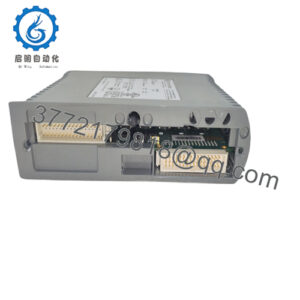
The GE Fanuc IC660BBA021 is a six-channel RTD input block for the Genius I/O system. It converts RTD resistance measurements into temperature or resistance data for transmission over the Genius network. Supported sensor types include platinum, nickel, and copper RTDs, with a 0–5,000 Ω measurement range.
The block provides factory calibration, configurable input filtering and RTD linearization, and channel-level diagnostics. Its three groups of two circuits provide 300 V group-to-group isolation, while published specifications identify 1,500 V block-to-block isolation.
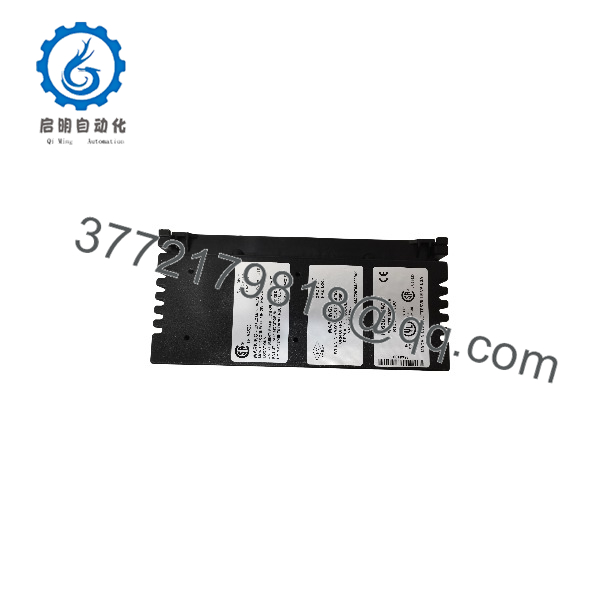
IC660BBA021
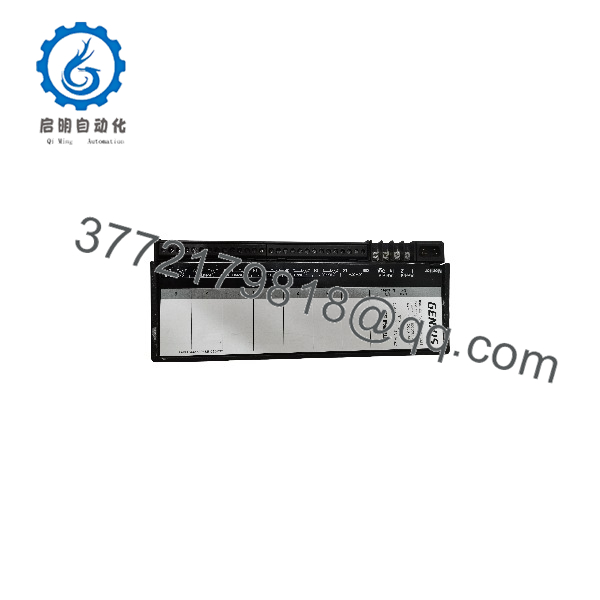
IC660BBA021
Installation & Configuration Guide
Stage 1 — Pre-Installation Preparation
Estimated time: 20–30 minutes
- Confirm the complete part number IC660BBA021 and hardware revision.
- Verify that the existing controller communicates through the Genius I/O bus.
- Record the current Genius bus configuration and block address.
- Document each RTD channel, sensor type, wiring arrangement, and engineering range.
- Back up the PLC/Genius configuration where applicable.
- Verify the field supply is within the documented 18–56 VDC range.
- Photograph the existing wiring before disconnecting the block.
⚠️ Do not assume another IC660BBA02x module is a direct substitute. The BBA021 is specifically an RTD input block.
Stage 2 — Removing the Existing Module
Estimated time: 15–25 minutes
- Stop the controlled process using the site’s approved shutdown procedure.
- Apply appropriate lockout/tagout to the block’s field power.
- Verify the supply is de-energized.
- Record the Genius bus connections and block address.
- Label all six RTD circuits.
- Record whether each sensor uses the applicable two- or three-wire configuration.
- Disconnect field wiring and Genius network wiring.
- Remove the existing block while preserving the terminal assembly where applicable.
Stage 3 — Installing the IC660BBA021
Estimated time: 20–30 minutes
- Verify the replacement part number and revision.
- Inspect the terminal assembly and connectors.
- Mount the block securely in the designated location.
- Reconnect the Genius communication wiring.
- Connect the 24/48 VDC block power.
- Reconnect each RTD according to its documented channel wiring.
- Verify polarity, commons, shielding, and cable routing.
- Confirm the Genius block address and configuration parameters.
⚠️ Do not interchange RTD wiring between channels without checking the original channel assignment and configuration.
Stage 4 — Power-On & Testing
Estimated time: 30–60 minutes
- Energize the block according to the approved commissioning procedure.
- Confirm the block’s status indication.
- Verify Genius network communication.
- Check all six input values from the PLC or engineering workstation.
- Compare displayed temperatures against a known reference where practical.
- Check for open-wire, short-circuit, overrange, or underrange diagnostics.
- Verify the configured RTD type and linearization.
- Confirm the selected input update/filter timing.
- Test the system under normal process conditions.
- Record the replacement part number and revision for maintenance records.
FAQ
1. What is the IC660BBA021?
It is a GE Fanuc Genius I/O six-channel RTD input block used to acquire temperature/resistance signals from RTD sensors and communicate the data through the Genius bus.
2. Which RTD sensors are supported?
The documented input types include platinum, nickel, and copper RTDs, with platinum and nickel configurations associated with DIN 43760 linearization. Linear resistance measurement is also supported.
3. What is the resistance measurement range?
The supports a 0–5,000 Ω resistance measurement range.
4. What is the input resolution?
The specified input resolution is 0.1 °C. Depending on configuration, the block can report temperature, resistance, or counts to the controller.
5. What power supply does the require?
It is a 24/48 VDC Genius RTD block. Published technical information gives an operating supply range of 18–56 VDC.
6. Is the obsolete?
Yes. Multiple current parts databases identify as discontinued by the manufacturer. It remains relevant for maintaining legacy Genius I/O installations, but replacement procurement should verify the exact revision and terminal configuration.
7. Can an IC660BBA023 replace the ?
No, not as a simple functional replacement. is an RTD input block, whereas IC660BBA023 is a six-channel thermocouple input block. Their sensor types and input processing are different.