 WhatsApp: +86 16626708626
 Email:
  Phone: +86 16626708626
Description
3. Key Technical Specifications
| Parameter | Value |
| Nominal Input Voltage | 120/240 VAC or 125 VDC |
| Input Voltage Range | 90 to 264 VAC (47 to 63 Hz) / 100 to 150 VDC |
| Total Output Power | 100 Watts maximum |
| +5 VDC Output Capacity | 20 Amps maximum |
| +12 VDC Output Capacity | 2 Amps maximum |
| −12 VDC Output Capacity | 1 Amp maximum |
| Holdup Time (Power Ride-Through) | 20 milliseconds minimum at nominal load |
| Chassis Slot Width | Double slot width (Must occupy the leftmost slots in the rack) |
| Battery Connections | Integrated 3-pin connector for CMOS memory backup battery |
| Status Indicators | Front-panel LEDs: Power, Logically OK, Battery Low |
| Isolation | 1,500 VAC continuous from input to outputs |
| Protection Layout | Overvoltage, overcurrent, and short-circuit protection |
4. Product Introduction & Supply Chain Strategy
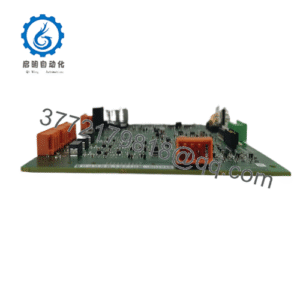
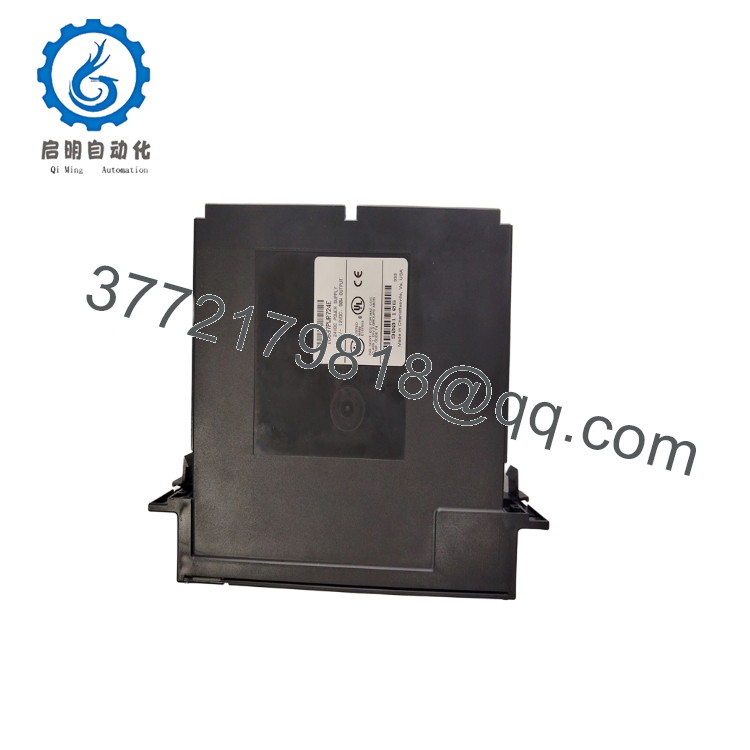
The GE Fanuc IC697PWR724 is a high-capacity 100 Watt power supply module designed exclusively for the Series 90-70 industrial automation platform. Occupying a double-width slot profile at the leftmost end of the baseplate, this unit accepts a flexible input voltage configuration spanning both wide-range AC rails and high-voltage DC battery banks. It rectifies and regulates this incoming power into precise +5 VDC, +12 VDC, and −12 VDC current rails, generating the electrical foundation required to run power-heavy VME controllers, communication blocks, and high-density I/O configurations.
From a lifecycle management standpoint, the IC697PWR724 is a critical Single Point of Failure (SPOF). Because the entire Series 90-70 architecture is completely obsolete, a sudden power supply failure causes an immediate blackout of the host rack, dropping field networks and halting production. Purchasing a certified New Surplus unit is a strategic necessity; third-party refurbished power supplies represent a severe operational risk due to degraded transformers, dried-out smoothing capacitors, and internal thermal fatigue. Keeping 1–2 zero-hour surplus power cards in your buffer stock guarantees immediate plant recovery and an efficient Total Cost of Ownership (TCO) while your long-term migration paths are engineered.
5. Installation & Configuration Guide
Stage 1: Pre-Installation (Prep & Safety)
Enforce absolute lock-out/tag-out (LOTO) procedures on the primary plant feeder lines supplying the rack enclosure. Verify that all external incoming power lines are completely dead using a certified digital multimeter. Secure a grounded ESD wrist strap to your arm and clamp its lead to an unpainted metal surface on the control cabinet frame. Before handling the replacement supply, check that you have a fresh IC697ACC701 lithium battery pack on hand to preserve the CPU logic tables during the physical swap.
Stage 2: Removal
Loosen the upper and lower faceplate retaining screws securing the module to the rack frame. Unplug the terminal block connector strip from the front face of the card to leave the field wiring intact. Disconnect the internal CMOS memory backup battery lead from the 3-pin terminal on the front plate. Simultaneously pivot the top and bottom card ejector clips outward to disengage the backplane power pins, then slide the module horizontally out of the slot tracks.
Stage 3: Installation (Clone & Seat)
Verify that the replacement IC697PWR724 has clean, unscored backplane connector pins and that its voltage selection jumpers or toggle switches match the incoming line setup (120/240 VAC or 125 VDC). This module must always be inserted into the leftmost slots of the primary rack chassis. Align the card with the upper and lower plastic slot guides, slide it inward, and lock the top and bottom ejector clips to seat the high-current backplane interface completely. Secure the faceplate retaining screws and plug in the fresh logic backup battery pack.
Stage 4: Power-On & Testing
Re-seat the main wired power terminal block assembly. Restore primary line power to the rack. Monitor the front panel indicator lights immediately: the “Power” LED must shine a solid green, indicating all internal DC outputs are operating within regulation parameters. The CPU module adjacent to it should successfully clear its boot cycle, and the “Battery Low” LED must remain completely unlit, confirming the memory backup loop is fully pressurized.

- IC697PWR724
- IC697PWR724
6. Firmware/Software Versions & Upgrade Notes
The IC697PWR724 operates as a purely analog and hardware-driven power conversion assembly, meaning it does not host a flash firmware operating system or microprocessor microcode.
⚠️ CRITICAL BACKPLANE LOADING BALANCE: While this power supply does not require software setup or firmware compatibility checking, its integration requires a strict calculation of backplane power consumption. The card delivers up to 20 Amps on the +5 VDC line. When inserting advanced processing or communication cards (such as the IC697CPX782 or multiple GBC modules), sum up the combined milliamp ratings specified for each module. Exceeding the 100 Watt overall threshold or over-drawing the +5 VDC limit will trip the module’s internal overcurrent fold-back protection, resulting in intermittent thermal shutdowns or spontaneous CPU system resets.
7. Frequently Asked Questions (FAQ)
What causes the “Battery Low” LED to turn on, and how do I replace it?
The “Battery Low” LED illuminates when the voltage of the external lithium battery pack connected to the front of the IC697PWR724 drops below a safe retention threshold. This battery maintains the volatile CMOS RAM (application logic and register parameters) inside the adjacent CPU card during power downs. To avoid completely losing your program, always replace the battery pack while the main rack power supply is energized and running.
Is this IC697PWR724 module brand new or a refurbished board?
This product is a Brand New Surplus unit. It is not used, not pulled from a decommissioned plant, and not refurbished. All modules undergo rigorous quality verification to ensure OEM-level reliability. Every power supply is stored within sealed anti-static protective packaging, showing pristine gold edge connectors, flawless internal component layouts, and zero track adjustments.
Can this power supply module be hot-swapped while the rack is active?
No. The legacy Series 90-70 backplane architecture does not feature hot-swap capability. Attempting to pull or insert the IC697PWR724 while the main incoming power line is live will create massive electrical arcs across the high-current backplane pins. This can permanently weld the backplane contacts, instantly destroy adjacent CPU/analog cards, and present a severe arc-flash safety hazard to the technician. Always isolate the incoming line power before swapping the hardware.
Does this module automatically switch between 120 VAC and 240 VAC input?
No, the IC697PWR724 does not feature auto-ranging input circuitry. You must manually configure the voltage input selection using the terminal wiring configurations and internal jumper placements located on the front and side terminal strips. Applying 240 VAC while the module is wired or jumpered for a 120 VAC input will cause catastrophic internal failure and burn out the primary input stage components.
What warranty applies to this obsolete surplus power supply?
We protect this New Surplus IC697PWR724 module with a comprehensive 1-year operational warranty from your date of purchase. If a component defect occurs during this window, we handle replacement or repair immediately, shielding your operating budget from the limited 30-day structural warranties typically packaged with refurbished alternative components.