 WhatsApp: +86 16626708626
 Email:
  Phone: +86 16626708626
Description
Key Technical Specifications
| Parameter | Value |
| Manufacturer | General Electric (GE) |
| Part Number | IS200HSLAH2ADE |
| Control System Series | Mark VI Speedtronic / EX2100 / Innovation Drive |
| Functional Revision | H2 (Enhanced Layer Optimization) |
| Artwork/Design Revision | ADE (Advanced Board Layout and Component Upgrades) |
| Data Signaling Rate | 50 MBaud Deterministic Network Transmission |
| Media Interface | Dual-Channel Fiber Optic Transceivers (TX/RX Pairs) |
| Bus Interface | Single-Slot VMEbus Form Factor (Standard Eurocard) |
| Isolation Profile | Complete Optical Isolation for High Common-Mode Noise Immunity |
| Status Indicators | Onboard Front Panel LEDs (Active Link, Transmit, Error states) |
| Circuit Protection | Full Class-A Conformal Coating for Corrosive/Dusty Environments |
| Power Consumption | +5 V DC from VME backplane with 15% inherent overhead margin |
Product Introduction & Supply Chain Strategy
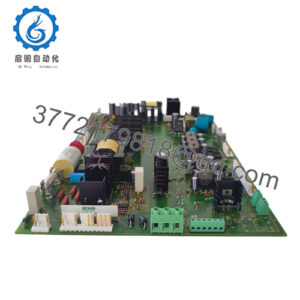
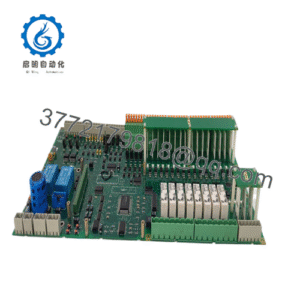
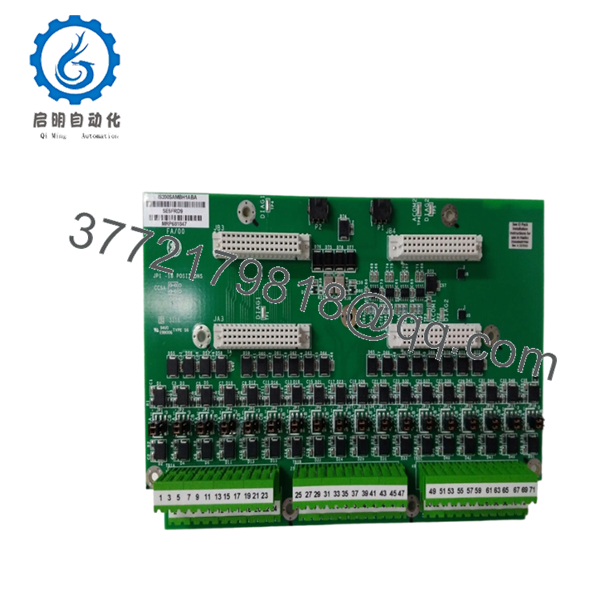
The GE IS200HSLAH2ADE is a specialized High Speed Local Area Network (HSLA) communications board utilized within GE Mark VI Speedtronic control systems, EX2100 excitation layouts, and Innovation Series drives. It serves as a ruggedized, deterministic communication link, facilitating high-bandwidth peer-to-peer data transfers via optical fiber cables to eliminate electrical noise and ground loop potentials. Operating at a strict 50 MBaud transmission rate, the H2ADE revision integrates advanced transceiver circuitry and specific artwork modifications designed to stabilize real-time control loops across highly synchronized industrial turbine and generator controls.
From an inventory and maintenance strategy perspective, securing this card as a New Surplus asset represents a high-return choice for optimizing your plant’s Total Cost of Ownership (TCO). Because this configuration is out of active manufacturing, a network link failure can completely isolate a controller rack, inducing a full-plant trip. Purchasing a certified New Surplus board instead of an unpredictable refurbished alternative guarantees zero degradation of the critical optical transceivers. By deploying 1 unit as on-site safety stock, procurement managers can bypass catastrophic OEM lead times and confidently maintain plant reliability.

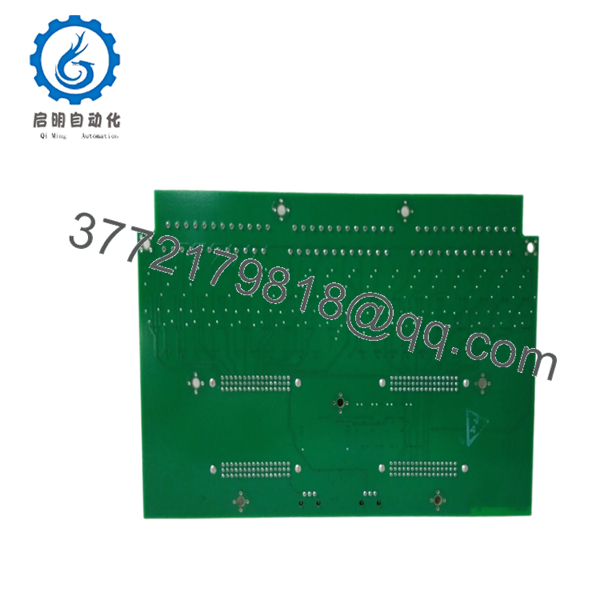
- IS200HSLAH2ADE
- IS200HSLAH2ADE
Installation & Configuration Guide
Stage 1: Pre-Installation (Prep & Safety)
- Isolate the VME rack control enclosure by applying formal lock-out/tag-out (LOTO) protocols to all secondary and primary power links.
- Put on a calibrated grounding ESD wrist strap and connect it directly to an uninsulated grounding terminal within the physical cabinet chassis.
- Review the exact hardware revision string on the failing board; verify that the incoming card contains matching functional (H2) and artwork (ADE) indices to prevent backplane identification conflicts.
Stage 2: Removal
- Unlatch the fiber optic cable connectors from the front transceivers carefully. Immediately cap the exposed fiber optic cable ends to prevent dust contamination.
- Unfasten the top and bottom captive retention screws holding the card assembly tightly to the VME frame rails.
- Pull the injector/ejector handles on the board faceplate outward in a synchronized motion to release the card from the backplane connectors. Slide the module straight out of its tracking tracks.
Stage 3: Installation (Clone & Seat)
- Extract the New Surplus IS200HSLAH2ADE from its protective anti-static packaging while inside your ESD-safe zone.
- Align the board into its dedicated slot slot guides. Ensure the card orientation aligns correctly with the upper and lower alignment tracking tracks.
- Slide the card backward until the connectors touch the backplane alignment boundary. Push the ejector/injector levers inward until the module locks securely into position. Secure the upper and lower faceplate retention screws.
- Remove the protective dust caps and reconnect the fiber optic TX/RX links into their designated front-panel transceivers.
Stage 4: Power-On & Testing
- Conduct a brief visual inspection to ensure no fiber cords are pinched or bent past their specified bend radius limits.
- Energize the main VME bus power system.
- Check the faceplate status LEDs immediately upon power up. The Link Active indicator should quickly flash or stay steadily lit once a network handshake occurs.
- Access the system configuration environment via ToolboxST to confirm that the node status displays clean connectivity data with zero transmission drops or CRC packet runtime deviations.
Firmware/Software Versions & Upgrade Notes
The IS200HSLAH2ADE card relies on built-in firmware structures that operate within the parameters defined by the H2 functional revision and ADE artwork profile. This exact configuration is tuned for high-speed, deterministic 50 MBaud cluster networking. It may not seamlessly integrate with older H1 functional variants or legacy systems that expect different optical transceiver signaling thresholds without adjustments.
Before executing a replacement sequence, cross-verify your software configuration file configurations within the GE Toolbox control platform. Ensure that the software hardware definition file correctly identifies the H2ADE revision matrix. Do not attempt to mix functional variations within redundant or dual-channel link setups; if a communication ring expects a matched pair of H2 modules, inserting a mismatched revision can cause timing skew anomalies, leading to frame loss or critical protocol timeout faults.
Frequently Asked Questions (FAQ)
Q: What justifies the price premium of your New Surplus inventory compared to the cheap refurbished boards available online?
A: Our pricing reflects the high cost of acquiring and validating genuine, unused industrial components from global corporate safety stocks. Refurbished boards are often cleaned-up parts pulled from decommissioned plants, containing aged components that have endured years of thermal cycling. This New Surplus card provides zero operational wear, providing original OEM reliability at a much lower cost than original factory list price.
Q: Are these modules genuinely brand new, or have they been reworked?
A: This product is a Brand New Surplus unit. It is not used, not pulled from a decommissioned plant, and not refurbished. All modules undergo rigorous quality verification to ensure OEM-level reliability. “New” means the card features its original anti-static packaging, factory component soldering, clear conformal coating, and zero tracking marks on its VME backplane interface connection pins.
Q: Can this HSLA network card be pulled or replaced while the control chassis is live?
A: Absolutely not. The IS200HSLAH2ADE is a VMEbus module that draws raw logic and system signal pathways directly from the backplane. Removing or inserting this module while the backplane is powered can cause voltage transients, destroying the on-board logic chips and potentially damaging neighboring communication or controller processors in the rack.
Q: Do I need to perform manual firmware programming or dip switch adjustments on this card?
A: No, this board does not feature manual dip switches or jumper fields. Configuration and node assignment parameters are handled automatically via software matching based on the onboard electronic ID and your system layout settings. You only need to verify that your software definition files accurately match the H2ADE revision parameters.
Q: What is the primary operational risk if an optical transceiver component fails on an older board?
A: Optical transceivers can degrade over time due to thermal stress, leading to a drop in light transmission efficiency. This degradation results in intermittent packet loss, CRC errors, and network timeouts. In a turbine control system, a sudden communication loss can isolate a controller rack, triggering an immediate safety trip and causing unplanned downtime.
Q: What type of warranty do you provide to back up the reliability of this legacy board?
A: To ensure full operational security, we provide a solid 2-year warranty on this New Surplus IS200HSLAH2ADE card. This coverage matches or exceeds original factory terms and offers significantly more protection than the standard 30-day warranty typically provided with refurbished parts.