 WhatsApp: +86 16626708626
 Email:
  Phone: +86 16626708626
Description
3. Key Technical Specifications
| Parameter | Specification Value |
| Module Type | Contact Input / Relay Output Board (VCRC) |
| Slot Width | Double-width VME module |
| Discrete Inputs | 48 dry contact inputs (optical isolation per channel) |
| Discrete Outputs | 24 relay outputs |
| Sequence of Events (SOE) | 1 ms time resolution sampling |
| Contact Chatter Filter | Minimum pulse width reporting down to 6 ms |
| Input Signal Filtering | Hardware 4 ms filter for noise and contact bounce rejection |
| Excitation Voltages | 125 V DC floating (TBCIH1) or 24 V DC floating (TBCIH2) |
| AC Noise Rejection | 60 V RMS at 50/60 Hz with 125 V DC excitation |
| Interface Connections | Front panel J33 and J44 plugs; backplane P4, P5, P6 connectors |
| Terminal Board Compatibility | TBCI (Contact Input) and TRLY/DRLY/SRLY (Relay Output) |
| Operating Temperature | 0 to 60°C (32 to 140°F) |
4. Product Introduction & Supply Chain Strategy
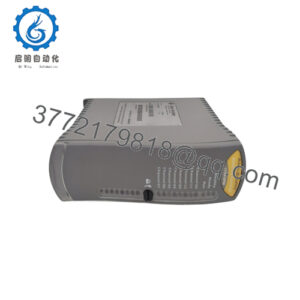
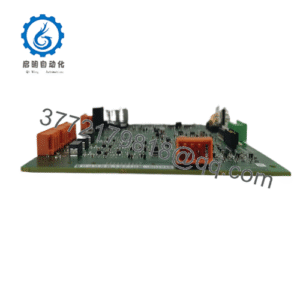
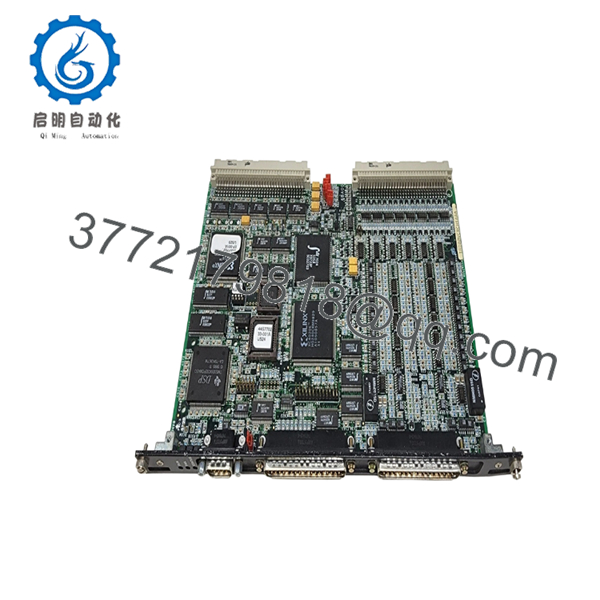
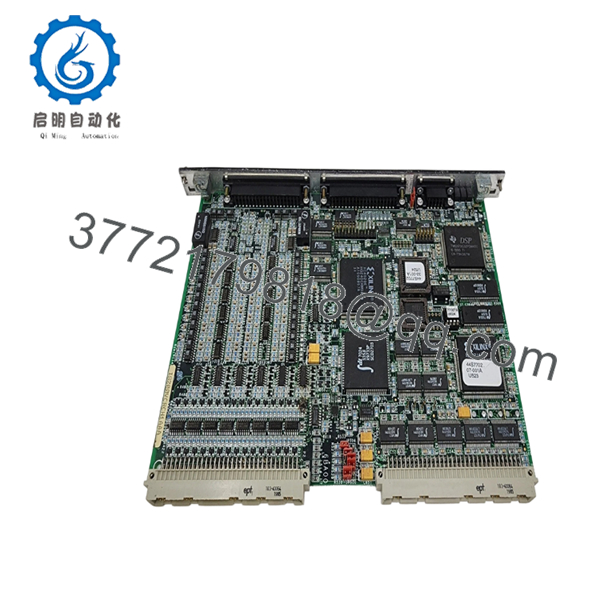
The GE IS200VCRCH1A is a double-width VME discrete input/output module designed for the Speedtronic Mark VI gas and steam turbine management platform. Acting as the primary Contact Input/Relay Output (VCRC) interface, this board coordinates critical control data by acquiring 48 isolated dry contact signals and managing 24 heavy-duty relay outputs across paired TBCI and TRLY terminal blocks. Its 1 ms high-speed scanning capability makes it an indispensable component for precision Sequence of Events (SOE) data capture and real-time turbine protection loops.
From an asset management perspective, securing this card as a New Surplus unit represents a highly calculated Total Cost of Ownership (TCO) advantage. Because the Mark VI series is a mature legacy platform, sourcing original OEM parts minimizes the operational liabilities associated with aging infrastructure. Opting for a certified New Surplus module eliminates the high breakdown risk of degraded capacitors and oxidized backplane pins found in refurbished units, protecting your plant against catastrophic, multi-million-dollar downtime during emergency trips.

- IS200VCRCH1A
- IS200VCRCH1A
5. Installation & Configuration Guide
Stage 1: Pre-Installation (Prep & Safety)
- Isolate all hazardous voltages linked to the module. Perform standard lock-out/tag-out (LOTO) procedures on incoming 125 V DC or 24 V DC contact excitation power supplies.
- Equip your work area with an ESD-safe mat and don a grounded, tethered wrist strap before opening the protective anti-static packaging.
- Document the existing hardware setup. Take high-resolution photographs of the terminal board connections, front-panel cable routing, and all daughterboard hardware jumpers or DIP switch addresses to verify exact configuration parity.
Stage 2: Removal
- Unscrew the retention fasteners securing the front-panel ribbon cables to the J33 and J44 faceplate ports. Unplug the cables slowly, pulling straight outward to safeguard the connector housings from twisting forces.
- Loosen the upper and lower captive module screws on the VME rack panel.
- Grip the card handles firmly and pull the module outward using a steady, horizontal motion. Ensure the backplane logic pins do not scrape or bend against the inner cage guides during extraction.
Stage 3: Installation (Clone & Seat)
- Set any hardware configuration points on the new IS200VCRCH1A to mirror the pulled module exactly.
- Align the board with the upper and lower tracks of the targeted VME rack slot.
- Slide the module smoothly inward until the rear P4, P5, and P6 connectors make initial contact with the backplane receptacle. Apply firm, balanced pressure on the faceplate handles to seat the board fully into the backplane sockets.
- Tighten the upper and lower retaining chassis screws, then reattach the front-panel J33 and J44 communication cables.
Stage 4: Power-On & Testing
- Energize the VME chassis power supplies and cross-reference the 24 V DC input rails using a multimeter to confirm a clear electrical path free of short circuits.
- Observe the three diagnostic LEDs on the upper faceplate. Ensure the module transitions into a flashing green RUN status; a solid red FAIL light indicates a hardware conflict or initialization failure.
- Connect via the Mark VI Toolbox software to monitor real-time I/O states, confirm successful controller voting loops, and clear any latched composite system alarms.
6. Firmware/Software Versions & Upgrade Notes
- Firmware Baseline: The IS200VCRCH1A relies heavily on proper EEPROM configuration data tailored to specific Mark VI system code releases. Ensure your Control System Toolbox version matches the existing functional revision level of the board group.
- Compatibility Matrix: The functional revision level (e.g., H1A) utilizes standard onboard components that communicate directly with the VCMI bus master. Mixing disparate board revisions within a Triple Modular Redundant (TMR) rack framework can induce voting mismatches or bus timeout errors.
- Upgrade Warning: Never flash or overwrite the onboard serial ID chip data while a module is online. Firmware and physical hardware version mismatches between the I/O processor’s baseline profile and the physical terminal board’s read-only identification chip will immediately trigger an explicit hardware incompatibility system fault.
7. Frequently Asked Questions (FAQ)
What exactly does “New Surplus” mean for this specific module?
Our New Surplus units are genuine, authentic hardware assets that have never been put into active industrial service or installed in a control rack. These parts typically come from excess corporate inventory projects, cancelled capital expansions, or retired physical warehouse spares. They are kept in climate-controlled environments, stored inside anti-static bags, and feature pristine backplane pins and trace solders. They are completely free of the structural aging, thermal fatigue, and component degradation found in refurbished or used cards.
Why is this unit priced higher than a refurbished card but lower than OEM list price?
Our pricing structure reflects the real-world value of total risk mitigation. Refurbished components carry severe hidden failure hazards, such as dried-out electrolytic capacitors or weakened solid-state relays, which regularly compromise system reliability. This New Surplus card gives you a mint-condition, zero-hour module at a significant markdown from the manufacturer’s original list price. You save substantial capital while securing OEM-level operational lifespan and absolute peace of mind.
Is the IS200VCRCH1A classified as a hot-swappable module?
No, this board is not hot-swappable. Pulling or inserting a double-width VME card while the backplane rack is energized poses a severe threat of electrical arcing, which can instantly ruin the onboard CMOS SRAM, dual-port SRAM, or adjacent processor cards. Always power down the specific VME control rack and disconnect all external 125 V DC/24 V DC field contact interrogation voltages before removing any hardware.
How does this card operate inside a Triple Modular Redundant (TMR) system architecture?
In a standard TMR layout, the field contact input signals are split across three separate VME board racks (designated as R, S, and T) through specialized JR1, JS1, and JT1 terminal connectors. Three identical VCRC cards process these incoming data streams simultaneously. The resulting digital states are compiled and voted on by the primary VCMI master communications board in each controller rack, ensuring continuous, fault-tolerant operations even if one channel encounters an error.
What kind of inventory buffer levels do you recommend for this component?
Because the Speedtronic Mark VI platform is an EOL (End of Life) legacy architecture with highly erratic global supply chains, we recommend maintaining an on-site insurance stock of 1–2 units for critical production facilities. Relying on Just-In-Time (JIT) procurement for specialized turbine control modules can lead to prolonged, expensive forced outages if a critical input card fails unexpectedly during a turbine start-up or heavy load cycle.